German
  English
  French
  Spanish
  Russian
  Polish
  Chinese
  Japanese
  Korean
Inhalt
How Long Does Silicone Last?
Service Life, Performance Factors, and Industrial Applications
Silicone is widely recognized as one of the most durable elastomer materials available today. It is used across industries such as food processing, medical devices, dairy systems, electronics, and industrial sealing, where long-term stability and reliability are critical.
But how long does silicone actually last in real-world applications?
The answer depends on material grade, operating environment, and usage conditions.
This guide explains the key factors that influence silicone lifespan, compares silicone with other elastomers, and helps manufacturers and buyers choose the right silicone solution for long-term performance.
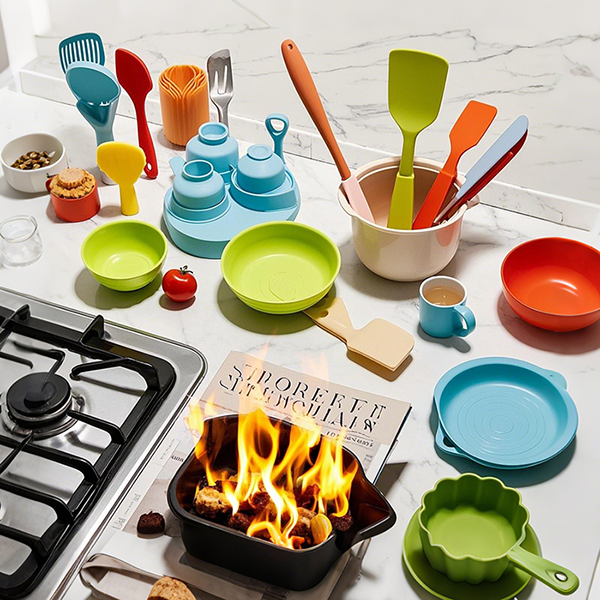
What Factors Affect the Lifespan of Silicone?
High-quality silicone can last many years or even decades, but its service life is influenced by several technical factors.
Temperaturbeständigkeit
Silicone maintains elasticity across a wide temperature range, typically from -40°C to 230°C, without cracking or melting.
Continuous exposure near maximum temperature limits may accelerate aging
Rapid thermal cycling can increase mechanical fatigue over time
Best practice:
Select silicone grades designed for continuous heat exposure when used in high-temperature environments.
UV, Ozone, and Weather Exposure
Unlike many plastics and rubbers, silicone naturally resists:
UV radiation
Ozone
Outdoor weathering
This makes it suitable for outdoor and exposed applications. However, prolonged UV exposure over many years may still cause gradual surface hardening.
Best practice:
For outdoor use, select UV-stabilized silicone formulations or apply shielding where possible.
Chemical Compatibility
Silicone resists water, detergents, and many cleaning agents. However:
Strong solvents
Certain oils
Concentrated acids or alkalis
may affect long-term performance.
Platinum-cured silicone typically offers superior chemical resistance compared to peroxide-cured silicone, especially in pharmaceutical and food environments.
Mechanical Stress and Wear
Repeated:
Flexing
Compression
Stretching
Abrasion
can eventually lead to material fatigue, especially in dynamic applications such as tubing, pumps, or seals.
Best practice:
Correct installation, proper alignment, and avoiding over-stretching significantly extend service life.
Cleaning and Hygiene Processes
Frequent cleaning is essential in food, dairy, and medical sectors. When done correctly, cleaning helps maintain silicone integrity. Improper methods can shorten lifespan.
Avoid:
Abrasive brushes
Excessive chemical concentration
Non-compatible disinfectants
Silicone vs Other Elastomers: Lifespan Comparison
Silicone vs PVC
PVC often becomes brittle over time due to plasticizer migration, especially under heat or UV exposure.
Why silicone lasts longer:
Silicone does not rely on plasticizers and retains flexibility for years.
Silicone vs Natural Rubber
Natural rubber offers elasticity but degrades quickly under:
Heat
UV
Ozone
Oils
Why silicone lasts longer:
Superior resistance to environmental aging and extreme temperatures.
Silikon vs TPE
TPE materials are easier to process but typically lack long-term thermal and chemical stability.
Why silicone lasts longer:
Its molecular structure remains stable under continuous stress and harsh environments.
Real-World Silicone Lifespan Examples
Food & Dairy Silicone Tubing
Silicone tubing in dairy systems experiences:
Constant movement
Repeated CIP cleaning
Temperature changes
Typical lifespan:
Several years with proper maintenance, significantly longer than PVC or rubber tubing.
Medical and Pharmaceutical Applications
Medical-grade silicone withstands:
Autoclave sterilization
Chemical disinfection
Repeated use cycles
Typical lifespan:
Maintains performance across many sterilization cycles without degradation.
Industrial Seals and Gaskets
In industrial machinery, silicone seals face:
Heat
Pressure
Oils
Intermittent chemicals
Typical lifespan:
Often remains functional for multiple years when matched to the correct operating environment.
Signs Silicone Has Reached End of Life
Even durable materials eventually degrade. Common indicators include:
Loss of elasticity
Surface cracking or chalking
Hardening or stiffness
Reduced sealing or suction performance
Visible wear in high-stress zones
When these signs appear, replacement is recommended to maintain safety and performance.
Sustainability and Long-Term Value
While silicone may have a higher initial cost, its long service life delivers:
Fewer replacements
Lower maintenance costs
Reduced downtime
Less material waste
From a total cost of ownership perspective, silicone is often the most economical option.
OEM & Custom Silicone Solutions for Extended Lifespan
As a professional silicone manufacturer, we focus on maximizing product durability through:
Advanced Silicone Formulations
Application-specific compounds
Optimized curing systems
High thermal and chemical stability
Precision Manufacturing
Tight dimensional tolerances
Uniform wall thickness
Consistent surface quality
Application-Matched Design
Correct hardness selection
Geometry optimized for stress distribution
Tailored solutions for food, medical, and industrial use
Technical Support & Lifecycle Guidance
We provide clear recommendations on:
Installation
Cleaning
Maintenance
to help customers achieve the longest possible service life.
How long does silicone last?
High-quality silicone can last several years to decades, depending on application, environment, and maintenance.
Does silicone degrade over time?
Yes, but very slowly. Degradation usually appears as hardening, cracking, or loss of elasticity after prolonged stress or exposure.
Is silicone more durable than rubber or PVC?
Yes. Silicone generally outperforms rubber, PVC, and TPE in heat resistance, chemical stability, and long-term flexibility.
What extends silicone lifespan the most?
Correct material grade selection, proper installation, compatible cleaning methods, and controlled operating conditions.