English
  French
  German
  Spanish
  Russian
  Polish
  Chinese
  Japanese
  Korean
Contents
Silicone baby feeding products have become a familiar sight in modern homes, baby stores, and private-label product collections. Suction plates, divided bowls, soft-tip spoons, bibs, snack cups, and training cups are often promoted as safe, durable, and easy to clean. However, the quality of these products depends on far more than simply selecting a material described as “food-grade silicone.”
For brands, wholesalers, distributors, and sourcing managers, understanding the lesser-known facts behind silicone baby feeding products can prevent quality disputes, improve product development, and support more accurate marketing. The following industry insights explain how materials, hardness, molding, suction performance, color matching, testing, packaging, and daily use can influence the final product.
1. “Food-Grade Silicone” Is Not a Universal Certification
One of the most misunderstood expressions in the silicone baby feeding industry is food-grade silicone. The term generally indicates that a material is intended for food-contact applications, but it is not a single international certificate that automatically makes a product compliant in every market.
Different countries and regions may apply different requirements to food-contact articles. The applicable testing program can also depend on the product’s intended use, contact temperature, food type, age group, and duration of contact. A product designed for cold snacks may require a different evaluation from a bowl intended for hot meals or microwave reheating.
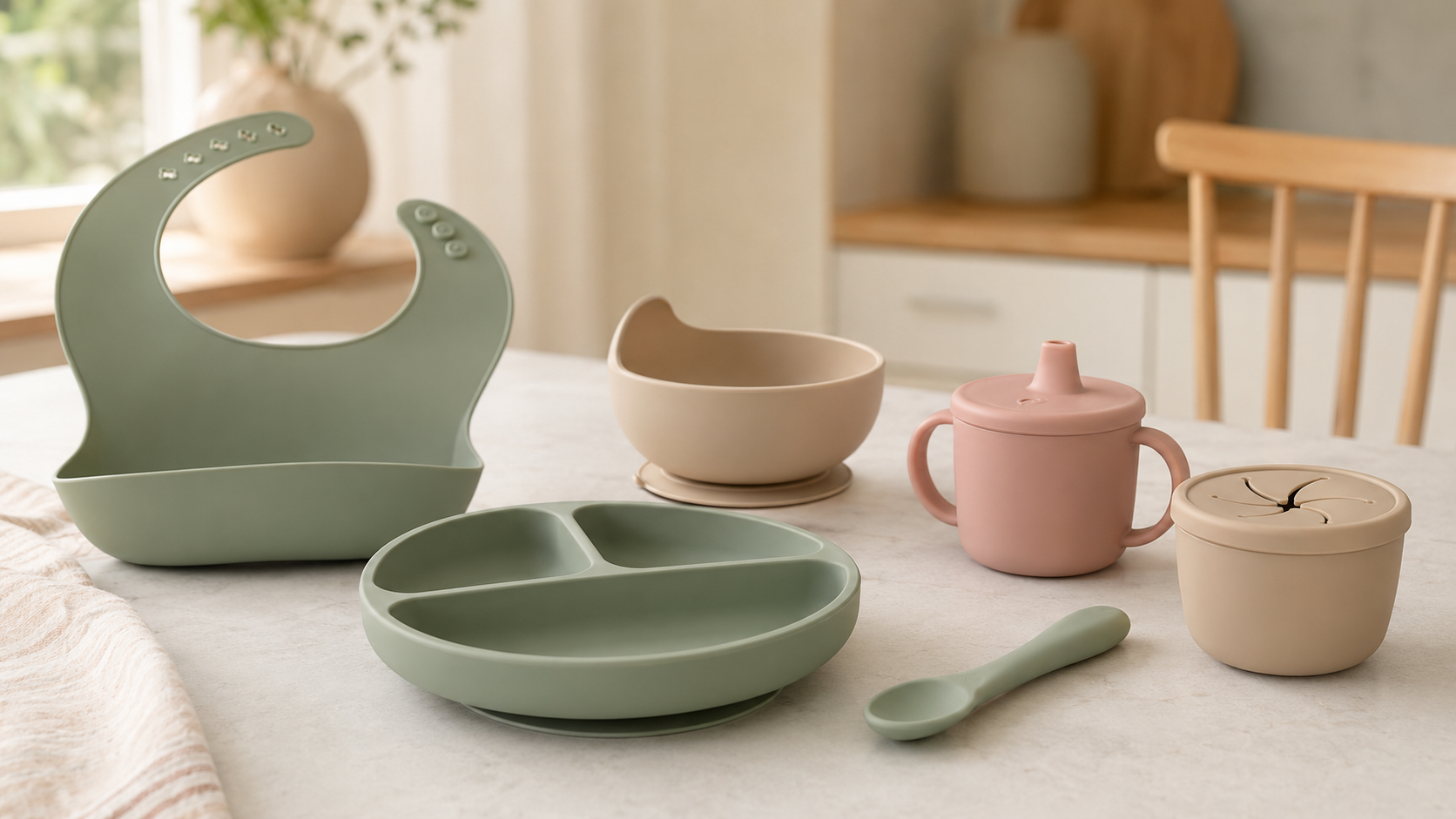
✓ Procurement insight: Ask for finished-product test reports that match the destination market and intended application. A raw-material certificate alone may not represent the colorant, printing, manufacturing process, or complete finished product.
2. Raw Material Is Only One Part of Product Safety
Premium silicone raw material provides a strong foundation, but the finished product is affected by every component added during manufacturing. Pigments, curing agents, decorative printing, adhesives, plastic accessories, stainless steel inserts, and packaging materials can all influence the final compliance result.
Factory cleanliness is equally important. Light-colored silicone can reveal dust, dark particles, mixed-color residue, or contamination more easily than darker products. Controlled material storage, clean molding equipment, proper operator procedures, and effective inspection systems are essential for stable production.
The practical lesson is simple: silicone baby feeding product quality is created through a complete manufacturing system, not through one material specification.
3. Platinum-Cured Silicone Can Still Have an Odor
Platinum-cured silicone is widely selected for baby feeding products because it can offer good stability, clarity, flexibility, and low odor. Nevertheless, describing it as completely odor-free under every condition can create unrealistic expectations.
A temporary smell may come from pigments, insufficient post-curing, sealed packaging, printing materials, cartons, or the storage environment. Silicone can also absorb fragrances from strongly scented detergents. This means that an odor noticed after opening a package does not always come from the base silicone itself.
💡 Manufacturing fact: A controlled post-curing process can help reduce volatile residues and stabilize the product. Adequate ventilation before sealed packaging may also improve the customer’s first impression.
4. Softer Silicone Is Not Always Better
Softness is frequently associated with comfort and safety, but every silicone feeding product requires an appropriate balance between flexibility and structural support. A soft bib should fit comfortably around a child’s body, while its food-catching pocket must remain open enough to perform its function.
A suction plate that is too soft may deform when lifted or filled with food. A spoon that bends excessively may be gentle on gums but frustrating for children learning to scoop. A collapsible snack cup needs flexible openings while maintaining enough body strength to stand securely.
Experienced manufacturers therefore select silicone hardness according to the product’s geometry, thickness, usage method, and target age. “The softest possible material” is rarely the best technical specification.
5. Suction Strength Depends on the Table as Much as the Plate
Suction plates and bowls are popular because they can reduce sliding and accidental spills. However, suction performance is influenced by a combination of product design and real-life conditions.
Key factors affecting suction include:
● Suction-base diameter, depth, edge thickness, and flexibility
● The weight and balance of the plate or bowl
● Smooth, textured, porous, curved, dusty, wet, or oily surfaces
● The amount of air remaining underneath the suction base
● The direction, speed, and duration of the applied pulling force
A plate may attach securely to glass, polished stone, or a smooth highchair tray but perform differently on textured wood or an uneven tabletop. This does not necessarily mean the suction base is defective; it may indicate that the test surface is incompatible with suction products.
For OEM orders, suction expectations should be agreed before mass production. The buyer and manufacturer should define the test surface, cleaning condition, pressing method, pulling direction, holding time, and acceptance criteria. Subjective descriptions such as “very strong suction” are difficult to use as inspection standards.
6. Heavier Products Do Not Automatically Suction Better
Increasing the amount of silicone can make a feeding plate feel more substantial, but extra weight does not guarantee better suction. If the plate is poorly balanced, its weight may pull on one side of the suction base and allow air to enter underneath.
Suction performance depends more on well-engineered geometry, suitable hardness, consistent molding, and an effective sealing edge. Product weight should be optimized for stability, transportation cost, material efficiency, and ease of use—not treated as the only measure of quality.
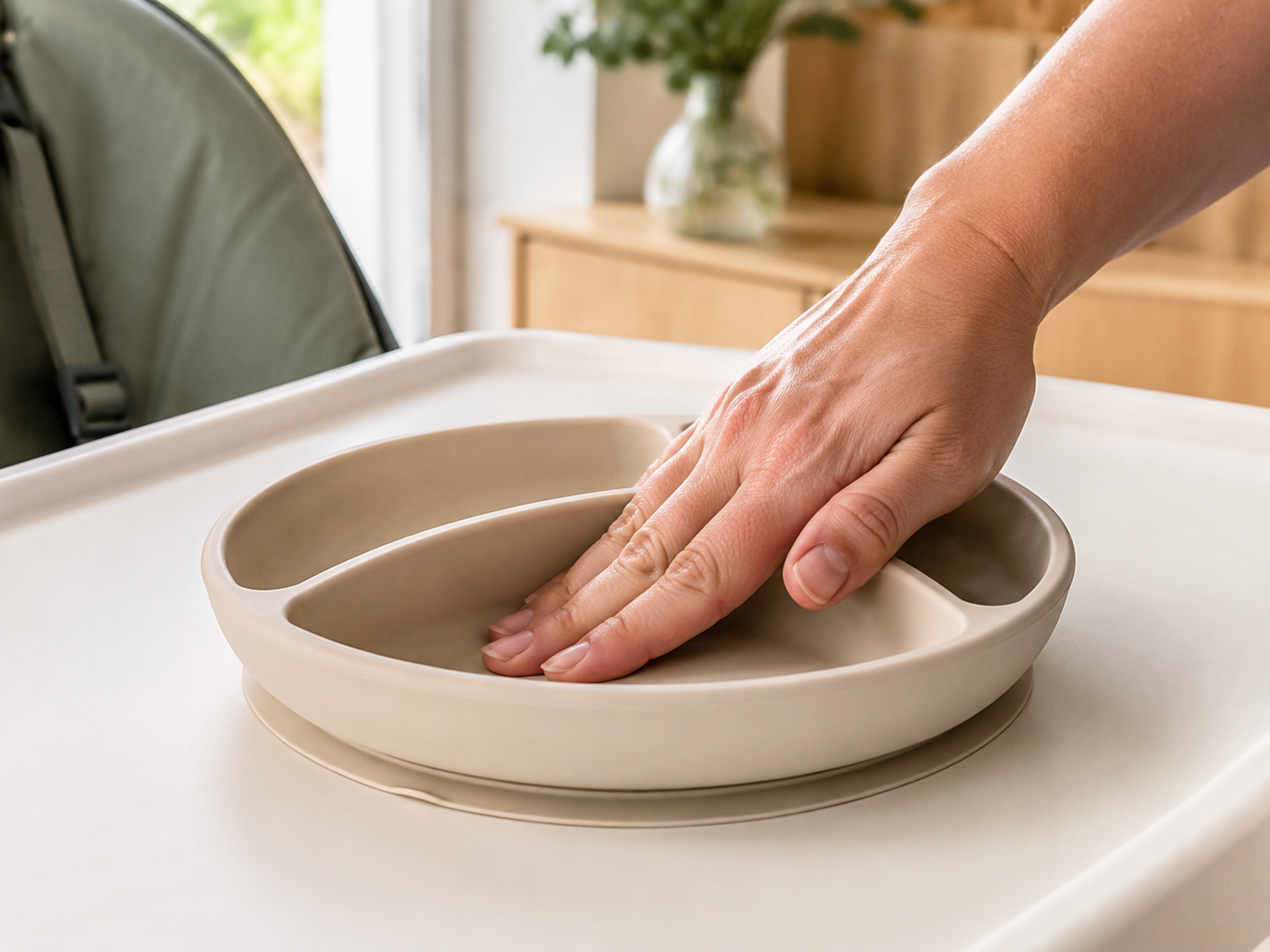
7. Silicone Can Absorb Food Colors, Oils, and Fragrances
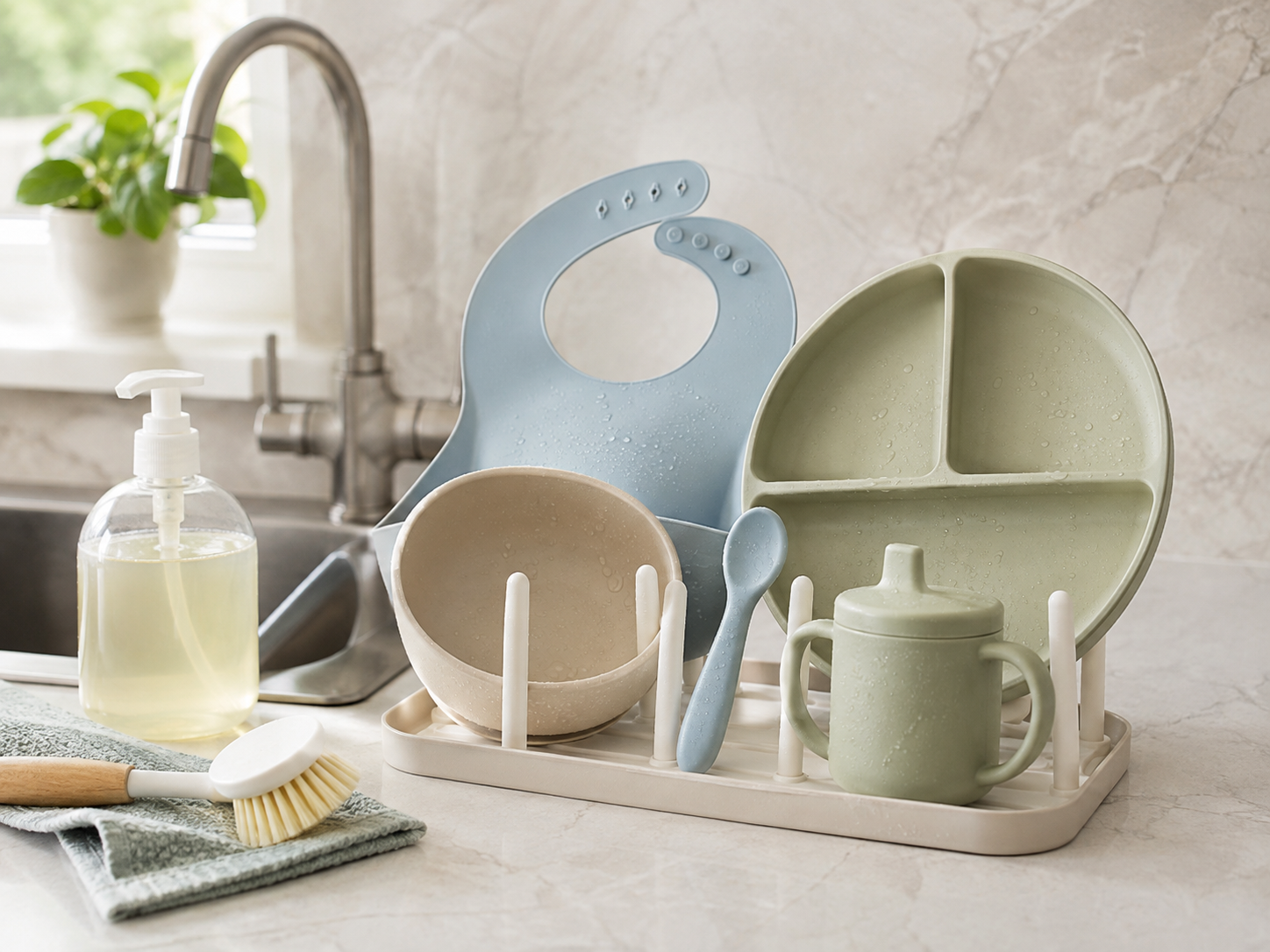
Silicone baby tableware is durable and washable, but it is not completely resistant to every stain or odor. Tomato sauce, curry, carrots, berries, and other strongly colored foods may leave temporary marks, especially on cream, beige, or pastel-colored products.
Oil residue and fragranced dishwashing products can also remain on the surface. Over time, a heavily scented detergent may make a silicone bowl smell like soap even though the product originally had little or no noticeable odor.
✦ Consumer-care tip: Recommend mild, low-fragrance detergent, thorough rinsing, and complete air-drying. Removing strongly colored food soon after use can also reduce visible staining.
8. Matte Finishes May Show More Dust or White Residue
Matte silicone is popular in Scandinavian-inspired and modern baby product collections because it creates a soft, premium appearance. The same surface texture, however, may make dust, oils, mineral deposits, or detergent residue more visible.
A whitish appearance does not always indicate that silicone is aging. It may be caused by hard water, incomplete rinsing, or residue left after dishwasher use. Brands can reduce unnecessary complaints by including clear cleaning guidance in the packaging or online product page.
9. Pastel Colors Are More Difficult to Manufacture Consistently
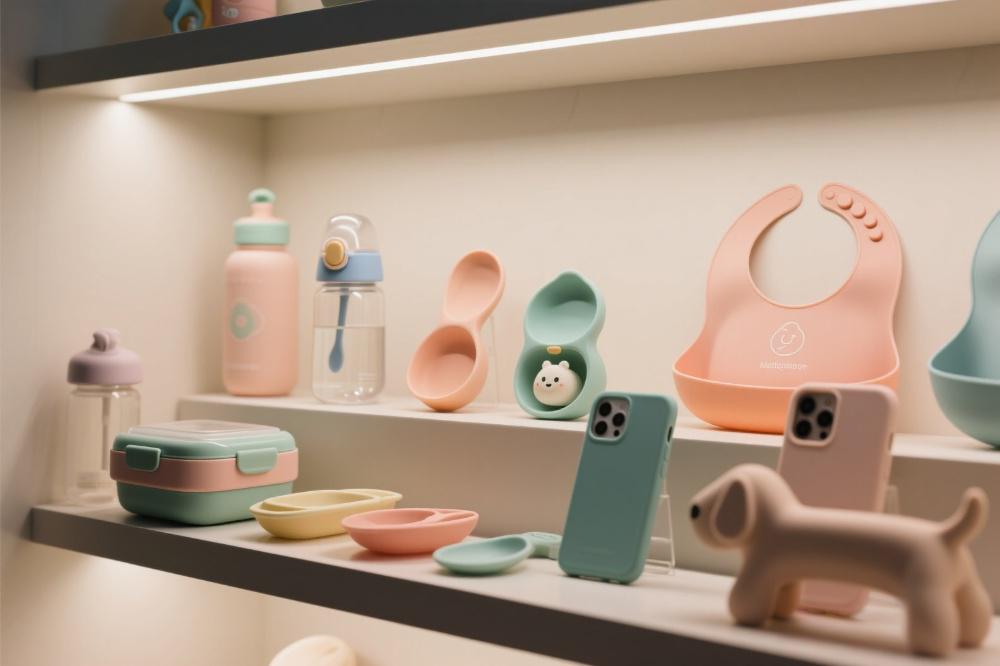
Cream, oatmeal, dusty pink, sage green, muted blue, and Nordic purple may look simple, but they often require tighter color and cleanliness control than dark shades. Minor pigment differences, black particles, or traces of a previous production color can be especially visible on pale silicone.
Color perception also changes under warm showroom lighting, cool office lighting, sunlight, and photography equipment. A buyer approving colors through a phone screen may see a different result from the physical sample.
Physical color samples and an agreed tolerance standard are more reliable than digital images alone. Brands should also remember that natural variation can occur between production batches.
10. One Pantone Reference Can Look Different Across Materials
A coordinated feeding set may combine silicone, polypropylene, stainless steel, printed packaging, fabric straps, and coated accessories. Even when every component is matched to the same Pantone reference, the finished colors may not appear identical.
Material transparency, surface gloss, texture, thickness, and production temperature all influence the visual result. Silicone may look deeper in a thick bowl base than along a thin rim. Paper packaging reflects light differently from molded silicone. Professional color matching should therefore focus on an acceptable coordinated appearance rather than expecting different materials to be visually indistinguishable.
11. Translucent and Speckled Silicone Requires Extra Control
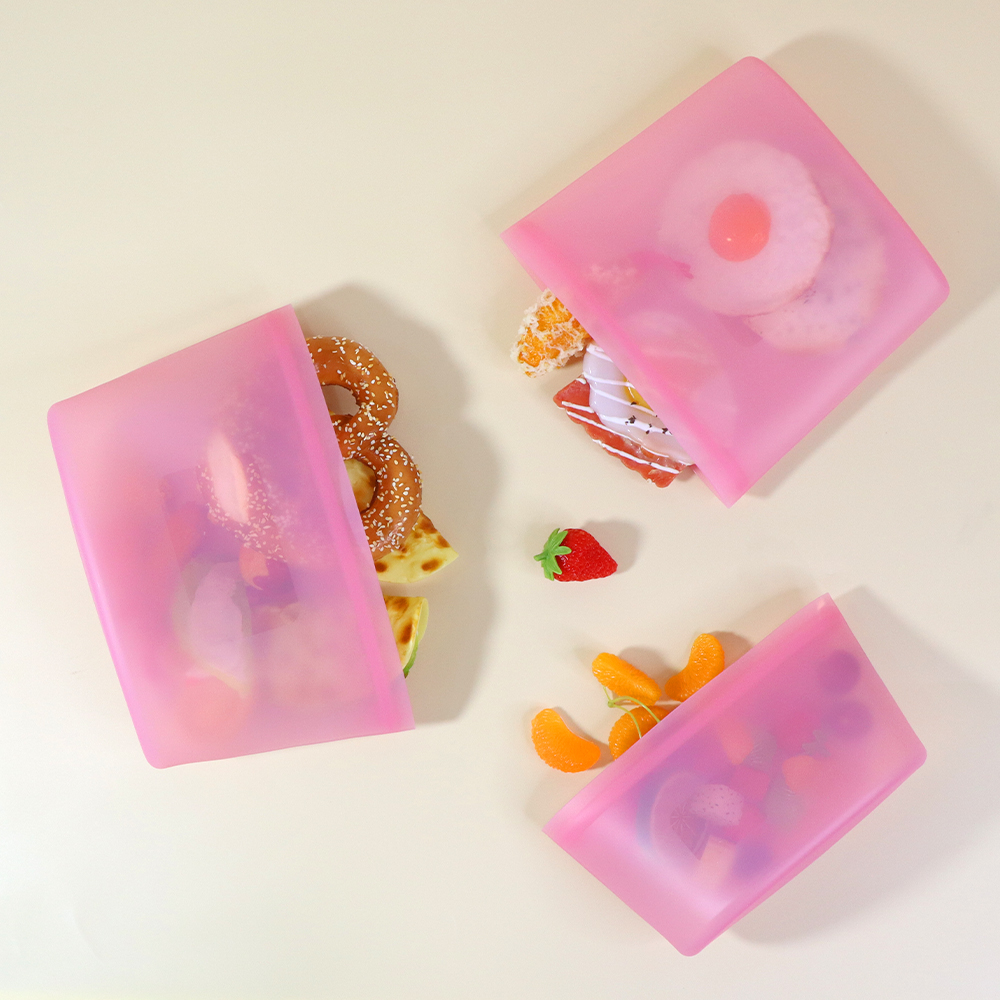
Translucent silicone can create an attractive, modern effect, but its appearance changes with product thickness, lighting, and background color. Thin edges naturally appear lighter than thick sections, even when the same material mixture is used throughout the product.
Products containing colorful silicone speckles, stars, or decorative particles introduce another manufacturing challenge. The factory must control overall distribution while preventing excessive clustering, missing areas, contamination, or surface defects.
⚠ Important OEM expectation: Decorative particles can be distributed consistently as an overall visual effect, but their exact position will normally vary from one product to another. Each piece can be unique without being defective.
12. Thick Silicone Products Need More Than Extra Material
A thicker bowl, plate, or freezer container may appear easier to manufacture, but thick sections can require longer curing cycles and careful control of heat and pressure. If the process is not optimized, the interior may cure inconsistently or the finished product may have stronger residual odor and unstable dimensions.
Thickness also affects production capacity. A longer molding cycle means fewer production cycles per day, which can influence unit cost and delivery time. Material consumption is only one part of the quotation; machine time, mold capacity, labor, inspection, and expected defect rate must also be considered.
13. More Mold Cavities Do Not Always Mean a Lower Cost
Multi-cavity molds can increase output, but adding too many cavities may cause uneven pressure, difficult air release, inconsistent filling, or higher rejection rates. The ideal cavity arrangement depends on product dimensions, wall thickness, machine tonnage, molding method, and quality requirements.
An experienced silicone manufacturer calculates the mold structure around stable production rather than simply maximizing the number of products in every cycle. A slightly lower theoretical output may produce a better real-world cost if it improves consistency and reduces defective pieces.
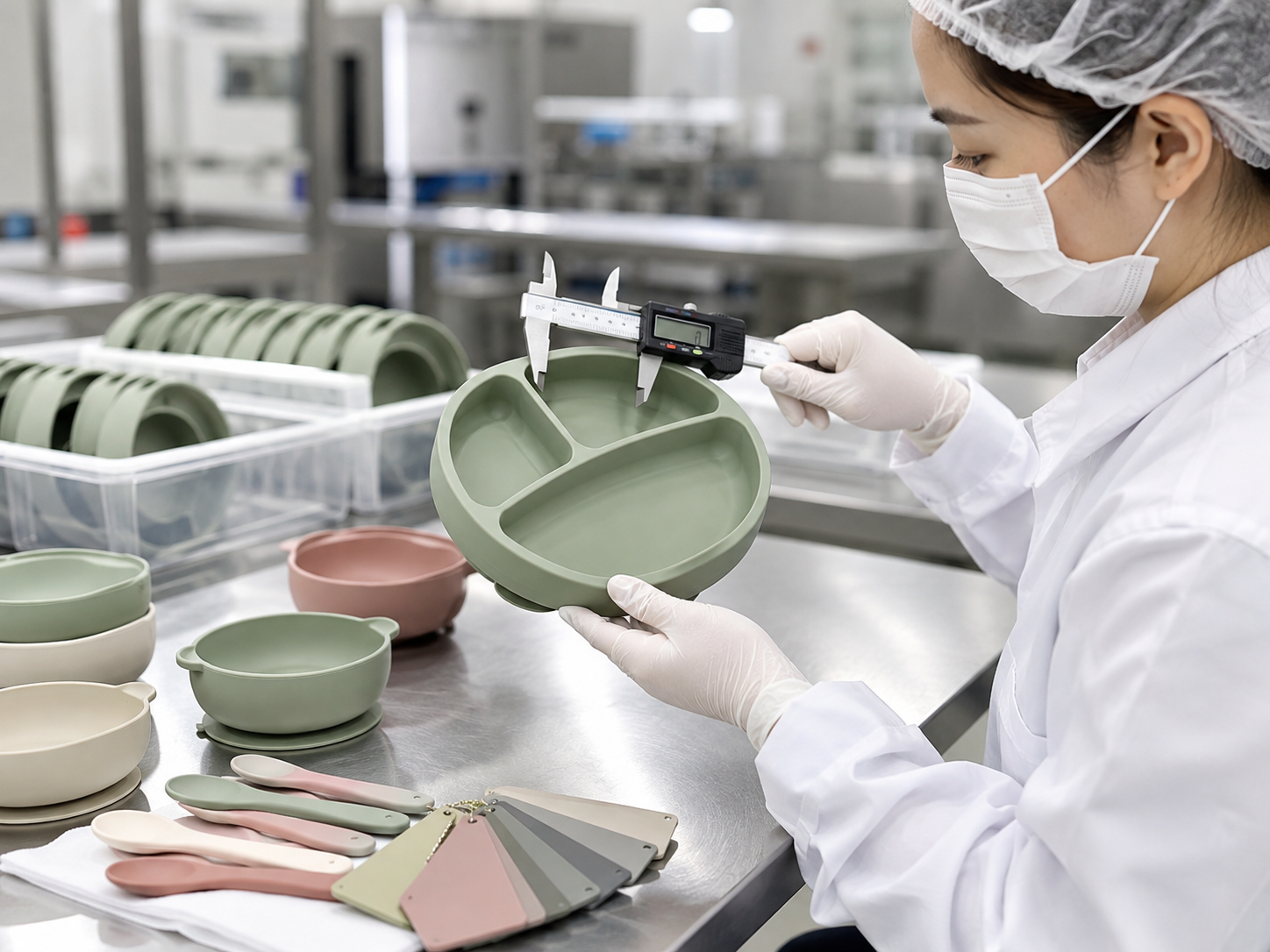
14. Multi-Color Products Often Require More Manual Work
Two-tone, gradient, marbled, and particle-filled silicone products are popular for distinctive private-label collections. To consumers, these features may look like simple color variations. In production, they may require material preparation, preforming, manual placement, separate molding stages, or additional visual inspection.
These designs can increase labor cost and create more natural variation between pieces. Brands should decide whether the visual differentiation supports a higher retail value before adding complex color effects to every item in a collection.
15. Stainless Steel and Silicone Tableware Is Technically Complex
A stainless steel plate combined with a silicone suction base may appear straightforward, but it brings together materials with different behaviors. Metal forming accuracy, edge finishing, silicone dimensions, assembly tolerances, and resistance to repeated washing must all be controlled.
If the stainless steel insert is slightly inconsistent, the silicone base may fit too loosely or too tightly. Temperature changes can also affect the two materials differently. Reliable development therefore requires prototype testing, dimensional verification, washing tests, and inspection of the connection between metal and silicone.
✓ Product development insight: A multi-material feeding product should be evaluated as a complete system. Testing the silicone and stainless steel separately cannot reveal every possible assembly or long-term use issue.
16. Heat Resistance Must Be Evaluated for the Entire Product
Silicone is known for performing across a broad temperature range, but a complete feeding product may contain other components. Plastic lids, printed decorations, adhesives, valves, metal inserts, woven straps, or packaging accessories may have different temperature limitations.
For this reason, oven, microwave, freezer, dishwasher, and sterilization claims should be based on the complete product rather than the silicone material alone. Usage instructions should clearly explain whether lids or accessories must be removed before heating.
17. “BPA-Free” Does Not Tell the Whole Safety Story
BPA-free is a familiar phrase that helps consumers understand a basic safety message. However, BPA is mainly associated with certain plastic materials and resins. For a silicone baby feeding product, the more meaningful evaluation is broader finished-product compliance for the intended food-contact application.
Responsible product marketing should avoid relying on one popular claim as proof of complete safety. Material identification, traceable production, suitable testing, age-appropriate design, accurate warnings, and quality-control records provide a more complete picture.
18. Packaging Can Influence the First Impression of Silicone
Freshly manufactured silicone products should be properly processed and aired before being sealed. If products are packed immediately into airtight bags, any remaining manufacturing or packaging odor may become more noticeable after a long shipping period.
Printed boxes, plastic bags, inserts, and adhesives may also contribute their own smells. Packaging tests should therefore include both appearance and odor after realistic storage and transportation conditions.
Efficient packaging design has another benefit: it can reduce product deformation. Bib pockets, cup openings, spoon tips, and thin suction edges should not remain heavily compressed during extended shipping.
19. Clear Instructions Can Prevent Many Product Complaints
Some problems reported by consumers are related to product use rather than manufacturing defects. A suction plate may be placed on a textured table, silicone may absorb the fragrance of detergent, or hard-water deposits may create a cloudy surface.
Clear instructions can explain compatible surfaces, correct suction methods, cleaning recommendations, temperature limitations, storage conditions, and when a damaged product should be replaced. This information improves the customer experience while helping brands reduce avoidable returns and negative reviews.
20. Silicone Is Durable, but It Is Not Indestructible
Quality silicone can remain flexible through repeated use, but long-term exposure to sharp objects, excessive pulling, ultraviolet light, aggressive chemicals, or unsuitable temperatures may eventually cause discoloration, cuts, surface damage, or reduced elasticity.
Parents should regularly inspect feeding products, especially spoon tips, drinking valves, handles, suction edges, and components that children may chew. Products showing cracks, tears, loose parts, or significant damage should be discontinued according to the brand’s care guidance.
What B2B Buyers Should Confirm Before Production
① Material and market: Confirm the silicone type, destination market, food-contact application, and required testing plan.
② Product performance: Agree on hardness, dimensions, suction test conditions, capacity, temperature claims, and assembly requirements.
③ Visual standards: Approve physical colors, acceptable surface appearance, logo position, and tolerance for translucent or speckled effects.
④ Packaging details: Check product arrangement, compression risk, labeling, odor, barcode placement, and transportation protection.
⑤ Golden sample: Keep an approved pre-production sample as the shared reference for mass-production inspection.
Conclusion
The most important hidden fact about the silicone baby feeding industry is that product quality cannot be judged by softness, weight, color, or a “food-grade” claim alone. A reliable product is the result of appropriate material selection, thoughtful structural design, precise molds, controlled curing, post-processing, careful assembly, finished-product testing, and suitable packaging.
For baby product brands and wholesale buyers, defining measurable requirements before production is one of the best ways to protect product quality and avoid disagreements. Working with an experienced OEM and ODM silicone manufacturer can also make it easier to balance safety, functionality, appearance, cost, and scalable manufacturing.
Frequently Asked Questions
Is food-grade silicone automatically safe for baby feeding products?
Not automatically. The raw material is only one part of the finished product. Pigments, printing, accessories, production processes, intended use, and destination-market requirements should also be evaluated. Buyers should request relevant testing for the complete product.
Why does a silicone suction plate work on one table but not another?
Suction works best on clean, smooth, flat, and nonporous surfaces. Wood grain, textured plastic, curved trays, dust, oil, and uneven surfaces can allow air to enter underneath the suction base and reduce its holding performance.
Why can silicone baby tableware develop a soapy smell?
Silicone can retain oil and fragrances from strongly scented detergents. Using a mild, low-fragrance cleaning product, rinsing thoroughly, and allowing the item to air-dry completely can help minimize unwanted smells.
What should an OEM buyer approve before mass production?
The buyer should approve the product structure, dimensions, silicone hardness, physical color sample, logo, packaging arrangement, performance criteria, test requirements, and pre-production sample. All critical standards should be documented before manufacturing begins.