French
  English
  German
  Spanish
  Russian
  Polish
  Chinese
  Japanese
  Korean
Contenu
How to Clean Silicone Teether for Baby?
Teething is a major milestone, but it often feels like a marathon for both parents and babies. When those first tiny teeth begin to push through the gums, a high-quality silicone teether becomes the most valuable toy in the nursery. It provides the necessary counter-pressure to soothe aching gums and keeps little hands busy.
However, because these items live in your baby’s mouth, they are constant magnets for drool, lint, pet hair, and microscopic bacteria. Understanding how to properly maintain this essential toy is not just about cleanliness; it is about protecting your child’s developing immune system. While silicone is naturally resistant to bacteria, improper care can lead to mold growth or chemical degradation.
This guide will walk you through the professional standards for cleaning, sanitizing, and inspecting silicone teethers to ensure your baby stays happy and healthy in 2026.
Why Silicone is the Gold Standard for Teething
Before we dive into the “how,” let’s look at the “why.” Most modern parents prefer silicone over plastic, wood, or latex. A reputable manufacturer will use 100% food-grade or medical-grade silicone because it is non-porous. Unlike plastic, it doesn’t have microscopic pores where bacteria can hide, and unlike wood, it won’t splinter or warp when exposed to moisture.
Silicone is also incredibly temperature-stable. Most high-quality silicone can withstand temperatures from -40°C to 230°C. This thermal resistance is exactly what makes it so easy to clean compared to other materials.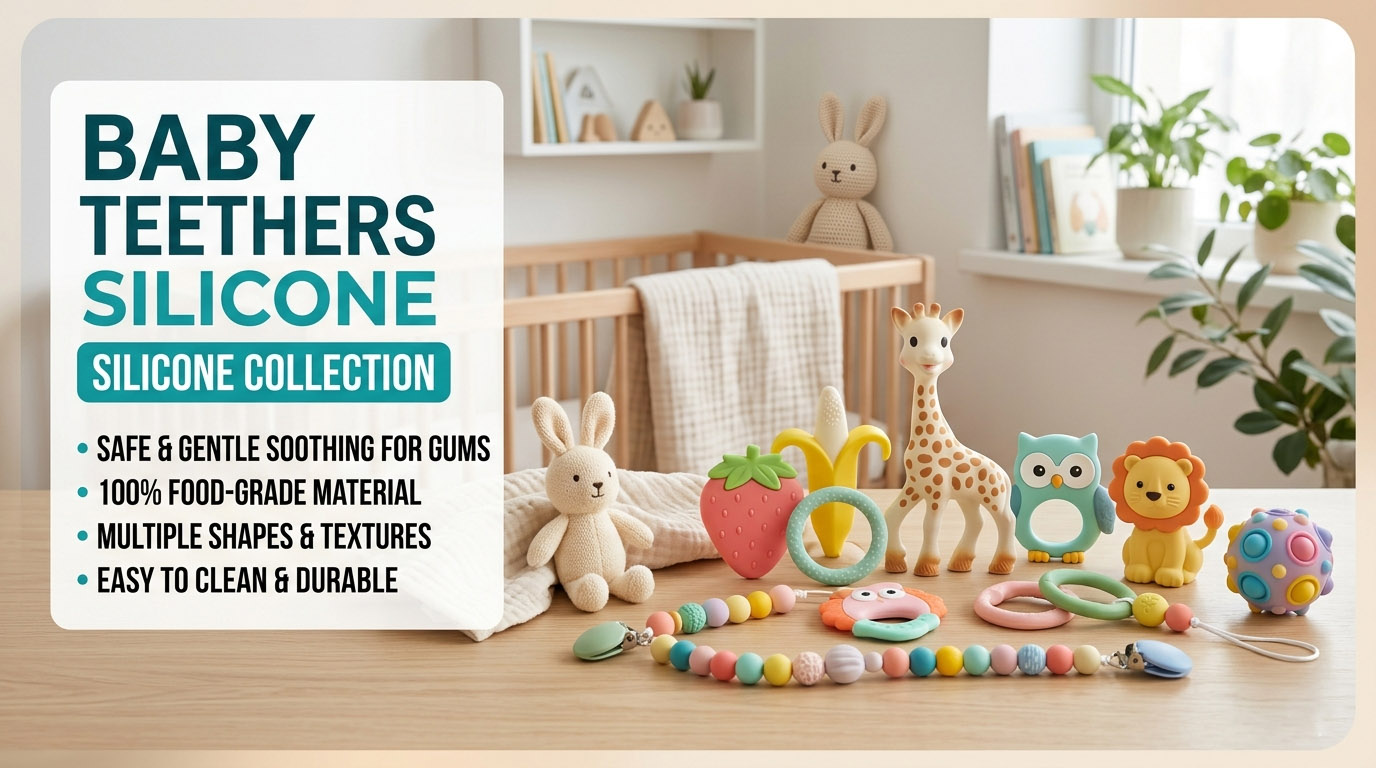
Step-by-Step: The Best Ways to Clean a Silicone Teether
There is a significant difference between cleaning (removing visible dirt and oils) and sanitizing (killing 99.9% of germs). You need both to maintain a safe environment.
1. The Daily Hand-Wash (Best for Routine Care)
For a toy that is used throughout the day, a simple hand-wash is your first line of defense.
-
Step 1: Wash your own hands thoroughly first. There is no point cleaning a baby toy with dirty hands.
-
Step 2: Use warm water and a mild, fragrance-free dish soap. Avoid “heavy-duty” grease cutters that may leave a chemical residue.
-
Step 3: Use a clean cloth or a small soft-bristled brush to scrub the textured areas. Many teethers have ridges or bumps designed to massage gums; these are also prime spots for dried drool to hide.
-
Step 4: Rinse under running water until all soap suds are gone.
-
Step 5: Air dry on a clean rack. Avoid using a communal kitchen towel, which can transfer bacteria from raw food or old dishes.
2. The Dishwasher Method (The Convenience Factor)
Most silicone teethers produced by a quality manufacturer are “top-rack dishwasher safe.”
-
Placement: Always place the silicone toy on the top rack. The heating element at the bottom of many dishwashers can become extremely hot during the drying cycle, which might eventually degrade the silicone over hundreds of washes.
-
Basket Use: Use a dishwasher-safe mesh bag or a small parts basket to prevent the teether from falling to the bottom and touching the heating element.
-
Detergent Choice: Stick to mild, eco-friendly detergents. Avoid rinse aids or “power-ball” pods that contain harsh bleaching agents.
3. Boiling and Steam Sterilizing (The Deep Clean)
Sanitizing should happen at least once or twice a week, or whenever the toy has been dropped in a public place.
-
Boiling: Submerge the silicone teether in boiling water for 3 to 5 minutes. This is the most effective way to ensure that any lingering bacteria are neutralized.
-
Steam Sterilizers: If you already have a bottle sterilizer, you can place silicone teethers inside. The high-temperature steam penetrates the surface without the need for chemicals.
-
Microwave Sterilizers: Only use these if the manufacturer explicitly states the product is microwave-safe. Some silicone teethers contain internal “chilled” gels or metal parts that will explode or melt in a microwave.
Cleaning Different Teething Materials: A Comparison
While silicone is our focus, many babies have a variety of toys. It is vital to know that you cannot clean them all the same way.
| Matériau | Dishwasher Safe? | Can be Boiled? | Best Cleaning Method |
| Silicone | Yes (Top Rack) | Oui | Mild soap & warm water / Boiling |
| Natural Rubber | No | No (Usually) | Hand-wash only; heat causes degradation |
| Wood | No | No | Damp cloth wipe; air dry immediately |
| Plastique | Varies | No | Warm soapy water; check the label |
| Fabric | No | No | Machine wash on gentle in a laundry bag |
4 Common Mistakes Parents Make
Even with the best intentions, it is easy to make mistakes that could compromise the safety of the toy.
-
Using Harsh Chemicals: Never use bleach, window cleaner, or abrasive scouring pads. These can create micro-scratches in the silicone where bacteria can eventually settle, or worse, leave toxic residue that the baby will ingest.
-
Soaking Wood or Rubber: Never “soak” wooden teethers or rubber toys. Wood will swell and crack, creating a choking hazard. Rubber can become “gummy” and lose its structural integrity.
-
Ignoring the “Hollow” Problem: If your silicone toy is hollow and has a small hole (like a bath toy), be extremely careful. Water can get trapped inside and grow mold. Always squeeze out excess water and ensure it dries completely.
-
Microwaving Without Checking: Not all silicone is created equal. Some lower-quality silicone contains fillers that don’t react well to microwave radiation. Always verify with the manufacturer first.
When to Replace a Silicone Teether
No toy lasts forever. Regularly inspecting your baby’s teether is a critical safety step. Look for the following signs that it is time to toss the teether:
-
Tears or Bitten-off Pieces: If your baby has strong “milk teeth” coming in, they might eventually bite through the silicone. Small pieces are a major choking hazard.
-
Discoloration: While silicone is stain-resistant, deep discoloration that won’t wash away can indicate material breakdown.
-
Changes in Texture: If the silicone feels sticky, tacky, or unusually hard, the chemical bonds are breaking down, and it should be replaced immediately.
The Role of the Manufacturer in Safety
When you buy a teething toy, you are trusting a manufacturer with your child’s health. Companies like Jewelives emphasize that “cleanability” starts at the design phase. A well-designed teether should have:
-
No sharp internal angles where mold can grow.
-
Certification for being BPA-free and Lead-free.
-
Clear instructions on temperature limits.
Always check the packaging or the company website for specific care instructions. A reputable manufacturer will always provide clear guidelines on whether their product can handle the high heat of a sterilizer or a dishwasher.
FAQ: Cleaning and Caring for Silicone Teethers
Q1: Do I need to sanitize a new teether before the first use?
Yes, absolutely. Even if the packaging looks clean, the toy has been through a manufacturing facility and a shipping process. Always boil or steam-sanitize any new teething item before giving it to your baby.
Q2: Can I put a silicone teether in the freezer to make it cold?
Most silicone teethers are freezer-safe and providing a cold teether is a great way to numb gum pain. However, don’t leave it in the freezer for weeks, as extremely cold temperatures for prolonged periods can make some silicone grades more brittle.
Q3: Is white vinegar safe for cleaning teethers?
Yes. A 50/50 mixture of water and white vinegar is a great natural disinfectant. However, ensure you rinse the toy thoroughly afterward, as the strong taste of vinegar might discourage your baby from using the teether.
Q4: How often should I clean the teether?
If the teether falls on the floor, clean it immediately. For general use, a daily wash with warm soapy water is recommended, with a deep sanitization (boiling) once or twice a week.
Q5: Can I use UV sterilizers on silicone?
Most modern silicone is UV-stable, but prolonged exposure to high-intensity UV light can eventually cause colors to fade or the material to lose some elasticity. Check your manufacturer guidelines before using a UV cabinet.
Summary for Busy Parents
-
Daily: Warm soapy water.
-
Weekly: Boil for 3 minutes or use the top rack of the dishwasher.
-
Always: Inspect for tears or damage.
-
Never: Use bleach or harsh chemicals.
Your baby’s oral health is the foundation for their overall well-being. By taking five minutes a day to ensure their teething toys are pristine, you are providing a safe, soothing, and healthy environment for them to grow.