French
  English
  German
  Spanish
  Russian
  Polish
  Chinese
  Japanese
  Korean
Contenu
How to Make Custom Silicone Wristbands: Materials, Manufacturing Process, and Branding Value
Custom silicone wristbands have become one of the most cost-effective promotional products for brand marketing, fundraising, events, and awareness campaigns. Lightweight, durable, waterproof, and highly customizable, silicone wristbands are widely used by businesses, nonprofits, schools, and sports organizations around the world.
In this guide, we explain how custom silicone wristbands are made, from raw material processing to molding, coloring, printing, and final packaging—helping you better understand product quality, customization options, and manufacturing standards.
Why Silicone Is the Ideal Material for Wristbands
Silicone rubber is the preferred material for wristbands due to its unique physical and chemical properties:
Excellent flexibility and elasticity
Waterproof and sweat-resistant
Stable under high and low temperatures
Does not crack, shrink, or become brittle
Latex-free and skin-friendly
Compared with PVC or rubber alternatives, high-quality silicone wristbands maintain their shape and comfort even after long-term daily use.
Step 1: Silicone Raw Material Processing
The production of custom silicone wristbands begins with raw silicone material preparation. Silicone polymers typically arrive at the factory in solid blocks or cylindrical forms.
Material Conditioning
The silicone is fed into compression rollers that soften and homogenize the material until it reaches the proper consistency. Processing time varies depending on production volume and wristband specifications.
Mélange de couleurs
Once the silicone reaches the correct texture, pigments are added to create the base color. Professional manufacturers use the Pantone Matching System (PMS) to ensure precise color accuracy for branding purposes.
To achieve uniform color distribution, the silicone and pigments are rolled multiple times. Additional elements such as glitter effects or functional additives (for example, DEET-free mosquito repellent) can be incorporated at this stage if required.
After color blending, the silicone is rolled into flat sheets for further processing.
Step 2: Cutting, Weighing, and Mold Preparation
The colored silicone sheets are protected with a thin plastic layer and cut into long strips by machine. These strips are then weighed and cut into smaller portions, ensuring consistent thickness and size for each wristband.
Common wristband thickness options include:
2mm — lightweight and flexible
3mm — thicker and more durable
Each silicone portion is then placed into a wristband mold.
Step 3: Molding and Logo Customization
During molding, heat and pressure are applied to shape the silicone into wristbands.
Logo & Design Options
Depending on branding needs, molds can include:
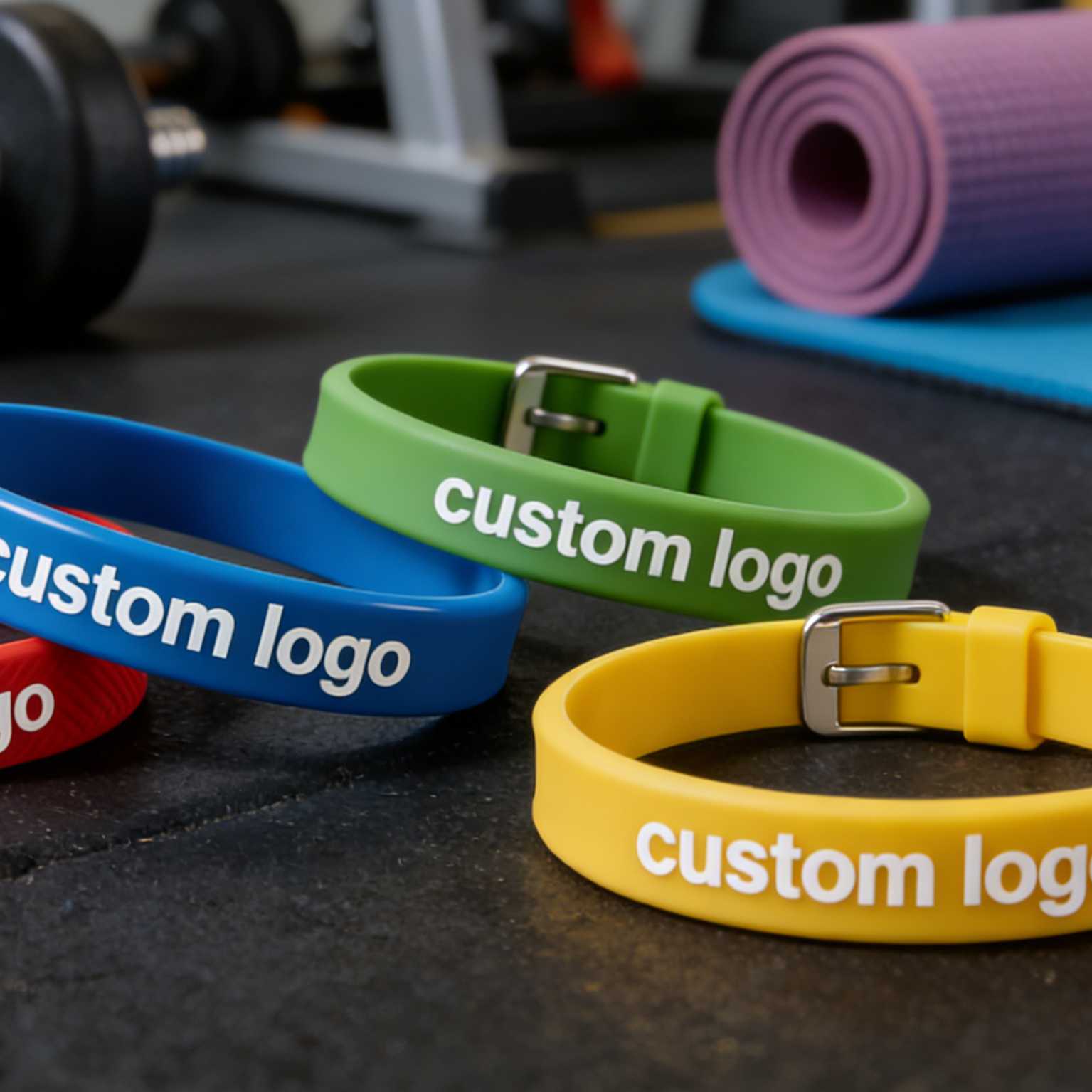
Debossed logos (text or graphics recessed into the band)
Embossed logos (raised text or graphics)
Segmented or swirl color designs
Blank wristbands with smooth edges
Multiple silicone colors can be placed into one mold to create layered or segmented designs.
Step 4: Painting and Ink Filling (Optional)
For enhanced visibility, wristbands may undergo additional decoration after molding.
Common Finishing Methods
Debossed ink-filled wristbands: paint is filled into recessed areas
Embossed printed wristbands: raised areas are surface-printed
Full-surface spray painting: used for printed-only designs
High-quality inks are selected to ensure long-lasting color adhesion, waterproof performance, and resistance to fading.
Step 5: Trimming and Finishing
After molding, excess silicone—such as thin flashing around the edges—is removed. This step is typically performed manually using precision cutters to ensure clean edges and a smooth finish.
Each wristband is then inspected for:
Color consistency
Logo clarity
Surface smoothness
Structural integrity
Step 6: Packaging and Shipping Options
Custom silicone wristbands can be packed in various formats depending on distribution needs:
Bulk packaging for events
Individual transparent poly bags
Printed opaque poly bags
Card insert packaging
Flat board display packaging
Professional packaging enhances brand presentation and improves the unboxing experience.
Why Custom Silicone Wristbands Are Powerful Marketing Tools
Despite their low production cost, silicone wristbands deliver exceptional marketing value:
Long-term brand exposure
High visibility through daily wear
Strong emotional connection to causes or messages
Ideal for fundraising, promotions, and awareness campaigns
A single wristband can generate significant word-of-mouth exposure and long-lasting brand recall at a fraction of the cost of traditional advertising.
FAQ: Custom Silicone Wristbands
1. What material is best for custom wristbands?
100% silicone rubber is the best option. It is latex-free, waterproof, durable, and safe for long-term skin contact.
2. What is the difference between debossed and embossed wristbands?
Debossed wristbands have recessed text or logos, while embossed wristbands feature raised designs. Both are permanent and durable.
3. Can custom silicone wristbands be color matched to a brand?
Yes. Professional manufacturers use the Pantone Matching System to ensure accurate brand color reproduction.
4. Are silicone wristbands waterproof and sweat-resistant?
Yes. Silicone wristbands are fully waterproof and suitable for sports, outdoor activities, and daily wear.
5. What is the typical lifespan of a silicone wristband?
High-quality silicone wristbands can last for years without cracking, fading, or losing elasticity.
6. Are silicone wristbands safe for sensitive skin?
Yes. Premium silicone wristbands are latex-free, non-toxic, and skin-friendly.