Japanese
  English
  French
  German
  Spanish
  Russian
  Polish
  Chinese
  Korean
内容
Choosing the right tableware material is an important decision for families, baby product brands, retailers, and food-service businesses. Plastic tableware has traditionally been popular because it is lightweight, inexpensive, and available in many designs. However, silicone tableware is becoming an increasingly attractive alternative for consumers who value durability, flexibility, temperature resistance, and a more comfortable user experience.
Silicone plates, bowls, cups, spoons, bibs, food containers, and kitchen utensils are now widely used in homes and commercial product collections. Their soft texture and practical performance make them especially suitable for baby feeding, toddler self-feeding, outdoor meals, and reusable kitchenware.
This comparison explains the main advantages of silicone tableware over conventional plastic tableware, as well as the limitations buyers should consider. Understanding these differences can help brands select the right material for safe, durable, and market-competitive products.
What Is Silicone Tableware?
Silicone tableware is manufactured from an elastomer primarily built around silicon and oxygen, with additional elements used to create its flexible structure. Although silicone is sometimes casually grouped with plastics, it is technically a different material category with different chemical and physical characteristics.
Common silicone tableware products include suction plates, divided feeding plates, bowls, training cups, spoons, placemats, bibs, lunch boxes, food storage containers, baking molds, and kitchen utensils. Depending on the formulation and intended application, silicone can be produced in different hardness levels, colors, levels of transparency, and surface finishes.
Plastic tableware, by comparison, can be made from several different polymers. Polypropylene, polyethylene, melamine, and other materials may each have different temperature limits, rigidity, durability, and food-contact properties. Therefore, any comparison should consider the specific silicone formulation and plastic type rather than treating every material as identical.
✓ Key distinction: Silicone is not conventional plastic. Its flexible elastomer structure gives it a different combination of softness, temperature resistance, durability, and product-design possibilities.
1. Silicone Tableware Is Softer and More Comfortable
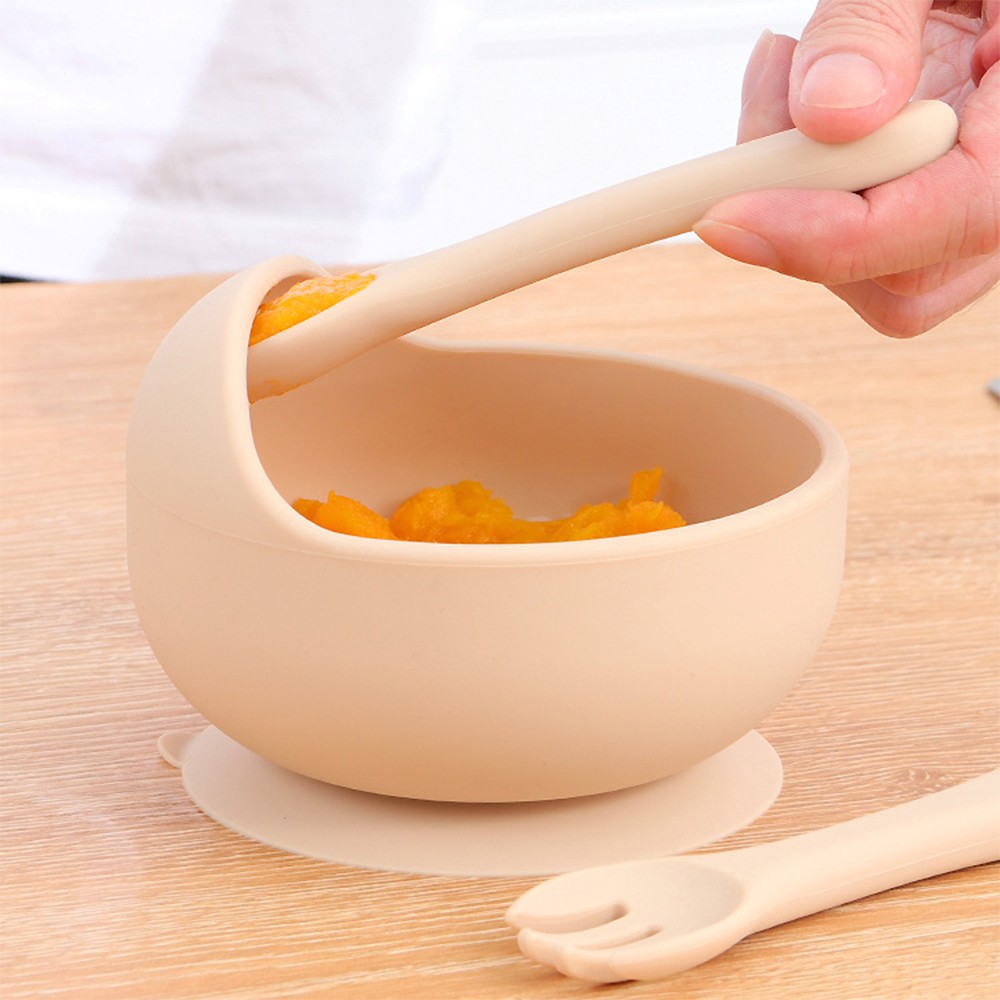
One of the most noticeable advantages of silicone tableware is its soft, flexible texture. Many plastic plates, bowls, and utensils are rigid. If a hard plastic spoon is pushed too far into a baby’s mouth, it may feel uncomfortable against sensitive gums. Silicone feeding spoons can provide a gentler contact surface for babies beginning solid foods.
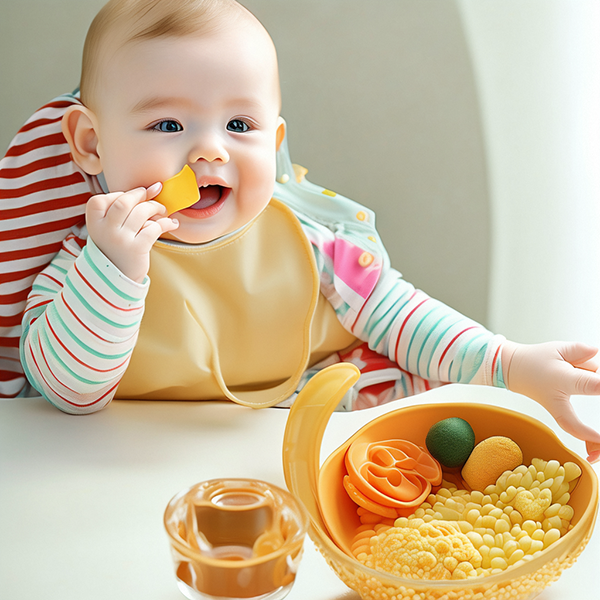
Soft edges can also make silicone products more comfortable for toddlers to hold. Silicone cups and bowls are less likely to have sharp-feeling corners, while flexible bibs can sit naturally against a child’s body. This combination of comfort and function is one reason silicone has become particularly popular in the baby feeding products industry.
Softness still needs to be carefully engineered. A spoon must remain firm enough to scoop food, a bib pocket needs sufficient structure to stay open, and a plate should not deform excessively when it is lifted. The best silicone tableware balances flexibility with appropriate support.
2. Silicone Is Less Likely to Crack When Dropped
Children frequently push, throw, or drop tableware. Some rigid plastic products may crack, chip, or develop stress marks after repeated impact, particularly as the material ages. Silicone can usually absorb impact more effectively because it bends rather than breaking.
This flexibility makes silicone tableware suitable for highchairs, family kitchens, picnics, travel, and outdoor dining. A silicone bowl dropped onto a hard floor is unlikely to create sharp broken fragments. Its resistance to everyday impact can also extend the useful life of the product.
💡 Practical benefit: Flexible silicone is particularly valuable for baby and toddler tableware because it can withstand the repeated drops that commonly happen during self-feeding.
3. Silicone Generally Offers Better Temperature Resistance
Quality silicone can generally perform across a broader temperature range than many common plastics. This makes it useful for products that may move between the freezer, microwave, dishwasher, or sterilizing process.
Certain plastic tableware may warp, soften, become brittle, or experience accelerated aging when repeatedly exposed to high temperatures. The exact performance depends on the polymer, product structure, manufacturing quality, and intended use. Consumers should never assume that every plastic or silicone item has the same temperature limit.
Temperature claims must be based on the complete finished product. A silicone container may include a plastic lid, adhesive, printed decoration, stainless steel component, or valve with a lower temperature limit. Usage instructions should clearly state which parts can be heated and whether accessories must be removed.
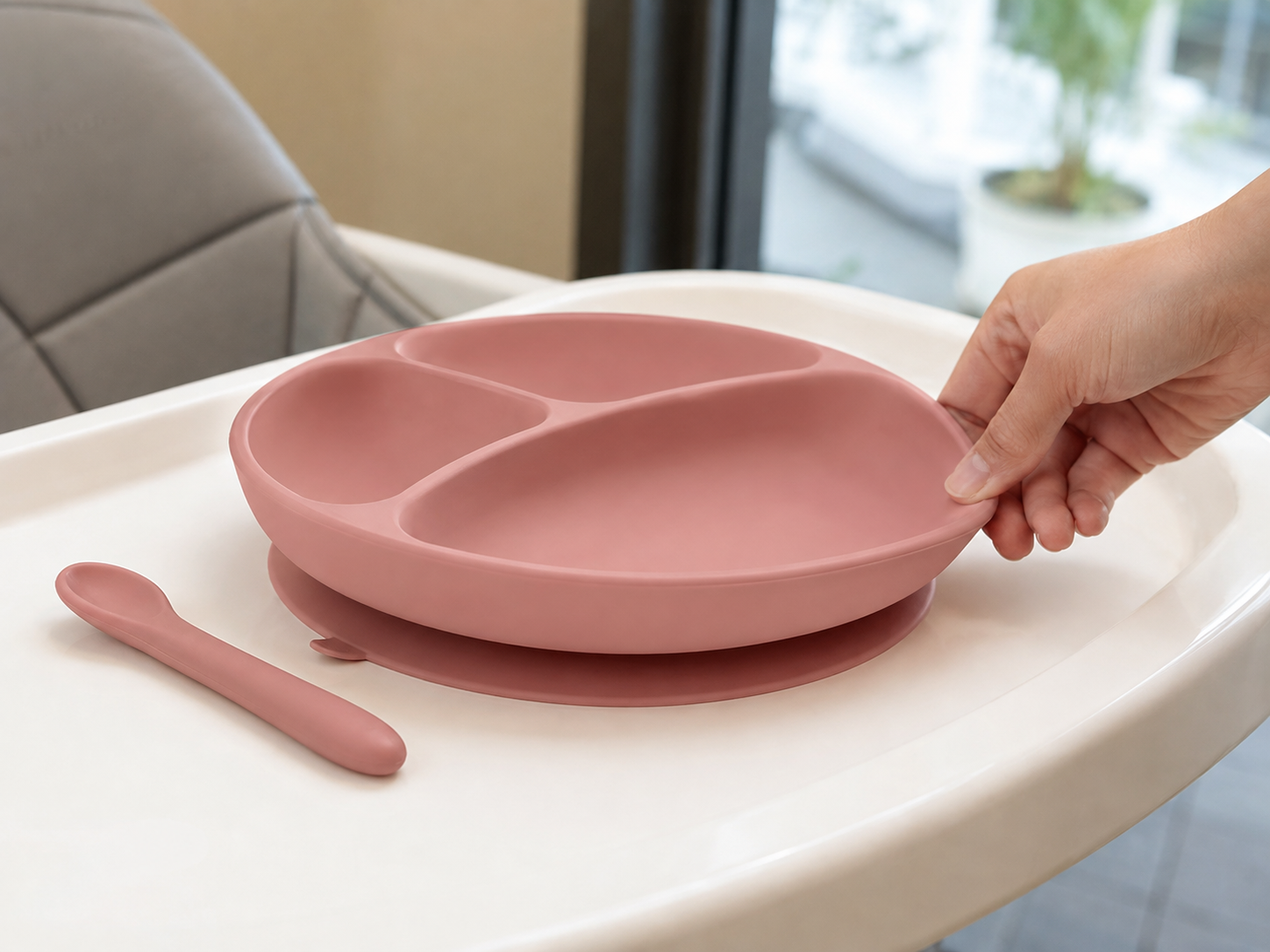
4. Silicone Is Ideal for Suction Tableware
Silicone’s flexibility makes it well suited to the integrated suction bases used on baby plates and bowls. When pressed onto a clean, smooth, flat, and nonporous surface, the flexible base can help create a seal that reduces sliding and accidental tipping.
Rigid plastic products can include separate suction components, but the design may require multiple materials or assembled parts. Silicone allows the suction base and tableware body to be molded as one continuous product in many designs, reducing the number of removable components.
Factors that influence suction performance:
● Diameter and depth of the suction base
● Thickness and flexibility of the sealing edge
● Silicone hardness and product weight
● Cleanliness and texture of the tabletop
● The amount of air removed from underneath the base
Suction performance is not identical on every surface. Glass, polished stone, and smooth highchair trays normally provide better conditions than textured wood, porous surfaces, or curved tables. Buyers developing silicone suction plates should agree on a test method and acceptance standard before mass production.
5. Silicone Provides Better Grip and Anti-Slip Performance
The natural surface grip of silicone can help tableware remain more stable during use. Even a product without a full suction base may slide less than smooth, rigid plastic tableware. Handles made from silicone can also feel more secure in small hands.
This characteristic is valuable for children learning to eat independently, adults with limited hand strength, and outdoor dining environments. Better grip does not eliminate spills, but it can make products easier and more comfortable to control.
6. Silicone Can Offer a Longer Service Life
High-quality silicone can tolerate repeated bending, compression, washing, and everyday impact without becoming brittle quickly. Some plastic products may lose transparency, develop scratches, crack around thin sections, or become brittle after prolonged use and heat exposure.
A longer service life can reduce the frequency of replacement. Although silicone tableware may have a higher initial purchase price than basic plastic products, its durability can provide greater value over time.
Silicone is not indestructible. Sharp knives, excessive stretching, aggressive chemicals, unsuitable temperatures, and severe abrasion can still damage the material. Users should inspect products regularly and replace items that show cuts, tears, loose parts, or significant deterioration.
7. Silicone Is Not a Source of Conventional Microplastics
Silicone is not a conventional plastic polymer, so it does not generate microplastics in the same way as ordinary plastic tableware under normal use conditions. This distinction has become increasingly relevant as consumers pay more attention to material durability and plastic particle pollution.
However, brands should avoid making an absolute claim that silicone can never release any particles. All materials can experience surface wear if they are cut, scraped, damaged, or exposed to unsuitable conditions. Silicone wear particles are not generally categorized as conventional microplastics, but responsible marketing should still avoid overstating environmental or health benefits.
✓ Recommended wording: “Silicone is not plastic and does not generate conventional microplastics like ordinary plastic tableware under normal use conditions.”
8. Silicone Can Support Reusable Product Design
Durable silicone tableware can be washed and reused many times. Products such as reusable snack bags, collapsible containers, lunch boxes, drinking cups, and food storage covers may help consumers reduce their dependence on disposable tableware and single-use packaging.
The environmental value of any product depends on how it is manufactured, transported, used, and eventually handled at the end of its life. Silicone should not automatically be described as completely sustainable simply because it is reusable. Nevertheless, a well-made silicone product that remains in service for a long time may reduce the need for frequent replacement.
Brands can strengthen this advantage by creating timeless colors, replacement components, efficient packaging, and clear care instructions that encourage consumers to keep products in use longer.
9. Silicone Offers Flexible Product Design Options
Silicone can be molded into rounded shapes, deep compartments, flexible hinges, collapsible walls, animal forms, textured handles, and integrated suction bases. This gives product designers considerable freedom when developing functional tableware for babies, children, families, and outdoor users.
A silicone baby plate can include several food compartments, raised edges for easier scooping, a wide suction base, and rounded corners in a single coordinated structure. Silicone spoons can combine a soft feeding tip with a firmer internal core. Bibs can include adjustable neck closures and an integrated food-catching pocket.
Plastic also offers broad molding possibilities, but rigid plastic designs may need separate soft components to achieve similar grip, flexibility, or suction functions. This can increase the number of materials and assembly stages in the final product.
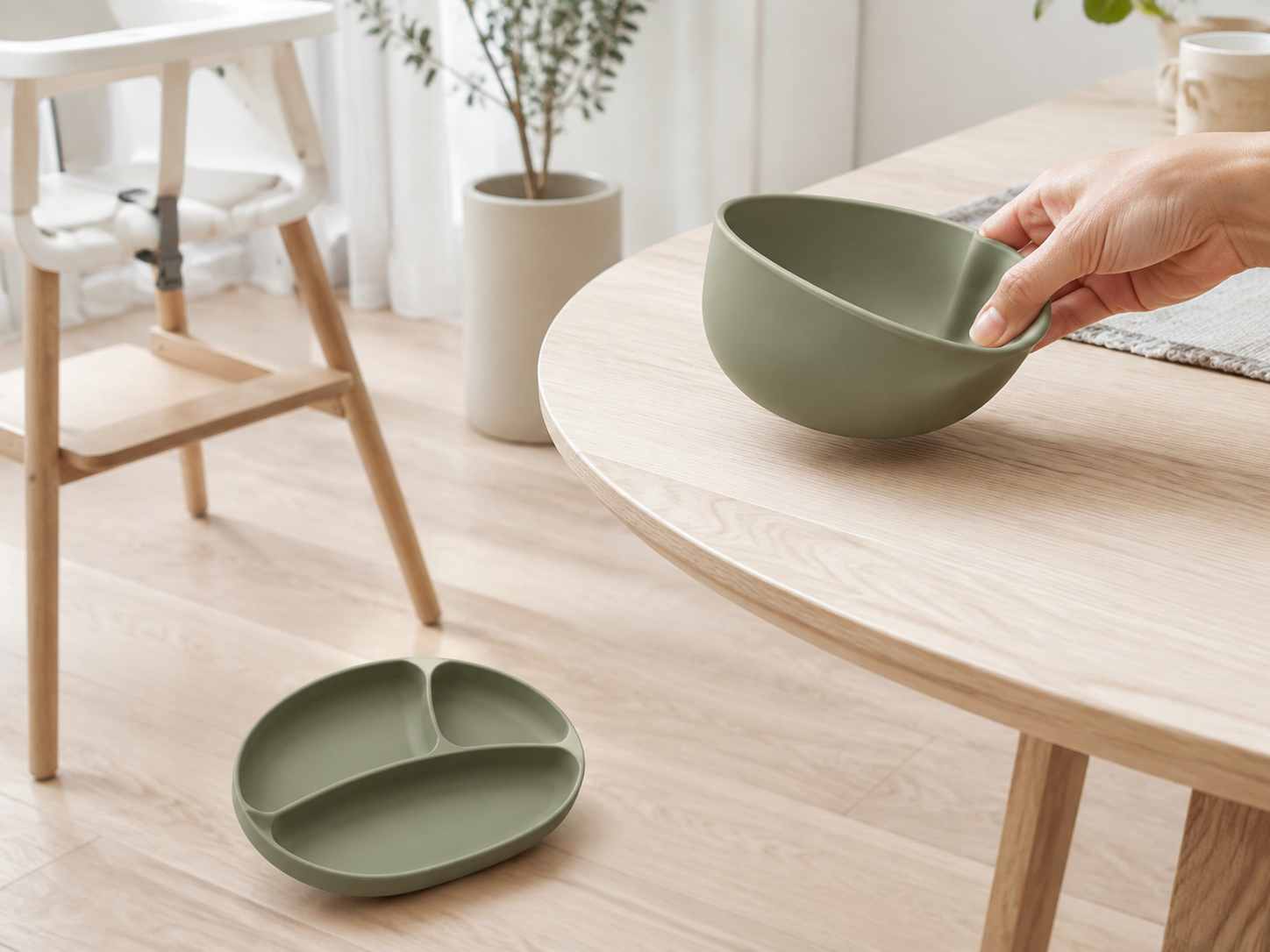
10. Silicone Creates a Premium Look and Feel
Silicone tableware is often associated with modern, premium product collections. Matte surfaces, muted colors, translucent effects, marbled patterns, and multicolor designs can help brands build a distinctive visual identity.
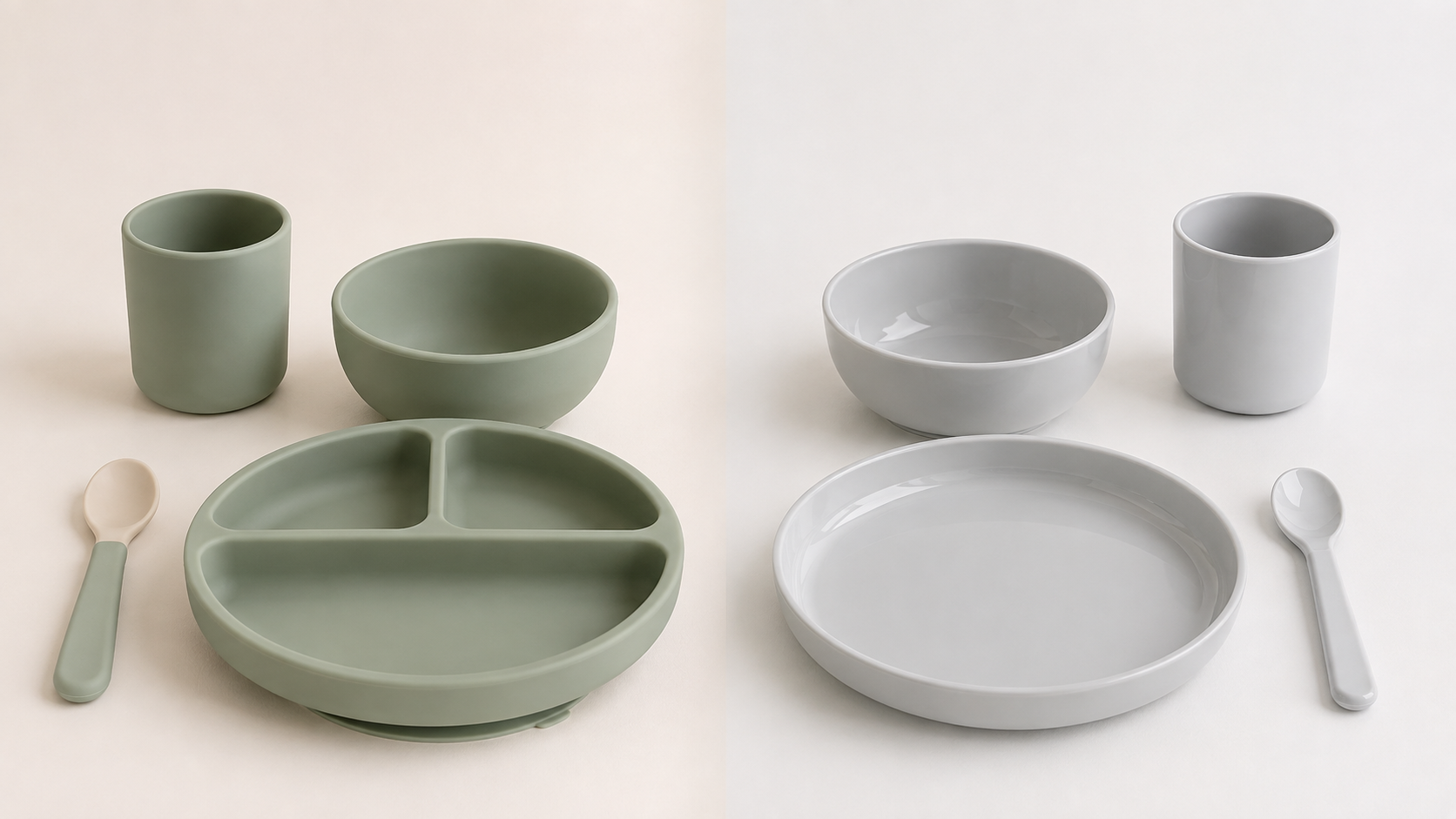
Pastel colors such as sage green, oatmeal beige, dusty rose, and muted blue are especially popular in contemporary baby feeding collections. The soft-touch finish can also provide a more substantial and comfortable impression than lightweight plastic.
Color matching requires realistic expectations. The same Pantone reference may look different on silicone, plastic, stainless steel, paper packaging, and fabric accessories. Material thickness and surface finish can also affect color appearance.
11. Silicone Can Be Quieter During Mealtimes
Rigid plastic tableware may create noticeable noise when it is dropped, tapped with utensils, or moved across a hard table. Soft silicone generally creates less impact noise and does not produce the same sharp sound against stone, glass, or wooden surfaces.
This is a small but valuable user-experience benefit for families with young children. Quieter tableware can make feeding environments feel calmer, particularly when a child is learning to use utensils independently.
12. Silicone Is Suitable for Foldable and Space-Saving Products
Silicone’s flexibility enables products to be folded or collapsed for travel and storage. Collapsible lunch boxes, bowls, cups, water bottles, and food containers can occupy less space when they are not in use.
Rigid plastic products may offer stackable designs, but they cannot normally provide the same flexible folding structure without mechanical hinges or additional components. Properly engineered silicone folding lines can support repeated use while keeping the product lightweight and portable.
Are There Any Disadvantages to Silicone Tableware?
A balanced silicone versus plastic tableware comparison should also consider silicone’s limitations. Silicone products may cost more initially because of material costs, curing time, molding cycles, manual processing, and quality-control requirements.
Silicone surfaces may attract dust or lint, particularly when the product has a soft matte finish. Light-colored tableware may absorb visible color from tomato sauce, curry, carrots, berries, or other strongly pigmented foods. Silicone can also retain oils and fragrances from heavily scented dishwashing products.
Extremely flexible products may feel less stable if the hardness and wall thickness are not properly designed. A plate that is too soft can bend when filled with food, while a bib pocket may collapse instead of remaining open.
✦ Care advice: Use a mild, low-fragrance detergent, rinse thoroughly, remove strongly colored foods promptly, and allow silicone tableware to dry completely before storage.
Silicone vs. Plastic Tableware: Quick Comparison
| 特徴 | Silicone Tableware | Plastic Tableware |
|---|---|---|
| Texture | Soft and flexible | Usually rigid or semi-rigid |
| Drop resistance | Bends and absorbs impact | May crack depending on material |
| Temperature performance | Generally suitable for a broad range | Varies significantly by plastic type |
| Suction design | Well suited to integrated suction bases | Often requires a separate soft component |
| Microplastics | Not a conventional plastic material | Can generate plastic wear particles |
| Initial cost | Usually higher | Often lower |
What Should B2B Buyers Check Before Ordering?
Food-contact suitability should never be determined by appearance alone. “Food-grade silicone” is a general material description rather than one universal global certification. Testing requirements can vary according to the destination market, product type, food-contact conditions, and intended temperature.
① Confirm the material: Define the silicone formulation, curing system, hardness, color, and intended application.
② Define performance: Agree on dimensions, capacity, suction method, temperature claims, and cleaning conditions.
③ Review finished-product testing: Testing should reflect the target market and the complete product, including colorants and accessories.
④ Approve physical samples: Use a confirmed pre-production sample as the quality reference for mass production.
⑤ Inspect packaging: Ensure that extended packing and transportation will not deform suction edges, bib pockets, or thin components.
For custom silicone tableware, an experienced OEM and ODM manufacturer can support material selection, structural engineering, mold development, prototyping, color matching, logo customization, packaging, testing coordination, and mass-production quality control.
結論
Silicone tableware offers several advantages over conventional plastic tableware. It is soft, flexible, drop-resistant, easy to grip, suitable for suction designs, and generally capable of handling a broader range of temperatures. Its durability and reusable nature also make it attractive to consumers looking for long-lasting alternatives to disposable or frequently replaced products.
Silicone is not conventional plastic and does not generate microplastics in the same way as ordinary plastic tableware under normal use conditions. However, responsible brands should avoid absolute claims and should always provide accurate care instructions.
The final product’s quality depends on much more than the material name. Silicone formulation, hardness, product structure, molding accuracy, curing, post-processing, colorants, finished-product testing, packaging, and quality control all affect safety and performance. For brands and wholesale buyers, clearly documented specifications and a reliable manufacturing partner are essential for developing successful silicone tableware.
Frequently Asked Questions
Is silicone tableware safer than plastic tableware?
Both materials can be suitable for food contact when correctly formulated, manufactured, tested, and used. Silicone offers practical benefits such as softness, flexibility, impact resistance, and broad temperature performance. Buyers should evaluate finished-product compliance rather than relying only on a material name.
Does silicone tableware contain microplastics?
Silicone is not a conventional plastic and does not produce microplastics in the same way as ordinary plastic tableware under normal use conditions. However, damaged or heavily abraded silicone can still release silicone wear particles, so scratched or torn products should be replaced.
Can silicone tableware be used in a microwave or dishwasher?
Many silicone tableware products are designed for microwave and dishwasher use, but suitability depends on the complete product. Always follow the manufacturer’s stated temperature range and remove any lid, accessory, or component that is not approved for heating.
Why does silicone sometimes retain food or detergent odors?
Silicone can retain oils and fragrances from strongly scented cleaning products. Mild detergent, thorough rinsing, and complete air-drying can help. Product formulation, post-curing, storage, and packaging can also influence odor.
Is silicone tableware suitable for OEM and private-label projects?
Yes. Silicone tableware can be customized in shape, hardness, color, surface texture, logo, packaging, and functional structure. OEM buyers should confirm compliance requirements, performance standards, approved samples, and quality tolerances before mass production.