How are lick mats good for dogs

Silicone Dog Lick Mats for Mental Stimulation and Slow Feeding

Silicone dog lick mats have become a fast-growing category in the global pet products market. Designed to encourage natural licking behavior, lick mats help dogs slow down feeding, reduce anxiety, and stay mentally engaged.

Compared with traditional feeding bowls or toys, silicone lick mats offer better hygiene, durability, and design flexibility, making them an ideal choice for modern pet brands and retailers.


What Is a Dog Lick Mat?

A dog lick mat is a flat or slightly raised feeding accessory made from food-grade silicone. Its surface features grooves, ridges, or maze-style textures that hold soft foods and treats.

Instead of gulping food quickly, dogs must lick gradually to access the food, which promotes calm behavior and prolonged engagement.


Why Are Lick Mats Popular in Pet Care?

Lick mats are widely used by dog owners, trainers, and veterinarians because they support both mental wellness and physical health.

Stress and Anxiety Reduction

Repetitive licking stimulates endorphin release in dogs, creating a calming effect. Lick mats are often used during:

  • Grooming sessions

  • Nail trimming

  • Vet visits

  • Bath time

  • Separation anxiety scenarios

Mental Enrichment

Licking challenges dogs to focus and problem-solve, helping reduce boredom and destructive behavior, especially for indoor or high-energy dogs.


Key Benefits of Silicone Lick Mats

Slow Feeding Support

Lick mats naturally slow down eating speed, helping prevent:

  • Choking

  • Bloating

  • Indigestion

  • Overeating

This makes them suitable for dogs that eat too fast or need portion control.

Oral and Dental Health

The textured surface gently massages gums and helps reduce plaque buildup. Increased saliva production supports:

  • Healthier gums

  • Cleaner teeth

  • Improved digestion

Digestive Support

Licking increases salivation, which aids food breakdown and smoother swallowing, supporting overall gastrointestinal health.

Long-Lasting Entertainment

Lick mats keep dogs occupied longer than traditional treats, making them ideal for mental stimulation and daily enrichment routines.
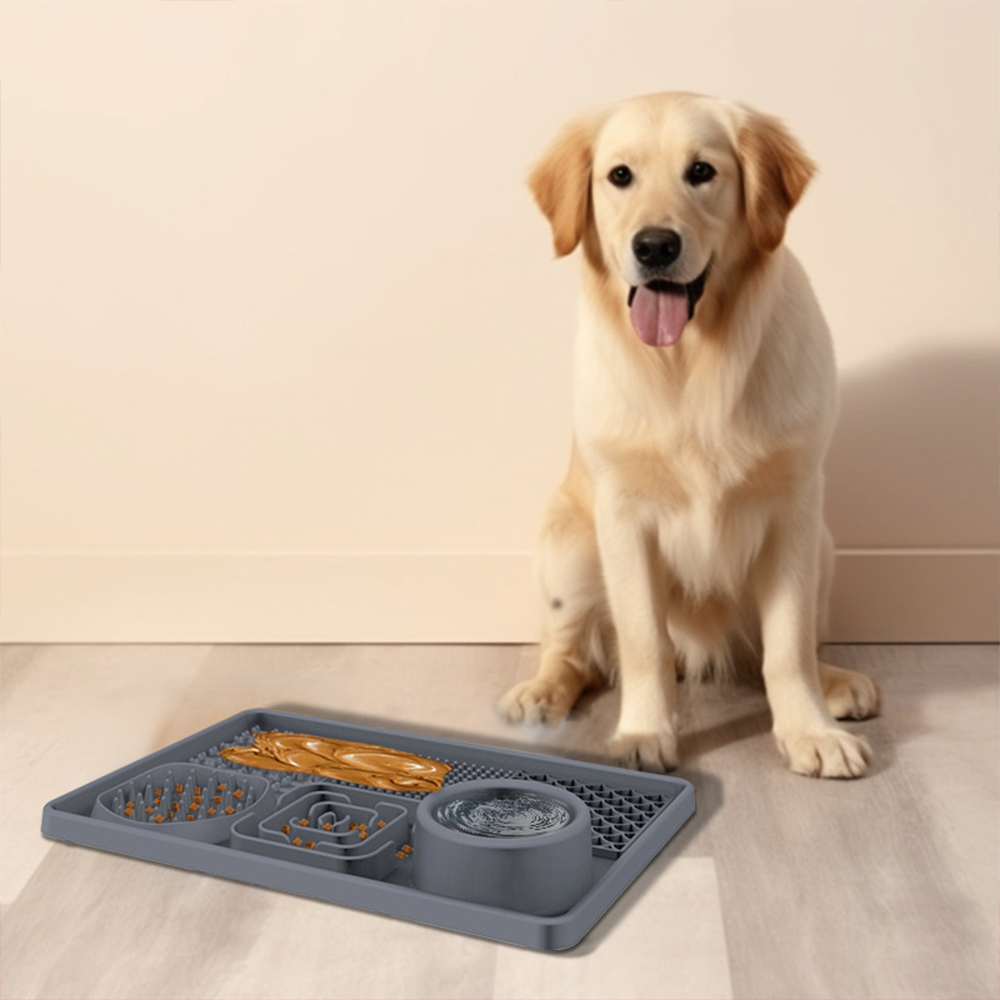
Silicone Lick Mat (4)


Why Silicone Is the Preferred Material for Lick Mats

High-quality silicone offers clear advantages over rubber or plastic alternatives:

  • Food-grade and non-toxic

  • BPA-free and odorless

  • Non-porous and easy to clean

  • Dishwasher and freezer safe

  • Flexible yet tear-resistant

  • Safe for repeated daily use

These properties make silicone lick mats suitable for both home use and professional pet environments.


Common Silicone Lick Mat Designs

Pet brands typically offer a variety of textures and structures to suit different dog sizes and feeding styles:

  • Maze patterns for longer licking time

  • Raised ridges for dental stimulation

  • High-wall designs for wet or liquid foods

  • Suction-base lick mats for bath or grooming use

Texture depth and layout can be customized to match different difficulty levels.


Popular Foods for Silicone Lick Mats

Lick mats are designed for soft, spreadable foods, such as:

  • Xylitol-free peanut butter or almond butter

  • Cream cheese (in moderation)

  • Mashed banana

  • Cooked sweet potato

  • Yogurt or pumpkin puree

  • Wet dog food

Freezing the mat after filling can extend licking time and provide additional enrichment.


How to Choose the Right Lick Mat for Your Brand

When sourcing silicone lick mats, pet brands should consider:

  • Material safety: Food-grade silicone only

  • Texture design: Suitable for different dog sizes

  • Thickness and durability: Tear-resistant construction

  • Cleaning method: Dishwasher compatibility

  • Use scenario: Feeding, grooming, or anxiety relief

Different patterns and depths can be tailored to target puppies, adult dogs, or senior pets.


OEM / ODM Custom Silicone Lick Mat Manufacturing

As a professional silicone manufacturer, we provide OEM and ODM services for custom pet lick mats.

Customization options include:

  • Custom shape, size, and thickness

  • Unique texture or maze pattern design

  • Pantone color matching

  • Logo molding or embossing

  • Custom packaging for retail or e-commerce

From concept development and prototyping to mold making and mass production, we support pet brands with scalable, factory-direct manufacturing solutions.


What is a dog lick mat used for?

A dog lick mat is used to slow feeding, reduce anxiety, and provide mental stimulation by encouraging natural licking behavior.

Are silicone lick mats safe for dogs?

Yes. Food-grade silicone lick mats are non-toxic, BPA-free, and safe for repeated daily use.

Do lick mats help with anxiety?

Yes. Licking releases calming hormones in dogs, helping reduce stress during grooming, vet visits, or alone time.

Can lick mats be customized for private label brands?

Yes. Silicone lick mats can be customized in size, pattern, color, logo, and packaging through OEM and ODM manufacturing.
관련 게시물

CNC Mold
Waterproof Bibs For Baby
Silicone Trend Products
Introduction to Silicone Manufacturing Silicone manufacturing is a specialized industry that requires a deep understanding of material science, chemical engineering, and environmental management. As a leading silicone factory, we pride ourselves on our ability to create custom silicone products tailored to the unique needs of our wholesale clients. This article delves into the manufacturing process, health and safety considerations, and the management strategies that ensure the highest standards of quality and compliance. 1. The Manufacturing Process of Silicone 1.1 Overview of the Manufacturing Process The silicone manufacturing process involves the transformation of raw silicone materials into finished products through curing and vulcanization. Curing refers to the process where silicone compounds harden through the addition of heat or moisture, while vulcanization involves the use of catalysts to speed up the hardening process. Over the years, we have perfected these processes to ensure the production of durable and high-quality silicone products. Curing with Peroxides During the vulcanization process employing peroxides, peroxides are incorporated into the silicone compound, which triggers a reaction leading to material solidification. This approach is renowned for its dependability and its capability to attain broad hardness levels in the end products. It is applicable for general silicone rubber goods, like those used in wires and cables, and also for oil-resistant and solvent-resistant silicone rubbers. Vulcanization with Platinum Catalysts On the other hand, vulcanization using a platinum catalyst is a more specialized process that allows for exceptional control of the reaction and produces items with superior purity and performance. This method is particularly suited for manufacturing custom silicone products that require high precision and consistency. It is ideal for products where environmental protection and hygiene conditions are of higher concern, such as food-grade silicone products and medical devices. 1.2 Chemical Composition and Volatile Emissions The chemical composition of silicone materials includes base polymers, fillers, and additives. Additives play a crucial role in enhancing the properties of silicone products, such as flexibility, heat resistance, and UV stability. Curing agents and catalysts are essential for initiating and controlling the polymerization reactions that lead to the formation of the silicone product. 1.3 Common Volatiles in Silicone Manufacturing During the manufacturing process, various volatile organic compounds (VOCs) can be emitted, including methyl siloxanes and other siloxane oligomers. These emissions can have environmental and health implications, which is why our silicone factory has implemented stringent measures to minimize their release. 2. Health, Safety, and Environmental Impact 2.1 Health and Safety Risks in the Manufacturing Environment The health and safety of our workers is paramount. In the silicone manufacturing environment, exposure to uncured silicone, catalysts, and other chemicals can pose risks. Therefore, we have established safety measures and protocols that include the use of personal protective equipment (PPE) and regular health check-ups for our employees. 2.2 Impact of Volatiles on the Environment The release of volatiles into the environment can contribute to air pollution and have long-term effects on ecosystems. As a responsible silicone factory, we are committed to reducing our environmental footprint by adopting advanced technologies that minimize VOC emissions and by recycling waste materials whenever possible. 2.3 Regulatory Compliance and Standards Adherence to regulations is a cornerstone of our operations. Both national and international standards, such as those set by the European Union's REACH regulations and the United States' EPA guidelines, dictate the allowable levels of VOC emissions and the safety measures that must be in place. Our silicone factory is fully compliant with these standards, ensuring that our operations are both safe and environmentally responsible. 3. Management Strategies 3.1 Implementing Safety Measures and Protocols To safeguard our workers and the environment, we have implemented a range of safety measures and protocols. These include the use of closed-loop systems to capture and treat emissions, regular equipment maintenance to prevent leaks, and comprehensive training programs for our staff. 3.2 Advancements in Process and Material Technology Innovation is at the heart of our silicone manufacturing process. We continuously invest in research and development to improve our manufacturing processes and material technologies. This includes exploring new catalysts that reduce VOC emissions and developing silicone compounds with enhanced properties for applications like silicone lunch boxes and water bottles. 3.3 Regulatory Compliance and Environmental Management Our commitment to regulatory compliance extends beyond mere adherence to standards. We actively engage with regulatory bodies to ensure that our practices are not only compliant but also contribute to the development of more stringent environmental protections. Our environmental management system is certified to ISO 14001, demonstrating our dedication to sustainable practices. 4. Conclusion Silicone manufacturing is a complex process that requires a delicate balance between product quality, worker safety, and environmental responsibility. As a silicone factory specializing in custom silicone products, we are committed to maintaining the highest standards across all aspects of our operations. By investing in advanced technologies, adhering to strict safety protocols, and prioritizing environmental stewardship, we ensure that our silicone products meet the needs of our wholesale clients while also protecting the health of our workers and the planet.
맨 위로 스크롤

문의하기