Korean
  English
  French
  German
  Spanish
  Russian
  Polish
  Chinese
  Japanese
콘텐츠
Silicone Mats: Applications, Advantages, and Manufacturing Guide
Silicone mats have become an essential solution across household, medical, industrial, and commercial applications. Known for their excellent temperature resistance, durability, and environmental safety, silicone mats are widely used in kitchens, baking, beauty, personal care, electronics, medical equipment, and industrial machinery.
If you are planning to build your own silicone mat brand or source custom silicone mats for your business, understanding their material advantages, application scenarios, and production process is critical.
What Is a Silicone Mat?
A silicone mat is typically manufactured from 100% food-grade silicone rubber or fiberglass-reinforced silicone. These materials provide high elasticity, strong compression resistance, and outstanding thermal stability.
Key material characteristics include:
Temperature resistance from -40°C to 230°C (up to 280°C for fiberglass-reinforced silicone)
BPA-free, non-toxic, odorless
Chemically stable and insoluble in water
Oven safe, freezer safe, and dishwasher safe
Recyclable and environmentally friendly
Common Applications of Silicone Mats
1. Household and Kitchen Use
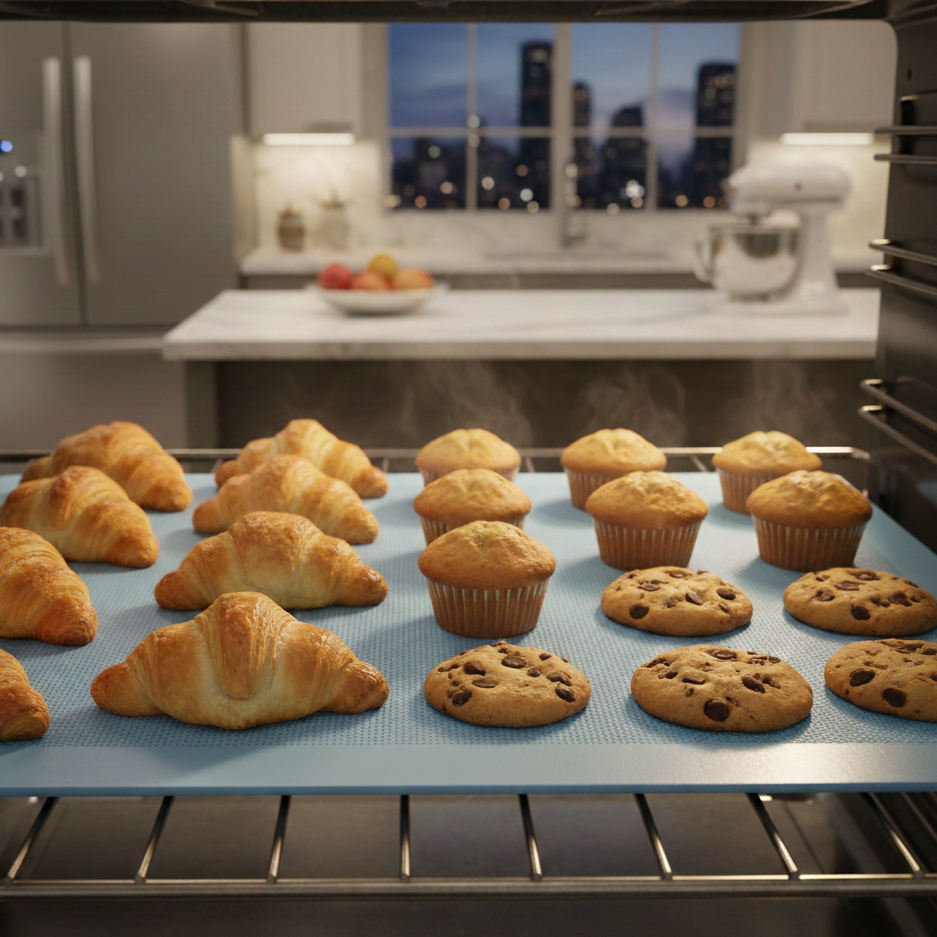
Fiberglass-reinforced silicone mats are widely used in high-temperature baking and cooking environments. Typical products include:
Silicone baking mats
Pastry rolling mats
Heat-resistant trivets
Cooling and freezing mats
Reusable oven liners


These mats provide a non-stick surface, prevent food from sticking, reduce the need for disposable parchment paper, and simplify cleaning.
Standard food-grade silicone mats are commonly used as:
Silicone placemats
Craft and resin mats
Kitchen countertop protectors
Waterproof and anti-slip table mats
They protect surfaces from spills, heat, scratches, and stains while offering a soft, non-slip grip.

2. Medical Applications
Medical-grade silicone mats are designed for safety, hygiene, and durability:
Cushioning and vibration reduction for medical equipment
Instrument tray mats for sterilization and storage
Protective mats for operating tables and surgical beds
These mats help improve operational accuracy, patient comfort, and equipment lifespan.
3. Industrial and Mechanical Use
In industrial environments, silicone mats are often used as:
Anti-vibration pads
Noise-reduction mats
Shock-absorbing machine bases
They reduce mechanical vibration, minimize noise, protect equipment components, and extend service life.
4. Electronics and Other Industries
Silicone mats are also used in:
Electronic insulation and anti-static protection
Automotive accessories
Sports and fitness equipment
Furniture protection
Their shock absorption, insulation properties, and flexibility make them suitable for multiple technical fields.
Advantages of Silicone Mats
Environmental Safety
Silicone mats are made from food-grade, eco-friendly materials derived from silica. They are non-toxic, tasteless, and safe for direct food contact.
High Durability
Silicone mats resist deformation, cracking, and wear even after long-term use in extreme temperatures.
Thermal Stability
With excellent heat and cold resistance, silicone mats maintain performance in ovens, freezers, and industrial heat environments.
Flexibility and Cushioning
Their elastic structure provides reliable shock absorption and surface protection.
Easy Maintenance
Silicone mats are non-stick and oil-resistant, allowing quick cleaning by hand or in a dishwasher.
Design Versatility
Available in multiple shapes, colors, textures, and printed patterns, silicone mats can be customized to match brand identity.
Recyclability
Silicone materials are recyclable and require no tree harvesting, making them a sustainable alternative to disposable materials.
Silicone Mat Manufacturing Overview
Silicone mats are typically produced using:
Compression molding
Liquid silicone rubber (LSR) injection molding
Calendaring and lamination (for fiberglass-reinforced mats)
The process includes material selection, color matching, molding, curing, trimming, quality inspection, and optional logo or pattern customization.
Custom options may include:
Size and thickness adjustment
Pantone color matching
Surface textures and printing
Logo integration via molding or printing
Custom packaging for retail or wholesale
FAQ – Silicone Mats
Are silicone mats safe for food contact?
Yes. Food-grade silicone mats comply with FDA and LFGB standards and are safe for direct food contact.
Can silicone mats be used in ovens?
Yes. Standard silicone mats are oven safe up to 230°C, while fiberglass-reinforced mats can withstand temperatures up to 280°C.
Are silicone mats dishwasher safe?
Yes. Most silicone mats can be safely cleaned in dishwashers without losing performance.
Do silicone mats absorb odors?
No. Silicone is odorless and does not absorb smells or stains.
Can silicone mats be customized?
Yes. Size, color, thickness, logo, surface texture, and packaging can all be customized for OEM or private-label brands.