Russian
  English
  French
  German
  Spanish
  Polish
  Chinese
  Japanese
  Korean
Содержание
As global consumers become more concerned about product safety, FDA and LFGB certifications have become critical standards for silicone products used in food contact, baby care, kitchenware, and medical-related applications. Whether you are sourcing silicone baby bibs, silicone baking mats, silicone water bottles, or silicone kitchen utensils, compliance with international safety regulations is no longer optional.
For importers, wholesalers, Amazon sellers, and private-label brands, understanding how silicone factories ensure FDA and LFGB compliance is essential for reducing supply chain risks and protecting brand reputation.
This guide explains how professional silicone product manufacturers maintain food-grade safety standards through raw material control, production management, testing procedures, and quality assurance systems.
What Are FDA and LFGB Standards?
Before understanding the manufacturing process, it is important to understand the meaning of these certifications.
FDA Certification for Silicone Products
FDA compliance refers to food-contact safety standards regulated by the U.S. Food and Drug Administration.
FDA-approved silicone products must meet strict requirements related to:
- Non-toxicity
- BPA-free materials
- Heavy metal limits
- Chemical migration testing
- Food-contact safety
FDA silicone products are commonly sold in:
- The United States
- Canada
- South America
- Global eCommerce platforms
LFGB Certification for Silicone Products
LFGB is Germany’s food safety standard and is widely recognized as one of the strictest testing systems for food-contact products in Europe.
Compared with FDA standards, LFGB testing often has:
- Lower odor tolerance
- Stricter migration limits
- More demanding taste testing
- Higher purity requirements
Many European retailers and premium kitchenware brands require LFGB-certified silicone products.
Why FDA and LFGB Compliance Matter
Global buyers are becoming more selective when choosing silicone product suppliers.
Products that fail safety testing can lead to:
- Customs delays
- Product recalls
- Amazon listing suspension
- Retail rejection
- Brand reputation damage
FDA and LFGB compliance help buyers:
- Build consumer trust
- Enter international markets
- Reduce legal risks
- Improve product competitiveness
For baby products and kitchenware, certifications are especially important because products come into direct contact with food or sensitive users.
Step 1: Using High-Quality Food-Grade Silicone Raw Materials
The foundation of FDA and LFGB compliance begins with raw materials.
Professional silicone factories only use certified food-grade silicone sourced from qualified suppliers.
Food-Grade Silicone vs Low-Quality Silicone
High-quality food-grade silicone typically offers:
- No BPA
- No phthalates
- No toxic fillers
- Low odor
- High thermal stability
- Better durability
Low-cost silicone materials may contain:
- Industrial fillers
- Excessive volatile compounds
- Chemical impurities
- Recycled silicone waste
These materials often fail FDA or LFGB testing.
Platinum-Cured Silicone
Many premium silicone products use platinum-cured silicone instead of peroxide-cured silicone.
Platinum silicone offers:
- Lower odor
- Better transparency
- Higher purity
- Improved food safety
- Better long-term stability
This material is commonly used for:
- Silicone baby products
- Silicone kitchen utensils
- Medical-grade silicone products
Step 2: Strict Material Inspection Before Production
Professional silicone factories conduct incoming material inspections before manufacturing begins.
Testing may include:
- Material hardness testing
- Tensile strength analysis
- Odor inspection
- Color consistency checks
- Chemical composition verification
Factories also maintain material traceability systems to track every production batch.
This is essential for export compliance and quality management.
Step 3: Controlled Silicone Manufacturing Processes
The production process directly affects product safety and certification performance.
Compression Molding
Compression molding is widely used for:
- Silicone baking mats
- Silicone kitchenware
- Silicone lids
- Silicone baby feeding products
During production, temperature and pressure must be carefully controlled to avoid incomplete curing.
Liquid Silicone Rubber (LSR) Injection Molding
LSR injection molding is commonly used for:
- Baby nipples
- Medical silicone products
- Precision silicone components
LSR offers:
- Better consistency
- Reduced contamination risk
- Higher precision
- Automated production
This process helps improve compliance stability.
Step 4: Secondary Vulcanization for Odor and Chemical Removal
One of the most important steps in FDA and LFGB compliance is secondary vulcanization.
What Is Secondary Vulcanization?
Secondary vulcanization is a high-temperature baking process that removes:
- Residual catalysts
- Volatile organic compounds
- Odors
- Low-molecular substances
Without this process, silicone products may produce strong smells or fail migration testing.
Typical Secondary Vulcanization Conditions
Professional factories usually bake silicone products for:
- 2–6 hours
- At temperatures between 180°C–220°C
This process significantly improves:
- Product safety
- Odor control
- Heat resistance
- Certification performance
Step 5: Clean Manufacturing Environments
Factories producing FDA or LFGB silicone products must maintain clean production environments.
Contamination risks include:
- Dust
- Oil residue
- Chemical exposure
- Foreign particles
Professional manufacturers implement:
- Clean workshops
- Dust-control systems
- Dedicated food-grade production lines
- Worker hygiene management
These practices reduce contamination during manufacturing.
Step 6: Product Testing and Laboratory Verification
Before shipment, silicone products must undergo comprehensive testing.
Common FDA and LFGB Tests
Testing usually includes:
- Overall migration testing
- Heavy metal testing
- Odor testing
- Taste testing
- Heat resistance testing
- BPA testing
- Phthalate testing
Testing is often conducted through third-party laboratories such as:
- SGS
- TÜV
- Intertek
- Bureau Veritas
Migration Testing
Migration testing measures whether chemicals transfer from silicone into food during use.
Products are tested under high temperatures and food-simulation conditions.
Low-quality silicone often fails this stage.
Step 7: Quality Control During Mass Production
Certification alone is not enough.
Professional silicone factories maintain ongoing quality control throughout production.
In-Process Quality Checks
QC teams inspect:
- Product dimensions
- Flash trimming
- Surface defects
- Color consistency
- Logo printing quality
- Structural integrity
Final Product Inspection
Before packaging, products are inspected again to ensure compliance with customer specifications.
This helps reduce defective shipment risks.
Common Silicone Products Requiring FDA and LFGB Compliance
Many silicone products require food-grade safety certifications.
Silicone Baby Products
Including:
- Silicone teethers
- Baby bibs
- Feeding bowls
- Pacifier clips
Silicone Kitchenware
Including:
- Baking mats
- Spatulas
- Ice trays
- Lunch boxes
- Cooking utensils
Silicone Water Bottles
Especially foldable silicone water bottles used for sports, travel, and promotional gifts.
Silicone Food Storage Products
Reusable silicone storage bags and containers are increasingly popular in eco-friendly markets.
How Buyers Can Verify FDA and LFGB Compliance
Many buyers mistakenly assume all silicone products are food-grade.
Before purchasing, buyers should request:
- FDA test reports
- LFGB test reports
- Material safety data sheets
- BPA-free declarations
- Factory audit reports
Important Buyer Tips
Avoid suppliers that:
- Cannot provide testing reports
- Offer unusually low prices
- Refuse third-party inspections
- Use vague material descriptions
Reliable suppliers are transparent about compliance documentation.
Why Global Brands Choose Jewelives for Certified Silicone Products
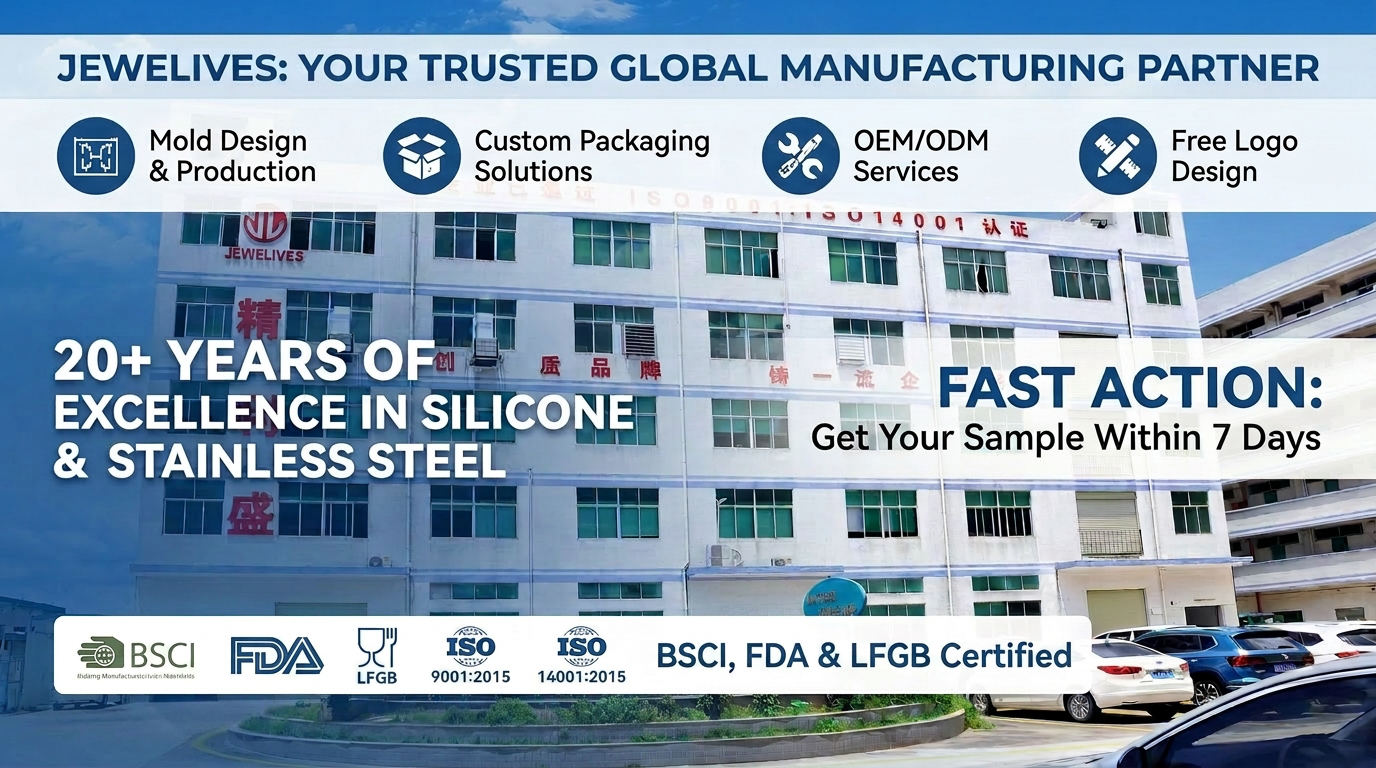
Jewelives is a professional silicone product manufacturer with more than 23 years of manufacturing experience.
The company provides OEM and ODM silicone product solutions for global brands, wholesalers, distributors, and retailers.
Advanced Manufacturing Capabilities
Jewelives factories are equipped with:
- 50 hydraulic presses
- 50 injection molding machines
- Advanced CNC tooling systems
This supports stable large-scale production.
Strong Quality Management System
Jewelives operates under internationally recognized standards, including:
- BSCI
- Sedex
- ISO 9001
- ISO 14001
- GMP
- Disney FAMA
Professional R&D Team
The company’s R&D team develops more than 1,000 new silicone product designs annually and supports customized product development.
FDA and LFGB Food-Grade Support
Jewelives supports food-grade silicone manufacturing for:
- Silicone baby products
- Kitchenware
- Water bottles
- Baking products
- Promotional silicone gifts
Products can be customized with:
- Logo printing
- Custom colors
- Packaging design
- Mold development
- Retail-ready packaging
Flexible Global Manufacturing
With factories in Shenzhen and Vietnam, Jewelives offers flexible supply chain solutions for international buyers.
Future Trends in Food-Grade Silicone Manufacturing
The silicone industry is evolving quickly as consumers demand safer and more sustainable products.
Key trends include:
Higher Demand for LFGB Silicone
European buyers increasingly prefer LFGB-certified products over standard FDA silicone.
Sustainable Silicone Products
Reusable and eco-friendly silicone products continue replacing disposable plastics.
Premium Platinum Silicone
More brands are upgrading to platinum-cured silicone for premium product positioning.
Increased Third-Party Testing
Retailers and eCommerce platforms are enforcing stricter product verification requirements.
Conclusion
FDA and LFGB compliance are critical for silicone products entering international markets. Achieving these standards requires far more than simply using silicone material. Professional factories must control every stage of production, including raw material selection, molding processes, secondary vulcanization, testing, and quality inspection.
For brands, wholesalers, and importers, working with an experienced silicone manufacturer helps reduce risks and ensures long-term product reliability.
Jewelives combines advanced production technology, international certifications, strong R&D support, and strict quality control systems to help global customers develop safe and compliant silicone products for competitive international markets.
ЧАСТО ЗАДАВАЕМЫЕ ВОПРОСЫ
What is the difference between FDA and LFGB silicone?
LFGB standards are generally stricter than FDA standards, especially regarding odor and migration testing.
Is FDA silicone always food-grade?
FDA-compliant silicone is typically food-grade, but buyers should always request testing documentation.
Why do some silicone products smell bad?
Strong odors often result from low-quality materials or insufficient secondary vulcanization.
What is platinum-cured silicone?
Platinum-cured silicone uses a cleaner curing process that improves purity, safety, and odor control.
Can silicone products fail LFGB testing?
Yes. Products containing fillers, impurities, or incomplete curing may fail migration or odor testing.
How long does FDA or LFGB testing take?
Third-party testing usually takes several working days depending on product complexity.
Are all silicone kitchen products BPA-free?
Not necessarily. Buyers should verify BPA-free test reports from suppliers.
Why is secondary vulcanization important?
Secondary vulcanization removes residual chemicals and improves product safety and odor performance.