Russian
  English
  French
  German
  Spanish
  Polish
  Chinese
  Japanese
  Korean
Содержание
How To Start a Candle Mold Business in 2026?
The home fragrance industry has undergone a massive transformation as we head into 2026. While selling finished candles remains a popular venture, a more strategic and highly profitable niche has emerged: the candle mold business. As the DIY (Do-It-Yourself) economy continues to expand, hobbyists and small business owners are no longer looking for standard candles; they are looking for the tools to create their own unique masterpieces.
Starting a candle mold business allows you to position yourself as the “architect” of the candle world. Instead of competing in the saturated market of finished scents, you provide the essential hardware that enables others to build their brands. This guide will walk you through the essential steps to launching a candle mold business in 2026, focusing on material quality, design innovation, and professional manufacturing partnerships.
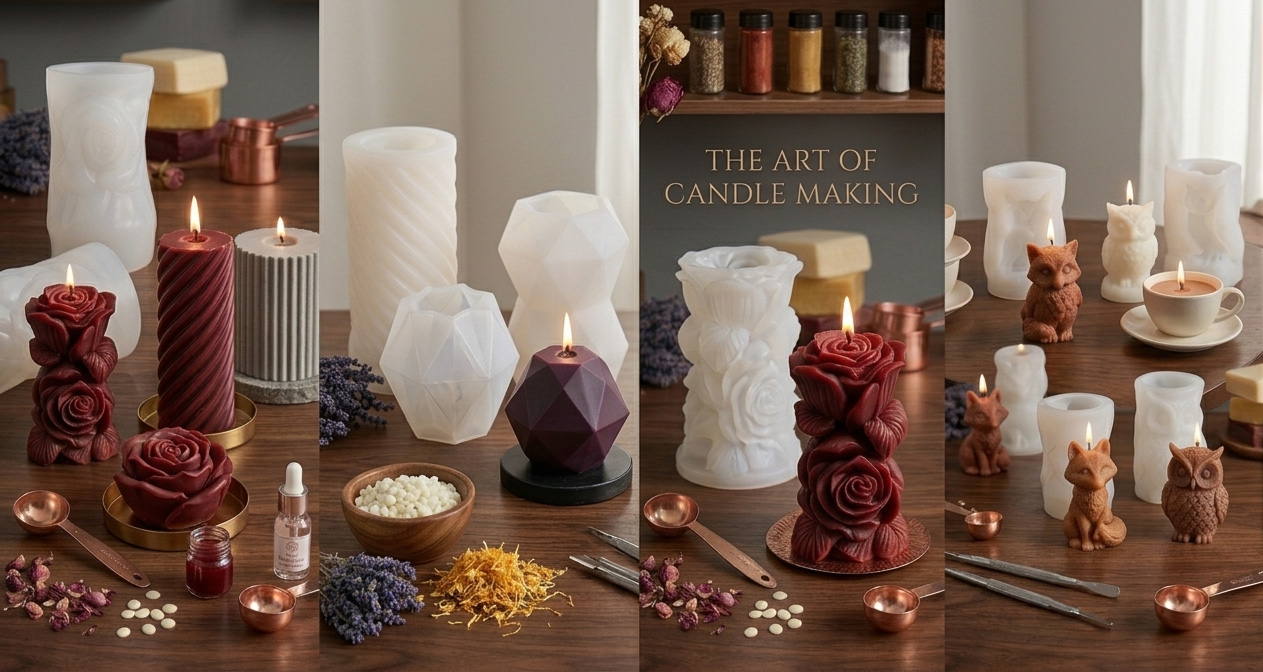
1. Understanding the 2026 Market Landscape
The 2026 consumer is defined by a desire for hyper-personalization. Generic pillar candles are out; sculptural, artistic, and geometric forms are in. The “Home Sanctuary” trend has pushed people to seek home décor that reflects their personality, leading to a surge in candle-making as a form of therapy and creative expression.
By starting a mold business, you tap into several revenue streams:
-
The DIY Hobbyist: Individuals looking for weekend projects.
-
The Artisan Brand: Small candle companies that need unique “Custom” shapes to differentiate themselves on platforms like Amazon or Etsy.
-
The Corporate Gift Market: Companies looking for branded or specifically shaped candles for events.
2. Why Silicone is the Undisputed Material Choice
When it comes to candle molds, the choice of material is the single most important factor for success. In 2026, Silicone has become the industry standard for several reasons:
Flexibility and Ease of Use
Silicone is a highly flexible elastomer. Unlike rigid plastic or metal molds, a silicone mold allows the user to easily “peel” the mold away from the finished wax. This is crucial for intricate designs where a rigid mold would likely snap or damage the delicate details of the candle.
Thermal Stability
High-quality silicone can withstand extreme temperature fluctuations. Whether a creator is pouring hot soy wax at 180℃ or using the mold for “cold-process” materials like plaster or resin, silicone remains stable and does not warp.
Durability and Longevity
A professional-grade silicone mold can be reused hundreds of times. In a world increasingly focused on sustainability, providing a tool that lasts is a major selling point. It reduces waste and provides better value for the customer.
3. Developing Your “Custom” Design Philosophy
To succeed in 2026, you cannot simply copy what is already on the market. You must offer a “Custom” edge. This begins with an intensive R&D (Research and Development) phase.
Trend Spotting
Look toward interior design trends for 2026. Are people leaning toward minimalism (clean lines, spheres, arches) or maximalism (highly detailed floral patterns, neoclassical busts, or abstract 3D shapes)?
Prototyping with 3D Printing
The barrier to entry for design has dropped significantly. You can use CAD (Computer-Aided Design) software to create a 3D model and then use a high-resolution resin 3D printer to create your “master” prototype. This master is then used to create the initial silicone production molds.
Functionality Matters
A good design isn’t just pretty; it’s functional. Ensure your molds include:
-
Proper Venting: To prevent air bubbles in the wax.
-
Stable Bases: So the mold doesn’t tip over during the pouring process.
-
Built-in Wick Holes: To make it easier for the end-user to center their wick.
4. Finding a Quality Silicone Candle Mold Manufacturer
Once you have your designs, the next hurdle is scaling. While you can make molds by hand in a small studio, a growing business requires a professional manufacturer to ensure consistency, quality, and volume.
Choosing the right partner is critical. You need a factory that understands the nuances of silicone production. For instance, Jewelives stands out as a premier partner for those looking to develop high-quality DIY candle molds. With 23 years of production experience, they have the technical infrastructure to turn complex concepts into reality.
What to Look for in a Manufacturer:
-
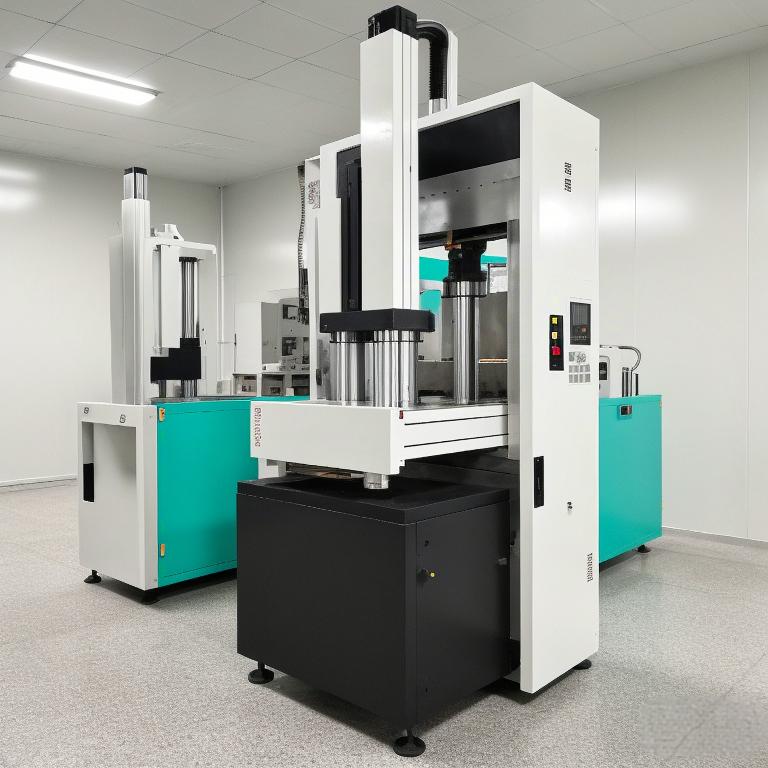
Technical Equipment: Ensure the factory is equipped with modern machinery. A facility with dozens of hydraulic presses and injection molding machines can handle both small custom orders and large-scale mass production.
-
R&D Support: A great manufacturer doesn’t just take orders; they provide solutions. Look for a partner with a dedicated team of R&D specialists who can help optimize your mold designs for better de-molding and durability.
-
Certifications and Ethics: In 2026, transparency is a requirement. Partner with factories that hold international certifications like ISO 9001, ISO 14001, BSCI, and Sedex. These ensure that your products are made in safe, ethical, and environmentally responsible conditions.
-
Global Reach: If your target market is international, a manufacturer with facilities in multiple locations (such as Shenzhen and Vietnam) can provide logistical advantages and help navigate global trade requirements.
5. Setting Up Your Business Infrastructure
With your product line and manufacturer secured, it’s time to build the business.
Branding and Identity
Your brand should evoke the feeling of creativity. Choose a name and logo that resonate with the “Maker” community. Your packaging should be as professional as the mold inside—consider eco-friendly boxes and clear, multi-language instruction cards.
The Online Store
Shopify remains the best platform for a candle mold business in 2026. It offers seamless integration with various sales channels and provides the tools needed to manage inventory.
-
Product Photography: High-quality photos are non-negotiable. Show the mold, the finished candle, and a lifestyle shot of the candle in a home setting.
-
Video Content: Short-form videos showing the de-molding process are incredibly “viral” on social media. They prove the quality of your silicone and the ease of use of your design.
6. Marketing and Growth Strategies for 2026
The way we market has shifted from “selling” to “teaching.”
Content Marketing (The Education Angle)
Don’t just sell a mold; sell a tutorial. Create “How-to” guides for different types of waxes (soy, beeswax, paraffin) and show how they react with your molds. This positions you as an authority in the field and builds trust with your audience.
The Power of “Custom” Collaborations
Partner with influential candle makers on Instagram or TikTok. Send them your latest Пользовательское designs and let them showcase the creative process to their followers. User-generated content (UGC) is the most powerful social proof in the DIY space.
SEO and Search Intent
Optimize your store for keywords like “Silicone Candle Molds for Beginners,” “Custom 3D Candle Molds,” and “Wholesale Candle Mold Manufacturer.” By targeting specific search intents, you capture customers who are already in the buying mindset.
7. Sustainability and Future-Proofing
In 2026, sustainability isn’t an option; it’s a standard. Ensure your silicone is high-purity and free from harmful fillers. Educate your customers on how to clean and store their molds to maximize their lifespan. You might even consider a “Mold Recycling Program” where old, damaged molds can be returned for a discount on new ones, reinforcing your brand’s commitment to the environment.
8. Conclusion: The Path to Success
Starting a candle mold business in 2026 is a journey of merging art with industrial precision. By focusing on superior Силикон materials, pushing the boundaries with Пользовательское designs, and partnering with an experienced manufacturer like Jewelives, you can build a brand that empowers thousands of other creators.
The market is hungry for innovation. If you can provide the tools that turn a simple hobby into a professional craft, your business will not just survive—it will thrive in the creative economy of the future.
FAQ: Starting a Candle Mold Business
Q1: Is a candle mold business more profitable than a candle business?
It can be. While the price per unit of a mold is higher, you don’t have to deal with the complexities of fragrance oils, glass jars, and the fire-safety regulations associated with finished candles. Molds are also easier and cheaper to ship globally.
Q2: What type of silicone is best for candle molds?
Platinum-cured silicone is generally the best choice for professional molds. It has superior tear strength and does not shrink over time, ensuring your Пользовательское designs stay accurate to the original dimensions.
Q3: Can I use these molds for other things like soap or resin?
Yes. High-quality silicone molds are versatile. Marketing your molds as “multi-purpose” (for soap, resin, plaster, and candles) can significantly broaden your target market.
Q4: How do I protect my original designs?
Work with a reputable manufacturer that respects intellectual property. You can also apply for design patents in your primary markets to prevent competitors from copying your unique shapes.
Q5: What is the minimum order quantity (MOQ) when working with a factory?
MOQs vary by manufacturer. Large factories like Jewelives are often flexible, but they generally require a certain volume to make the creation of high-precision steel production molds cost-effective.