Russian
  English
  French
  German
  Spanish
  Polish
  Chinese
  Japanese
  Korean
Содержание
Introduction: Why Silicone Dominates Modern Kitchens
Silicone kitchen utensils—from spatulas to ladles—have become ubiquitous in professional and home kitchens alike. Their popularity stems from a unique blend of heat resistance, flexibility, and non-stick properties. Yet beneath their smooth surfaces lies a world of material science and regulatory complexity. As Steve, a sales manager at a silicone products manufacturer, I often encounter buyers puzzled by terms like “platinum-cured silicone” or “LFGB certification.” This article demystifies the anatomy of silicone cookware, explores global compliance requirements, and equips buyers with actionable insights for supplier selection.
Chapter 1: Material Composition – Not All Silicone Is Created Equal
The Basics: What Is Food-Grade Silicone?
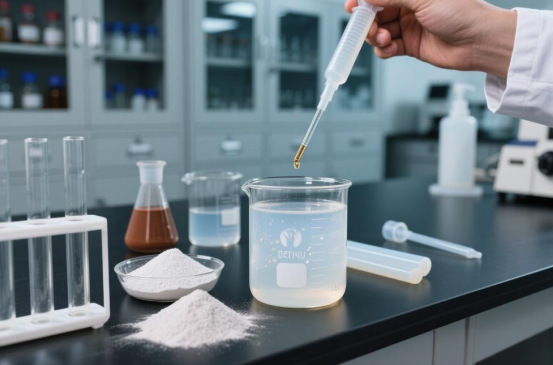
Silicone, a synthetic polymer derived from silica (sand), combines the flexibility of rubber with the thermal stability of metal. Food-grade silicone, specifically, must adhere to strict purity standards:
- Base Polymer:Polydimethylsiloxane (PDMS) forms the backbone, cross-linked via platinum (Pt) or peroxide curing.
- Fillers & Additives:Reinforcing agents like fumed silica improve tear strength, while pigments (often iron oxides) add color without compromising safety.
- Key Differentiator:Platinum-cured silicone uses a noble metal catalyst, eliminating byproducts and reducing odor compared to peroxide-cured alternatives.
Composite Materials: Balancing Functionality
Most silicone utensils are hybrid designs:
- Silicone Heads + Handles:Handles may use nylon (heat-resistant to 210°C), stainless steel, or bamboo.
- Embedded Components:Some models feature silicone-wrapped steel cores for rigidity.
Example: A spatula’s silicone head prevents scratching non-stick pans, while its nylon handle resists melting during high-heat searing.
Liquid Silicone Rubber (LSR): The Premium Choice
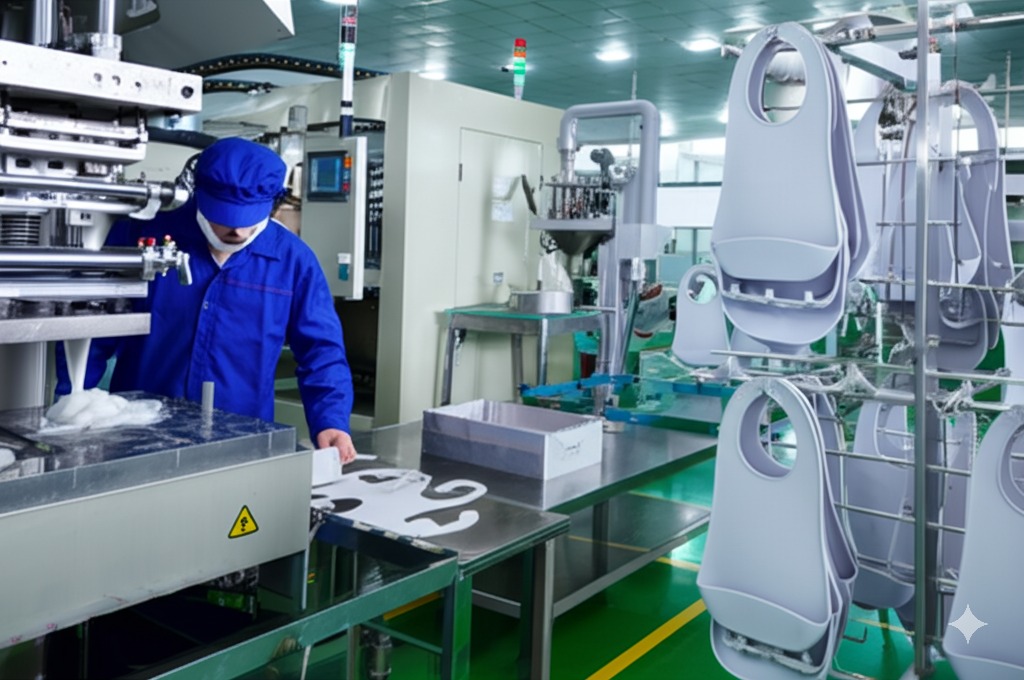
LSR injection molding enables intricate designs (e.g., thin-edged turners) with:
- Precision: Tolerances as tight as ±0.02mm.
- Durability: Resists degradation after 3,000+ dishwasher cycles.
Cost Implication: LSR tools typically cost 30–50% more than traditional molded silicone but last 2–3x longer.
Chapter 2: Global Certifications – Navigating the Regulatory Maze
North America: FDA ≠ Automatic Compliance
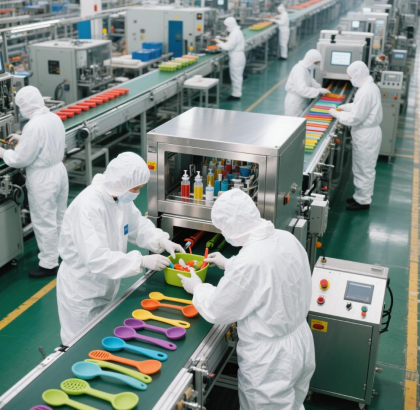
The FDA’s 21 CFR 177.2600 regulates silicone for food contact but does not test finished products. Responsible manufacturers conduct:
- Extraction Tests:Simulating 24-hour exposure to 4% acetic acid at 70°C.
- Heavy Metal Screening:Ensuring lead/arsenic levels stay below 1 ppm.
California Proposition 65: Requires warning labels if products contain phthalates (DEHP >0.1%) or cadmium.
Europe: LFGB vs. REACH – A Tale of Two Standards
- LFGB (Germany):The gold standard, mandating sensory tests (taste/odor transfer) and stringent migration limits (e.g., <0.5 mg/dm² for primary aromatic amines).
- REACH:Targets chemical safety, restricting substances like D4/D5 cyclomethicones (common in low-grade silicone).
- Compliance Tip:Ask suppliers for LFGB “Article 30/31” certificates, not just generic REACH declarations.
Asia-Pacific: JFSL 370 (Japan) & GB 4806 (China)
- Japan:Focuses on formaldehyde migration (<15 mg/L in 40°C water).
- China:Recent GB 4806.11-2016 updates add VOC testing, capping volatile matter at 0.5%.
 Chapter 3: The Price Puzzle – What Justifies Cost Differences?
 Chapter 3: The Price Puzzle – What Justifies Cost Differences?
A 2spatulaversusa15 premium model? Factors include:
- Raw Material Costs:Medical-grade silicone costs 8–12/kgvs.4–6/kg for industrial grades.
- Tooling Complexity:Multi-component molds (e.g., silicone+steel) raise initial setup costs by 40–60%.
- Certification Burden:Full REACH compliance adds 1,200–2,500 per substance group.
Negotiation Strategy: For large orders, request volume discounts on platinum-cured silicone (typically 15–20% savings at 50,000+ units).
Chapter 4: Sustainability – Beyond Recyclability
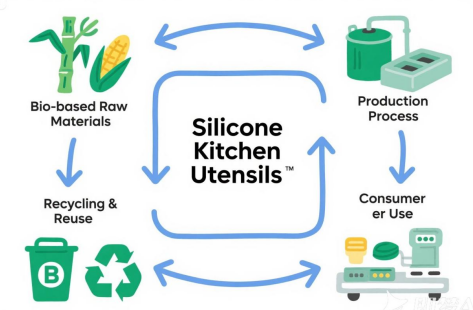 Eco-conscious buyers now demand:
- Bio-Based Silicone: Derived from silica via fermentation (e.g., Genomatica’s Brontide™).
- Recyclable Packaging: Use of recycled PET (rPET) trays and soy-based ink.
Case Study: A European client reduced carbon footprint by 22% by switching to LSR tools with 30% recycled content.
Chapter 5: Supplier Audits – Beyond the Sales Pitch
Technical Due Diligence
- Material Traceability: Request SDS (Safety Data Sheets) for ALL components, including pigments.
- Process Validation: Tour facilities to check for:
- Automated defect detection systems (reduce error rates to <0.3%).
- Cleanroom assembly for medical-grade tools.
Red Flags to Avoid
- Vague Certifications: Phrases like “FDA-compliant” without test reports.
- Overnight Quotes: Legitimate LSR tooling requires 3–5 days for pricing.
Chapter 6: Troubleshooting – Real-World Scenarios
Q1: “Our silicone spatulas turned cloudy after dishwashing!”
A: Cloudiness often indicates cheap fillers. Opt for 30–50% silica-loaded silicone with ≥8 Shore A hardness.
Q2: “Handles melted during sous-vide cooking!”
A: Nylon handles should withstand 121°C (autoclave temps). Test suppliers’ claims via ASTM D648 testing.
Conclusion: The Future of Silicone Cookware
The market, valued at $1.2B in 2024, grows 6% annually as innovation accelerates:
- Smart Silicone: Embedded sensors monitoring oil temperature.
- Self-Healing Coatings: Microcapsule technology repairing scratches.
For buyers, the mantra remains: “Certifications validate safety, material specs predict performance, and supplier transparency defines reliability.”