Chinese
  English
  French
  German
  Spanish
  Russian
  Polish
  Japanese
  Korean
目录
The Ultimate Guide to Silicone Teethers for Babies: Safety, Benefits, and Expert Insights
The arrival of a baby’s first tooth is a milestone often celebrated with photos, but for many parents, it marks the beginning of a challenging “drool-fest.” When a baby is fussy, restless, and constantly gnawing on their fists, parents naturally look for the best relief possible. This search often leads to a common question: are silicone teethers bad for babies, or are they the ultimate solution for parental sanity?
As a global leader in silicone manufacturing with over 23 years of experience, 珠宝 has seen the nursery industry shift toward materials that prioritize both sensory development and chemical safety. Navigating the world of infant products can be overwhelming, so we have compiled this comprehensive guide to address the most frequent concerns regarding silicone teethers, their safety profiles, and how to maintain them.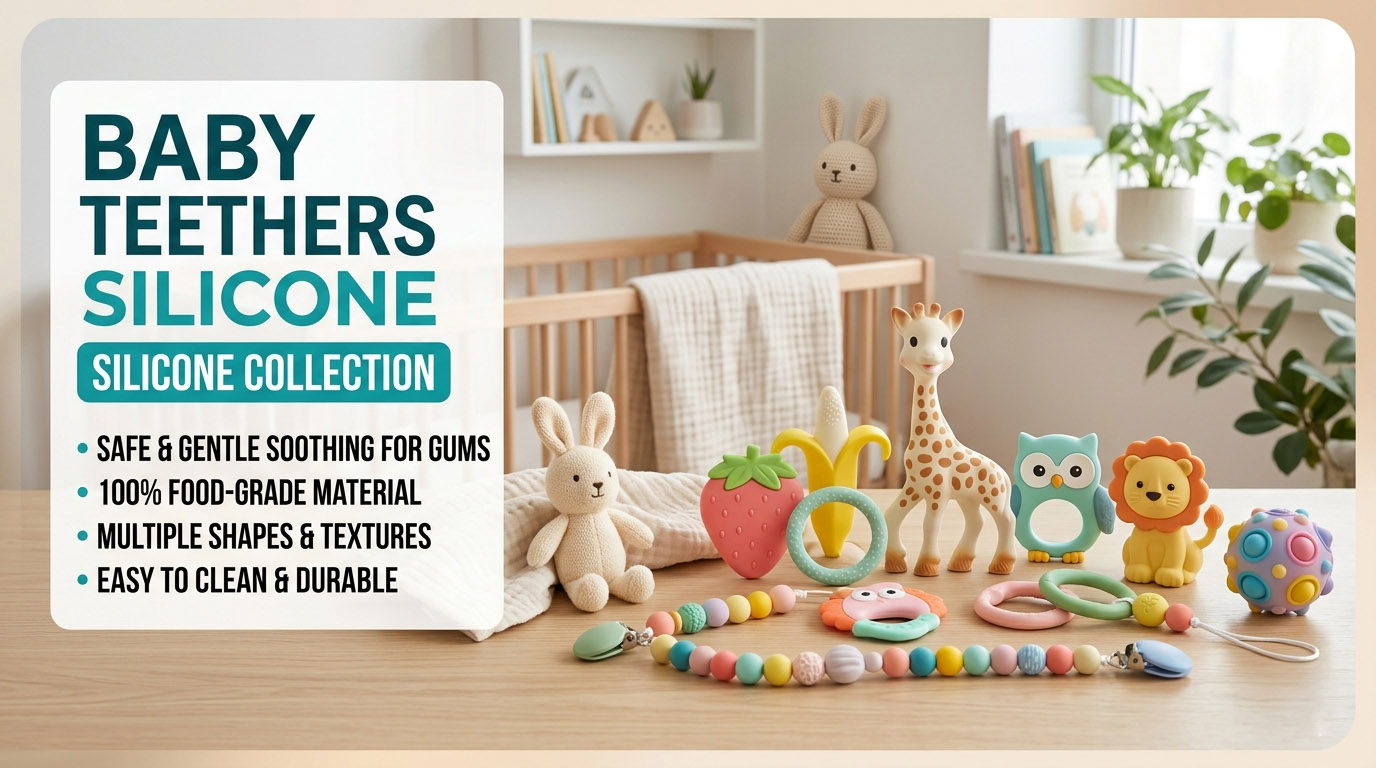
Addressing the Fear: Are Silicone Teethers Bad or Good for Babies?
The internet is full of conflicting advice, leading many to ask: are silicone teethers bad? The short answer is no, provided they are made from high-quality, food-grade materials. In fact, many pediatric experts argue that silicone teethers are good because they offer a unique combination of firmness and flexibility that other materials, like plastic or wood, cannot replicate.
The concern often stems from older, low-quality plastic toys that contained harmful chemicals like Phthalates or BPA. Modern silicone, specifically the type produced in professional facilities like the Jewelives silicone factory, is a different breed of material altogether. It is an inorganic polymer that is highly stable, meaning it does not react with food, liquids, or saliva. This makes silicone teethers okay for babies even during the most aggressive chewing phases.
The Science of Safety: Are Silicone Teethers Non-Toxic?
When parents ask, “are silicone teethers non toxic?” they are usually looking for a guarantee that the product won’t leach chemicals into their child’s system. To ensure a product is truly safe, it must be made from 100% food grade material.
At Jewelives, we adhere to the world’s most stringent safety protocols. A quality silicone factory doesn’t just claim safety; they prove it through international certifications. Our products are tested to meet FDA (Food and Drug Administration) and LFGB (European food safety) standards. These certifications ensure that the silicone is BPA-free, lead-free, and contains no harmful fillers.
Because silicone is non-porous, it is also naturally resistant to the growth of bacteria, mold, and fungus. This is a significant advantage over wooden teethers, which can trap moisture in their grain, or hollow plastic toys that can develop mold inside if water gets trapped.
The Practical Side: Can Silicone Teethers be Sterilized?
Hygiene is paramount when a child is putting an object in their mouth multiple times a day. One of the most common logistical questions is, “can silicone teether be sterilized?”
The answer is a resounding yes. One of the greatest functional benefits of silicone is its extreme thermal stability. High-quality silicone can typically withstand temperatures ranging from -40℃-230℃(approximately 40℉-446℉). This means you have several options for keeping things clean:
-
Boiling Water: You can drop a silicone teether into a pot of boiling water (100℃) for five minutes to kill 99.9% of germs.
-
Steam Sterilizers: They are perfectly safe for use in electric or microwave steam sterilizers.
-
Dishwashers: Most silicone teethers are top-rack dishwasher safe, making daily cleanup effortless for busy parents.
Cooling Relief: Can Silicone Teethers Go in the Freezer?
When gums are swollen and inflamed, cold therapy is a proven way to numb the pain. This leads many to ask, “can silicone teethers go in the freezer?”
Silicone is perfectly freezer-safe. Unlike some liquid-filled teethers that can expand and burst or become dangerously hard, a solid silicone teether remains flexible even when chilled. Placing a teether in the refrigerator or freezer for a short period provides a soothing, cooling sensation that helps reduce inflammation in the gums. However, a word of caution: while the material can handle extreme cold, you should ensure the teether isn’t “ice-cold” to the point of sticking to the baby’s sensitive skin. A few minutes in the fridge is often more than enough to provide relief.
Beyond Function: The Importance of Design and Customization
For business owners and retailers, a teether is more than just a tool for pain relief; it is a brand statement. In 2026, the market demands variety in shapes, textures, and colors to stimulate a baby’s developing senses.
Jewelives stands out as a premier manufacturer because we offer extensive custom services. We understand that a “one size fits all” approach doesn’t work in the competitive nursery market. Our team of 20 R&D specialists works closely with clients to provide:
-
Custom Logos: Embossing or debossing brand identities directly onto the silicone.
-
Custom Dimensions: Adjusting the 尺寸 and shape to ensure it is easy for small hands to grip (ergonomic design).
-
Custom Packaging: Developing eco-friendly or retail-ready packaging that stands out on shelves or Amazon listings.
With over 500 patents and 1,000 new designs introduced annually, we ensure that our partners have access to innovative products that go beyond the standard ring shape. Whether it’s a textured fruit shape, a geometric pendant, or a multi-surfaced teething mitt, our factory—equipped with 50 injection moulding machines and 50 hydraulic presses—is ready to scale production to meet global demand.
Trusting the Manufacturer: 珠宝
Choosing the right manufacturer is the most critical step in ensuring the safety of a baby product. Jewelives is not just a supplier; we are a partner in quality. Our factories in Shenzhen and Vietnam are BSCI, Sedex, ISO 9001, ISO 14001, Disney Fama, and GMP certified. These certifications represent our commitment to ethical labor, environmental responsibility, and rigorous quality management.
When you source from a professional silicone factory like Jewelives, you are investing in 23 years of technical mastery. We control every step of the process, from the initial custom mold creation using our 3 CNC machine tools to the final inspection of the finished BPA-free product. This vertical integration ensures that every teether leaving our facility is something we would be proud to give to our own children.
Conclusion: Why Silicone Wins Every Time
So, to return to our original questions: are silicone teethers bad for babies? No. Are they good? Absolutely. When manufactured with integrity and high-grade materials, silicone teethers are a safe, non-toxic, and incredibly durable choice for families. They offer the perfect balance of sensory stimulation and physical relief, all while being the easiest teething tool to clean and maintain.
As we look toward the future of infant care, the emphasis will continue to be on safety, sustainability, and innovative design. By partnering with an experienced manufacturer like Jewelives, brands can ensure they are providing products that parents trust and babies love.
FAQ: Frequently Asked Questions About Silicone Teethers
Q1: How often should I replace a silicone teether?
While silicone is highly durable, you should inspect it regularly for any signs of wear or damage. If you notice any tears or if the material starts to feel “tacky” or sticky, it is time for a replacement. Generally, with heavy use, replacing them every 3–6 months is a good practice.
Q2: Can I use silicone teethers if my baby has a latex allergy?
Yes. High-quality food-grade silicone is naturally latex-free. It does not contain the proteins found in natural rubber latex that cause allergic reactions.
Q3: Are silicone teethers better than water-filled ones?
Many parents prefer silicone because there is no risk of the teether leaking or “popping.” Additionally, silicone teethers can be sterilized in boiling water, which is often not possible for liquid-filled plastic teethers.
Q4: What is the best way to clean a teether on the go?
If you are out and about, you can use food-grade pacifier wipes or simply rinse the teether with bottled water. Once you return home, a thorough wash in warm soapy water or a cycle in the dishwasher is recommended.
Q5: Can I customize the firmness of the silicone?
Yes. As a professional manufacturer, Jewelives can adjust the “durometer” (hardness) of the silicone to meet your specific requirements, ensuring the teether is exactly as soft or firm as your brand requires.