Chinese
  English
  French
  German
  Spanish
  Russian
  Polish
  Japanese
  Korean
目录
Silicone baby feeding sets have become one of the fastest-growing product categories in the global baby care market. Parents today are looking for feeding products that combine safety, durability, functionality, and attractive design while supporting babies through every stage of self-feeding. As a result, food-grade silicone has emerged as the preferred material for bowls, plates, bibs, spoons, forks, cups, snack containers, and complete feeding sets.
For retailers, wholesalers, private-label brands, and e-commerce sellers, understanding silicone materials, international safety standards, manufacturing processes, and OEM/ODM customization options is essential when selecting a reliable manufacturing partner. This comprehensive guide explores everything you need to know about silicone baby feeding sets, from material selection to large-scale OEM manufacturing, helping you make informed sourcing decisions while meeting consumer expectations and international compliance requirements.
 Why Silicone Baby Feeding Sets Are Growing in Popularity
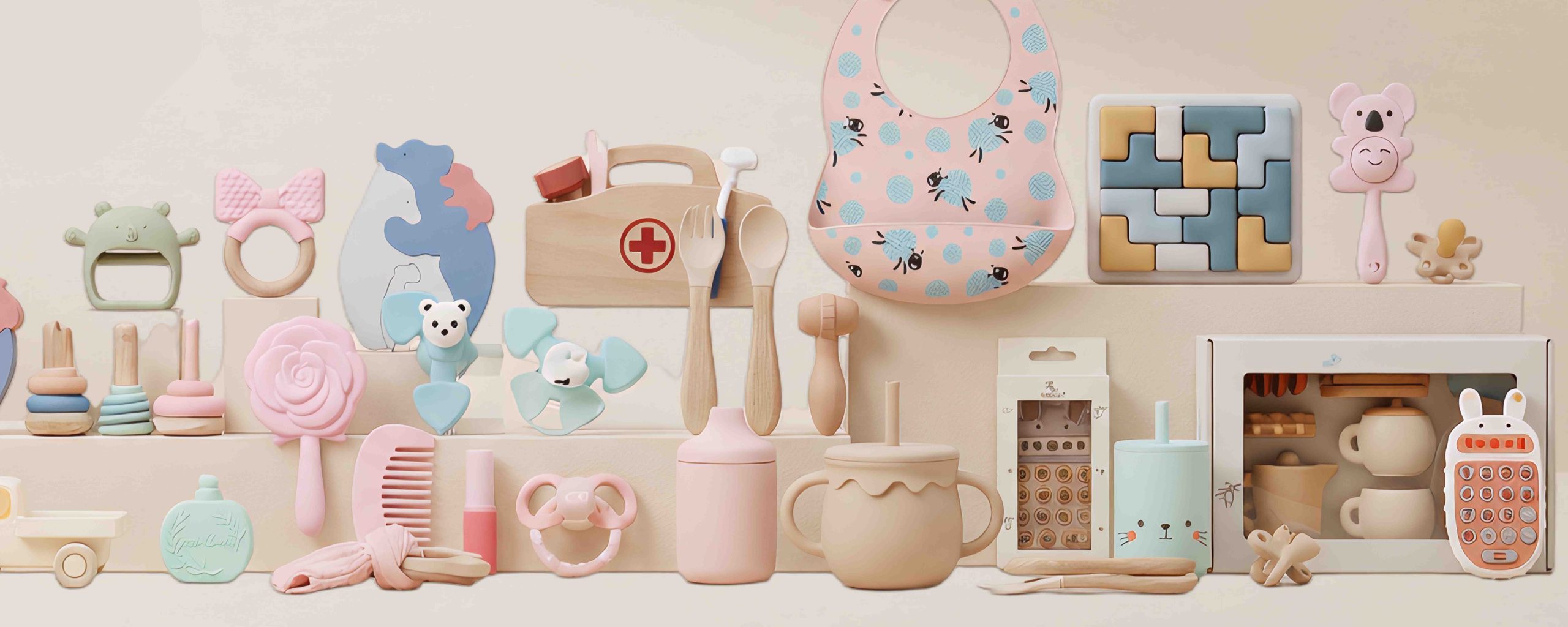 Why Silicone Baby Feeding Sets Are Growing in Popularity
The transition from milk feeding to solid foods is an important milestone in a baby’s development. Parents increasingly choose silicone feeding products because they are soft, lightweight, durable, and designed to reduce spills while encouraging independent eating.
★ Key Advantages of Silicone Baby Feeding Sets
• Food-grade and BPA-free materials
• Soft surface that protects sensitive gums
• Excellent resistance to heat and cold
• Dishwasher, microwave, freezer, and sterilizer safe
• Durable and long-lasting
• Flexible without cracking or breaking
• Available in modern colors and attractive designs
• Easy to clean with stain-resistant surfaces
These advantages make silicone an ideal alternative to plastic, glass, and ceramic tableware, especially for babies learning to feed themselves.
What Is Included in a Silicone Baby Feeding Set?
Although product combinations vary by brand, a complete feeding set typically contains several coordinated items designed for different feeding stages.
Common Components
- Suction bowls
- Divided suction plates
- Training spoons
- Silicone forks
- Adjustable baby bibs
- Snack cups
- Training cups with straws
- Silicone placemats
- Food storage containers
Many brands also combine silicone components with premium materials such as 304 stainless steel to create upgraded feeding sets that provide better durability and insulation while maintaining a child-safe silicone exterior.
Understanding Food-Grade Silicone Materials
Material quality is the foundation of every premium baby feeding product. Food-grade silicone is manufactured from high-purity silica and processed into an elastic material that is safe for direct food contact.
Unlike conventional plastics, food-grade silicone does not contain BPA, PVC, phthalates, or other harmful chemicals that parents increasingly seek to avoid.
Important: Premium silicone should remain odorless, flexible, and stable under both high and low temperatures without releasing harmful substances.
Characteristics of High-Quality Silicone
- Non-toxic composition
- Excellent flexibility
- High tear resistance
- Superior durability
- Odor-free performance
- Heat resistance up to approximately 220°C
- Cold resistance below freezing temperatures
- Long product lifespan
Essential Safety Standards for Baby Feeding Products
Parents expect baby products to meet strict international safety standards. Manufacturers producing feeding sets for export typically comply with multiple regulations depending on target markets.
✔ Common International Certifications
• FDA Food Contact Compliance
• LFGB Food Safety Standard
• CPSIA Requirements
• EN14372 Feeding Equipment Standard
• REACH Compliance
• BPA-Free Verification
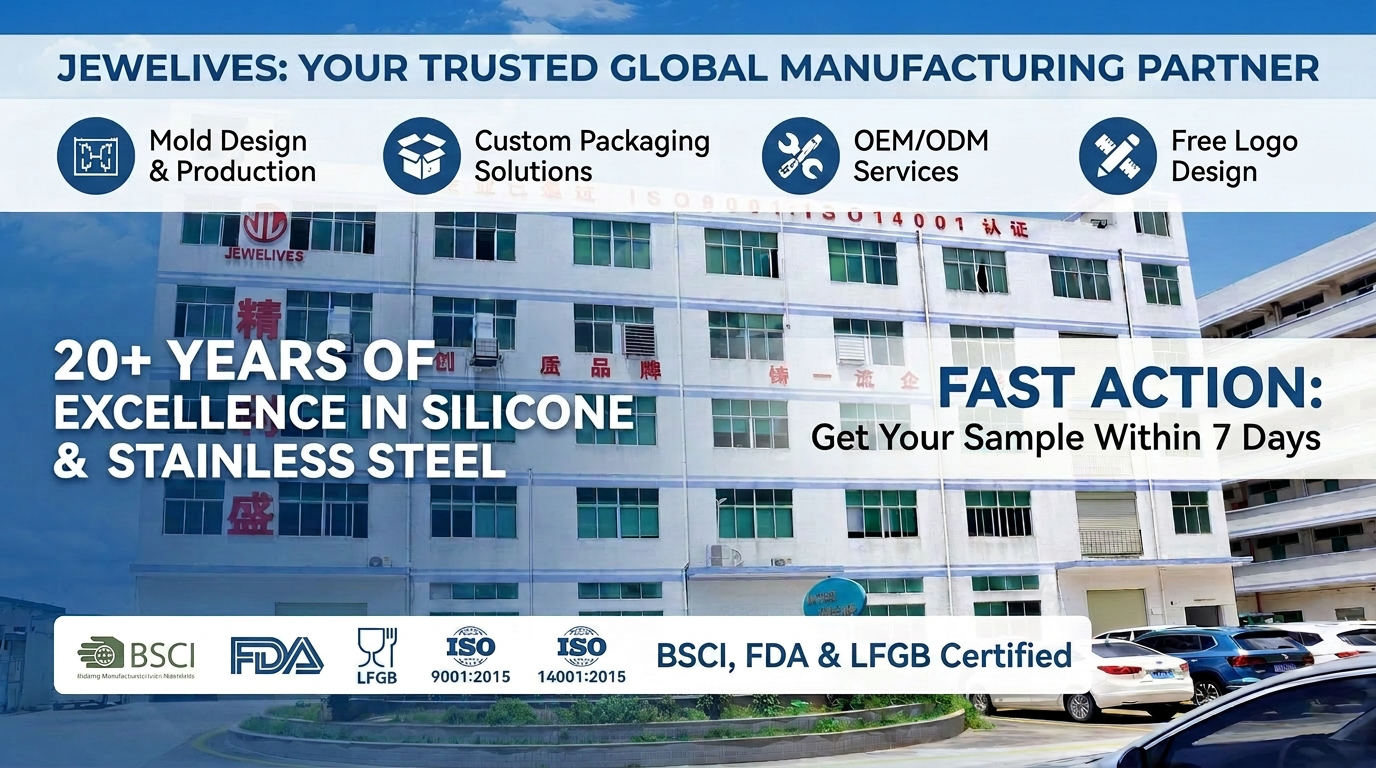
In addition to product testing, buyers should also evaluate factory certifications such as ISO 9001, ISO 14001, BSCI, Sedex, GMP, and Disney FAMA when applicable.
How Silicone Baby Feeding Sets Are Manufactured
Producing premium silicone baby products involves multiple manufacturing stages, each contributing to product safety, consistency, and performance.
Raw Material Inspection
Every production batch begins with the inspection of food-grade silicone materials to ensure purity, consistency, and compliance with customer specifications.
Silicone Mixing
Silicone compounds are blended with food-safe pigments and curing agents using precision mixing equipment to achieve consistent color and mechanical properties.
Mold Manufacturing
Engineers create precision molds using CNC machining equipment to ensure accurate product dimensions and repeatable production quality.
Compression or Injection Molding
The silicone material is molded under controlled temperature and pressure to create bowls, plates, spoons, bibs, and other feeding accessories.
Post-Curing Process
Many premium products undergo post-curing to eliminate residual odors and improve long-term stability, making them more suitable for food-contact applications.
质检
Finished products are inspected for dimensions, appearance, suction performance, color consistency, mechanical strength, and packaging quality before shipment.
Manufacturing Priorities
✓ Consistent product dimensions
✓ Smooth surface finish
✓ Reliable suction performance
✓ Uniform color matching
✓ Food-safe production environment
OEM vs. ODM Manufacturing for Baby Feeding Sets
Manufacturers generally provide both OEM and ODM services, allowing brands to choose the most appropriate development strategy.
OEM Manufacturing
OEM manufacturing enables customers to create unique products using custom molds, exclusive designs, personalized packaging, and proprietary branding. This option is ideal for established brands seeking product differentiation.
ODM Manufacturing
ODM services allow customers to select proven product designs and customize logos, colors, packaging, and accessories. This approach reduces tooling costs while accelerating market entry.
OEM Is Best For
• Exclusive product development
• Premium private-label brands
• Patent protection strategies
• Large production volumes
ODM Is Best For
• Fast market entry
• Lower initial investment
• Small and medium businesses
• Product line expansion
Popular Customization Options
Today’s consumers appreciate feeding products that are both functional and visually appealing. Professional silicone factories provide a wide range of customization services to help brands stand out.
- Custom Pantone colors
- Embossed logos
- Debossed logos
- Laser engraving
- Printed packaging
- Gift boxes
- Instruction manuals
- Custom product combinations
- Silicone and stainless steel hybrid designs
How to Choose a Reliable Silicone Baby Feeding Set Manufacturer
Selecting the right manufacturing partner is just as important as selecting the right product. Experienced factories provide technical expertise, stable production capacity, and comprehensive quality management systems.
Questions to Ask Before Choosing a Factory
• How many years of silicone manufacturing experience do you have?
• Which international certifications do you hold?
• Can you provide OEM and ODM services?
• Do you have an in-house R&D team?
• What testing equipment is available?
• Can you support customized packaging?
• What is your monthly production capacity?
• Can you provide product samples before mass production?
Quality Control Throughout Production
Reliable manufacturers implement strict quality inspections throughout the production process rather than relying only on final inspections.
Quality Inspection Procedures
- Raw material testing
- Color consistency inspection
- Mold verification
- Dimension measurement
- Suction strength testing
- Appearance inspection
- Packaging inspection
- Pre-shipment quality audits
Comprehensive quality management reduces production defects while ensuring that every feeding set meets customer specifications and international safety standards.
Emerging Trends in Silicone Baby Feeding Products
The baby feeding market continues to evolve as consumer preferences change. Manufacturers are introducing innovative designs that improve functionality while supporting sustainable lifestyles.
📈 Current Industry Trends
• Silicone combined with 304 stainless steel bowls and plates
• Earth-tone color collections
• Foldable travel feeding products
• Minimalist Scandinavian-inspired designs
• Eco-friendly gift packaging
• Multi-functional feeding sets for different growth stages
结论
Silicone baby feeding sets have become an essential product category for modern families thanks to their outstanding safety, durability, versatility, and ease of use. For businesses entering this growing market, success depends on selecting premium food-grade materials, complying with international safety standards, and partnering with an experienced OEM or ODM manufacturer that offers strong engineering capabilities and rigorous quality control. By combining thoughtful product design, reliable manufacturing, and customized branding, companies can build competitive baby feeding collections that meet the expectations of parents around the world while supporting long-term brand growth.
Frequently Asked Questions
Are silicone baby feeding sets safe for everyday use?
Yes. High-quality food-grade silicone feeding sets that comply with FDA, LFGB, or other international safety standards are designed for daily food contact and are free from BPA and other harmful substances.
What is the difference between OEM and ODM baby feeding sets?
OEM products are fully customized according to a brand’s specifications, while ODM products are based on existing designs that can be personalized with logos, colors, and packaging.
Can silicone feeding sets be used in microwaves and dishwashers?
Most premium food-grade silicone feeding products are microwave-safe, dishwasher-safe, freezer-safe, and suitable for steam sterilization, although users should always follow the manufacturer’s instructions.
What certifications should a silicone baby feeding set manufacturer have?
Reliable manufacturers typically maintain certifications such as ISO 9001, ISO 14001, BSCI, Sedex, FDA, LFGB, and other compliance documents required by target markets.
How do I choose a reliable silicone baby feeding set supplier?
Evaluate the supplier’s manufacturing experience, production equipment, R&D capabilities, certification portfolio, quality control processes, customization services, and ability to provide samples before placing large production orders.