Korean
  English
  French
  German
  Spanish
  Russian
  Polish
  Chinese
  Japanese
콘텐츠
Are Silicone Baking Mats Non-Toxic? A Complete Safety & Buying Guide
When choosing baking tools that come into direct contact with food, safety is always the first concern. One of the most common questions buyers ask is: Are 실리콘 baking mats non-toxic?
The short answer is yes—but only if you choose the right material and supplier.
This guide explains the safety of silicone baking mats from a material, usage, and procurement perspective, helping buyers make confident purchasing decisions.
What Are Silicone Baking Mats Made Of?
High-quality silicone baking mats are produced using 100% food-grade silicone. This material is specifically designed for food contact and high-temperature use.
Food-grade silicone offers several safety advantages:
Non-toxic and chemically stable
BPA-free, phthalate-free, and lead-free
Does not react with food or release harmful substances under proper heat
Reputable manufacturers ensure their silicone mats comply with FDA and LFGB food contact standards, making them suitable for both home and commercial baking environments.
Are Silicone Baking Mats Safe for Baking?
Yes. When manufactured correctly and used within recommended temperatures, silicone baking mats are safe for daily baking.
Compared with parchment paper or aluminum foil, silicone mats:
Do not burn or scorch
Require little to no added oil
Stay flat and stable on baking trays
Reduce waste through long-term reuse
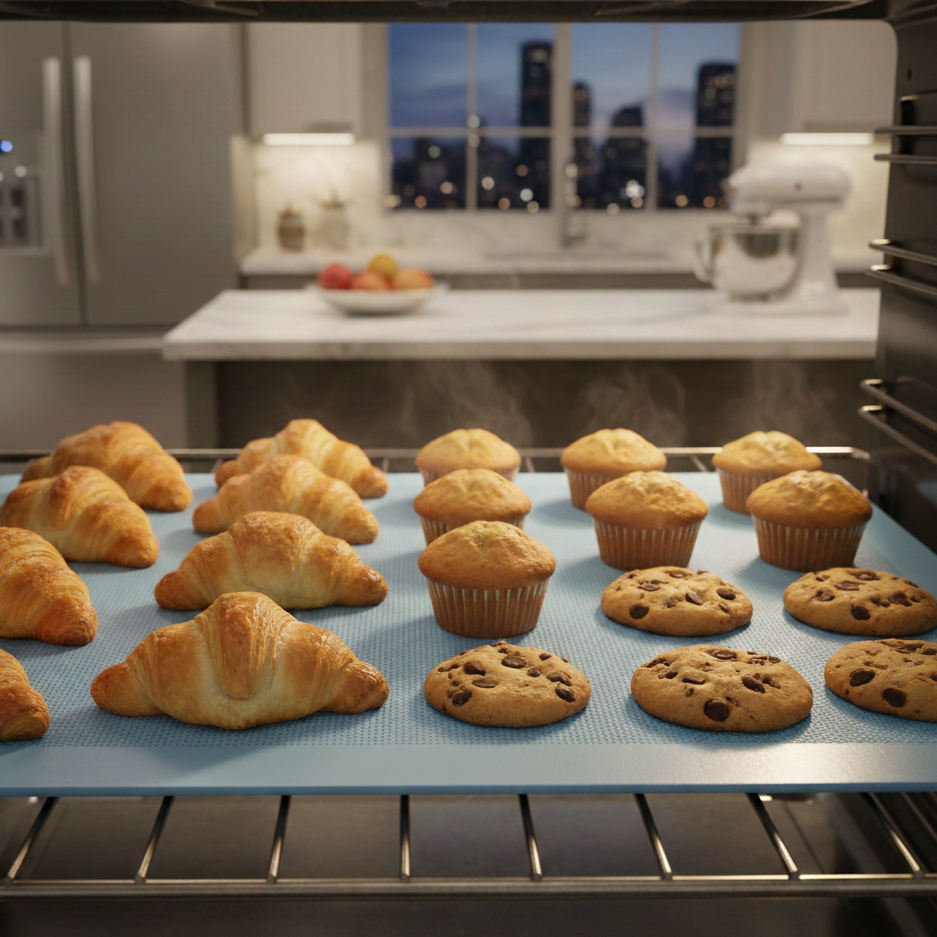
They are widely used for cookies, pastries, bread, roasted vegetables, and frozen dough baking.
Are Silicone Baking Mats Oven Safe?
Food-grade silicone baking mats are oven safe up to 480°F (250°C). Most baking processes occur between 350–425°F, well within the safe range.
However, correct usage is critical:
Do not place mats under a broiler
Avoid direct flame or contact with heating elements
Do not exceed the manufacturer’s maximum temperature
Following these guidelines ensures long-term durability and safe performance.
Are There Any Risks with Silicone Baking Mats?
Silicone baking mats are safe, but risks can arise from low-quality products or improper use.
Potential issues include:
Mats containing fillers instead of pure silicone
Strong rubber-like odors when heated
Surface stickiness or discoloration over time
These problems are typically found in uncertified, low-cost products.
Common Mistakes to Avoid
Using mats above 480°F
Placing mats under broilers
Cutting directly on the mat
Purchasing mats without food safety certification
Can Silicone Baking Mats Cause Cancer?
There is no scientific evidence linking food-grade silicone to cancer when used correctly.
Certified silicone baking mats:
Contain no BPA, phthalates, or known carcinogens
Remain chemically stable under baking temperatures
Meet FDA food-contact safety requirements
Health concerns usually stem from non-certified products made with unknown additives or fillers.
Are Silicone Baking Mats Safe for Food Contact?
Yes. Silicone baking mats are designed for direct food contact.
Food-grade silicone:
Is non-stick without chemical coatings
Does not absorb odors or flavors
Leaves no residue on baked goods
For food safety assurance, buyers should always verify:
FDA or LFGB certification
BPA-free labeling
No strong odor before or during heating
Do Silicone Baking Mats Contain Harmful Chemicals?
High-quality silicone baking mats do not release harmful chemicals when used within recommended temperatures.
Safe silicone mats should be:
Made from 100% food-grade silicone
Free from fillers and recycled materials
Heat-resistant and odorless during use
A strong rubber smell, yellowing, or surface breakdown are warning signs of poor-quality silicone.
Are Silicone Baking Mats Safe for Health?
From a long-term use perspective, certified silicone baking mats are safe for health.
Key safety indicators include:
Stable performance after repeated baking cycles
No odor, melting, or surface degradation
Compliance with international food safety standards
For families, professional bakers, and food businesses, silicone baking mats remain a reliable and safe baking accessory when sourced from reputable manufacturers.
Silicone Baking Mats Buying Guide for Buyers & Wholesalers
Before purchasing silicone baking mats in bulk, consider these key factors:
Material: 100% food-grade silicone only
Certifications: FDA, LFGB, BPA-free
Heat Resistance: Minimum 480°F
Thickness & Density: Firm but flexible, not overly soft
Supplier Transparency: Clear material and compliance documentation
Choosing the right supplier directly impacts product safety, customer trust, and long-term brand reputation.
Final Verdict: Are Silicone Baking Mats Non-Toxic?
Yes. Silicone baking mats are non-toxic, safe, and reliable—as long as they are made from certified food-grade silicone and used correctly.
For buyers and brands, the priority should always be:
Verified material safety
Certified manufacturing standards
Consistent product quality
When these conditions are met, silicone baking mats are a safe, durable, and sustainable choice for modern baking.