Korean
  English
  French
  German
  Spanish
  Russian
  Polish
  Chinese
  Japanese
콘텐츠
The Ultimate Guide to Silicone Baby Bibs
Starting the journey of solid foods is one of the most exciting—and undeniably messiest—milestones in a baby’s first year. For many parents, the transition from milk to purees feels like a full-time job in laundry management. Between the flying spoonfuls of sweet potato and the inevitable “gravity experiments” with broccoli, the humble baby bib becomes the most important piece of equipment in the house.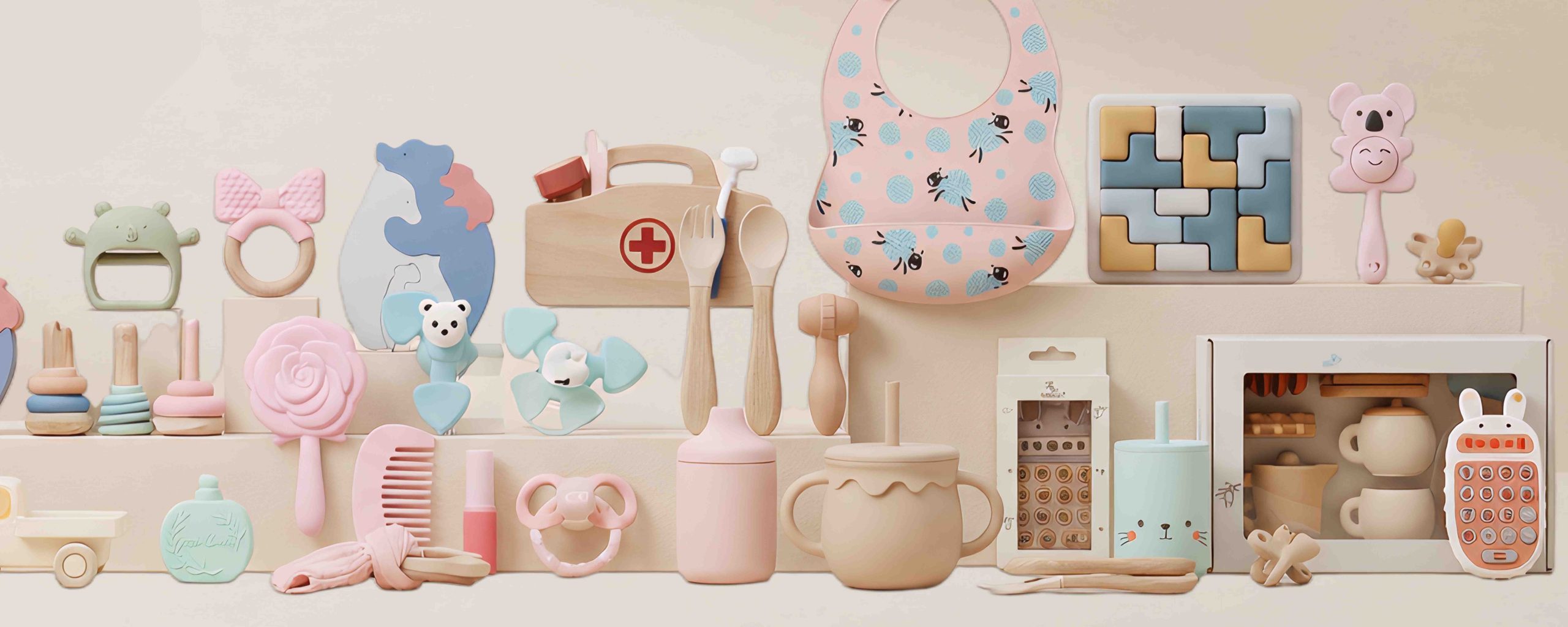
As a professional manufacturer with 23 years of experience in the children’s silicone tableware industry, Jewelives has seen the evolution of baby gear firsthand. We serve as the source supplier for numerous global household brands and top-tier Amazon sellers, ensuring that what reaches your dinner table is nothing short of excellence. In this comprehensive guide, we will dive into the science of silicone, compare it to traditional materials, and answer the most pressing questions parents and retailers have about these essential feeding tools.
The Great Debate: Silicone Bib vs. Cotton Bib
One of the most frequent searches by new parents is “silicone bib vs cotton bib” or “are silicone bibs better than cloth.” To understand the winner, we have to look at the primary function of a bib during mealtime: protecting the baby’s clothes and making cleanup easier.
Cotton or cloth bibs have been a staple for decades, and they certainly have their place. They are soft and excellent for absorbing drool during the teething phase. However, when it comes to the “active combat” of mealtime, cloth often fails. Cotton is porous, meaning it absorbs liquids, oils, and odors. A single bowl of spaghetti sauce can leave a permanent orange stain on a favorite cloth bib. Furthermore, a wet cloth bib sitting against a baby’s chest can lead to skin irritation or “drool rash” because the moisture is held against the skin.
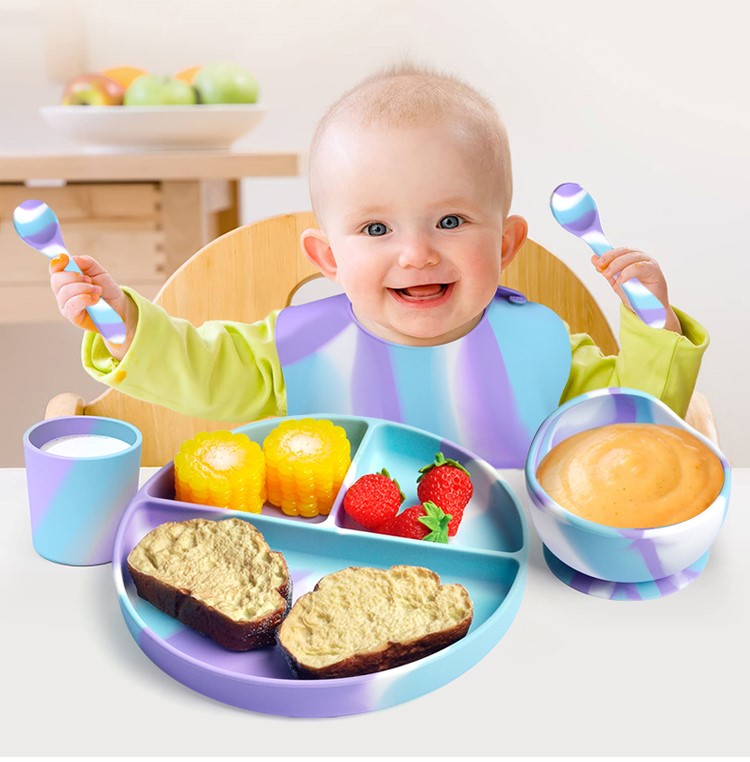
In contrast, silicone bibs are completely non-porous. When you use a bib made from food grade material, liquid simply beads off the surface. The standout feature of a silicone bib is the molded “crumb catcher” or deep front pocket. While a cotton bib allows food to slide down onto the baby’s lap or the floor, a well-designed silicone pocket catches those stray bites, saving your carpet and, occasionally, providing a second chance for that piece of fruit the baby dropped. For these reasons, in the battle of “are silicone bibs better than cloth,” silicone is the clear victor for solid food feeding.
Safety and Materials: What is Your Bib Actually Made Of?
Safety is the non-negotiable foundation of any baby product. Parents often ask, “do silicone bibs have latex?” or “are they safe for my baby’s sensitive skin?”
At Jewelives, we utilize high-quality silicone that is naturally latex-free. Unlike some rubber products, silicone does not contain the proteins that typically trigger latex allergies. However, not all silicone is created equal. When sourcing a bib, it is vital to ensure it is BPA-free and made from a food grade material.
To guarantee the highest levels of safety, professional manufacturers adhere to global standards. The two most important certifications to look for are FDA (Food and Drug Administration) and LFGB (Lebensmittel- und Futtermittelgesetzbuch). While the FDA is the standard for the United States, LFGB is the stricter European standard which involves more rigorous testing for sensory and chemical leaching. Jewelives’ products meet both, ensuring that no matter where you are in the world, your baby is eating from a surface that is as safe as a medical-grade tool. This level of compliance is what separates a quality silicone factory from a generic supplier.
The Timeline: When Do Babies Use Silicone Bibs?
Timing is everything. A common question for first-time parents is “when do babies use silicone bibs?” While cloth bibs can be used from birth for spit-up and drool, silicone bibs generally enter the picture around 4 to 6 months.
This is the age when most pediatricians suggest introducing solids. A baby is ready for a silicone bib when they can sit up relatively well and have started showing interest in spoons or finger foods. Because silicone bibs have a bit more structure and weight than a thin piece of cotton, they are most effective once the baby is upright in a high chair. The adjustable neck straps found on Jewelives’ bibs ensure that as your child grows from an infant to a toddler, the bib continues to provide a comfortable, gap-free fit.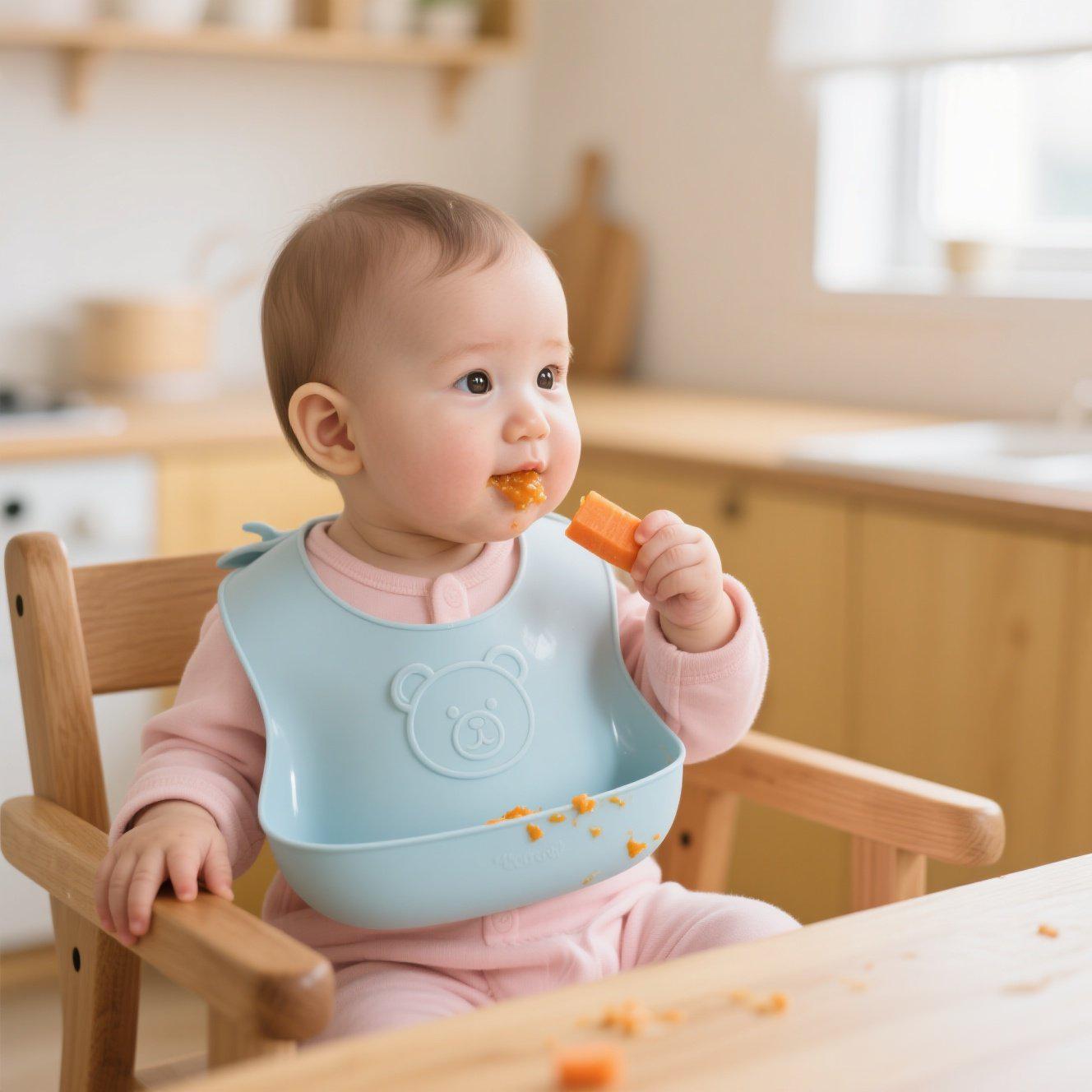
The Cleaning Revolution: Are Silicone Baby Bibs Dishwasher Safe?
In the busy life of a modern parent, time is the most valuable currency. The question “are silicone baby bibs dishwasher safe” is usually asked by a parent who is tired of doing three loads of laundry a day.
The short answer is: Yes. High-quality silicone is incredibly heat-resistant, typically withstanding temperatures up to 230℃ (446℉). This means you can toss your silicone bib into the top rack of the dishwasher without worrying about it warping, melting, or losing its vibrant color.
Beyond the dishwasher, the daily maintenance is incredibly simple. Between deep cleans, you can simply wipe the bib down with a damp cloth or rinse it under the tap with a bit of dish soap. It dries in minutes, unlike cloth bibs that might take hours to air dry or require a full cycle in the tumble dryer. This “wipe and go” functionality is a game-changer for families who travel or eat out frequently.
The Manufacturer’s Edge: Customization and Innovation
For brand owners and Amazon sellers, the “how” and “where” of production are just as important as the “what.” In a crowded market, a generic bib isn’t enough. This is where the concept of a custom design comes into play.
Jewelives is more than just a manufacturer; we are a partner in innovation. With a dedicated team of 20 R&D specialists and over 500 patents, we help our clients create custom bibs that stand out. This might include unique ergonomic shapes, specialized neck fasteners that babies can’t pull off, or aesthetic patterns that align with modern interior design trends.
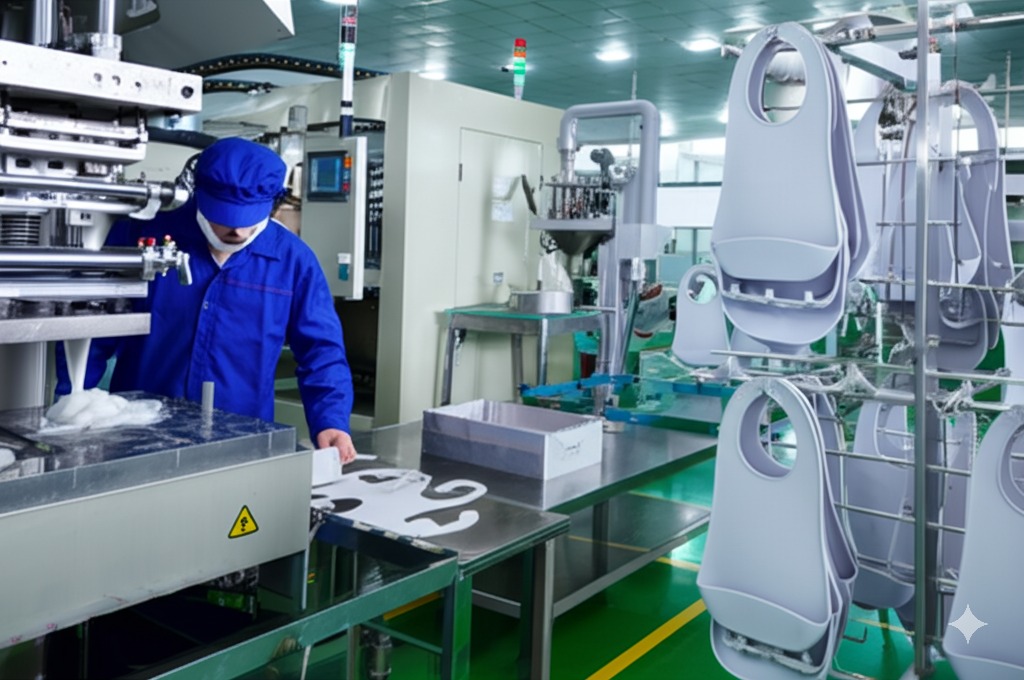
Our factories in Shenzhen and Vietnam are equipped with 50 hydraulic presses and 50 injection molding machines, allowing us to scale production while maintaining the strict quality controls required for FDA and LFGB compliance. Whether you are looking for a specific pantone color or a completely new mold design, our OEM and ODM services provide the technical backbone your brand needs to succeed.
Conclusion: Making the Right Choice for Your Family or Business
Choosing a baby bib might seem like a small decision, but it has a significant impact on daily life. By opting for a silicone bib over a cloth one, you are choosing a product that is more hygienic, easier to clean, and better at containing the inevitable chaos of mealtime.
From a safety perspective, ensuring your bibs are BPA-free, made of food grade material, and certified by bodies like the FDA, provides the peace of mind that every parent deserves. At Jewelives, we are proud to be the silent partner behind many of the world’s favorite baby brands, bringing 23 years of expertise to every piece of silicone we produce. Whether you are a parent looking for the best for your child or a retailer looking for a reliable manufacturing partner, silicone is the future of infant feeding.
FAQ: Everything You Need to Know About Silicone Bibs
Q1: Will the silicone bib irritate my baby’s neck?
High-quality silicone is extremely soft and flexible. At Jewelives, we design our bibs with rounded, adjustable neckbands to ensure a smooth fit that doesn’t chafe or pinch the baby’s delicate skin.
Q2: Can I roll up a silicone bib for travel?
Yes! One of the best features of silicone is its “memory.” You can roll the bib into its own pocket for compact storage in a diaper bag. When you unroll it, it will pop back into its original shape instantly.
Q3: How do I get rid of stains from strong-colored foods like carrots?
While silicone is stain-resistant, some high-pigment foods can leave a faint mark if left for too long. If this happens, a mixture of baking soda and water or a quick soak in mild bleach (followed by a thorough wash) usually does the trick. Sun-drying also naturally bleaches out stains.
Q4: Is silicone more environmentally friendly than cotton?
While cotton is a natural fiber, the amount of water, detergent, and electricity used to wash cloth bibs hundreds of times adds up. A single silicone bib can replace dozens of cloth bibs and last for several children, making it a highly sustainable long-term choice.
Q5: Why does my new silicone bib have a slight smell?
High-quality silicone is generally odorless. If there is a slight “new” smell, it is often just from the packaging. Simply wash it with soap or run it through the dishwasher once, and any scent will disappear.