Polish
  English
  French
  German
  Spanish
  Russian
  Chinese
  Japanese
  Korean
Zawartość
How To Start a Silicone Toy Business: 2026 Guide
The landscape of the toy industry has shifted dramatically in 2026. Parents are no longer just looking for entertainment; they are demanding products that are “aesthetic,” “eco-conscious,” and “scientifically safe.” Silicone has emerged as the premier material for this new era due to its durability, non-toxic nature, and soft-touch appeal.
Starting a silicone toy business is a high-stakes venture that blends chemical safety, 3D engineering, and strict regulatory compliance. This guide provides a 10-step modular blueprint to launching your brand in the 2026 market.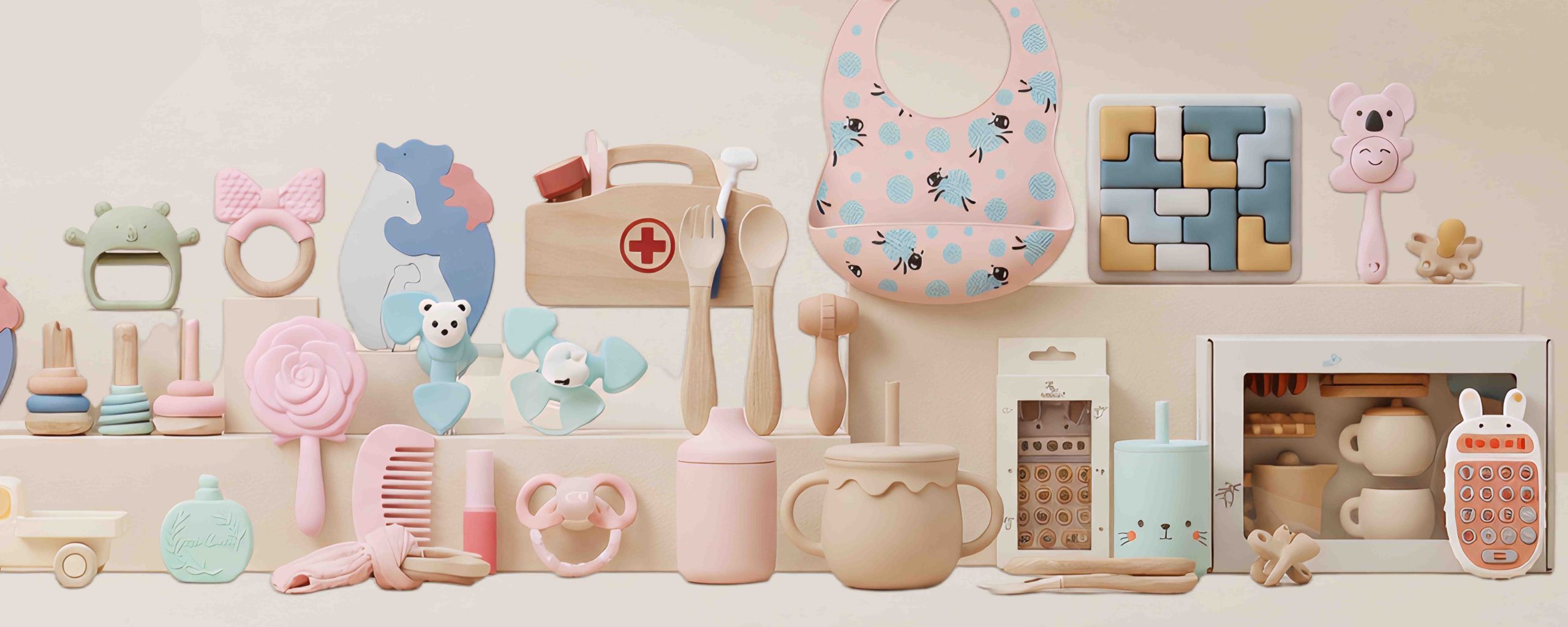
1. Finding Your Niche: Developmental Psychology Meets Design
The first step is moving beyond “generic toys.” In 2026, the most successful brands align their products with specific developmental milestones.
-
Infant Sensory Play: Focus on items like a custom baby teether. These require high-purity, food-grade silicone with varied textures to soothe gums.
-
Cognitive Development: This is where the Silicone stacking toy shines. These toys teach spatial awareness and fine motor skills while being safe enough for a child to chew on.
-
STEM-Based Learning: Consider developing educational baby toys that introduce basic concepts of geometry or cause-and-effect.
-
Age-Appropriate Expansion: Don’t limit yourself to infants. The preschool toy market is growing for silicone-based puzzles and sensory “fidget” tools that are more durable than their plastic counterparts.
2. Market Research and Competitor Analysis
Before you invest in a silicone mold, you must understand the “White Space” in the market.
-
Social Listening: Monitor platforms like TikTok and Instagram for “nursery aesthetics.” In 2026, muted earth tones and “Scandi-minimalism” are dominant.
-
Review Mining: Look at the top-selling baby bath toy listings on Amazon or Etsy. What are parents complaining about? (e.g., “mold growth inside the toy” or “too difficult to clean”). Solving these pain points is your competitive advantage.
3. Product Design and 3D Prototyping
Unlike a 2D T-shirt print, a toy is a 3D object that must be “fail-safe.”
-
CAD Design: You will need a 3D designer experienced in silicone. They must understand “draft angles” (to ensure the toy pops out of the mold) and “undercuts.”
-
Prototyping: Use 3D printing (specifically SLA or PolyJet) to create a physical model. This allows you to test the size—essential for ensuring a custom baby teether isn’t a choking hazard.
4. The Science of Safety: Compliance and Certifications
This is the most critical module. In the US and EU, toys are the most regulated consumer category.
-
ASTM F963 & EN71: These are the gold standards for mechanical, physical, and chemical safety.
-
CPC (Children’s Product Certificate): You cannot sell a baby bath toy in the US without a CPC issued by a CPSC-accepted laboratory.
-
BPA-Free and Phthalate-Free: Ensure your silicone is platinum-cured. This ensures no “blooming” or chemical leaching, which is vital for educational baby toys that will inevitably end up in a child’s mouth.
5. Sourcing a Reliable Silicone Factory
Choosing a manufacturer is a long-term marriage. You need a partner that understands the nuances of the 2026 global supply chain.
-
Audit Verification: Only work with a fabryka silikonu that holds BSCI or Sedex social responsibility audits.
-
LSR vs. Compression: For high-precision educational baby toys, look for LSR (Liquid Silicone Rubber) manufacturers. LSR offers better hygiene and more intricate detail than traditional compression molding.
-
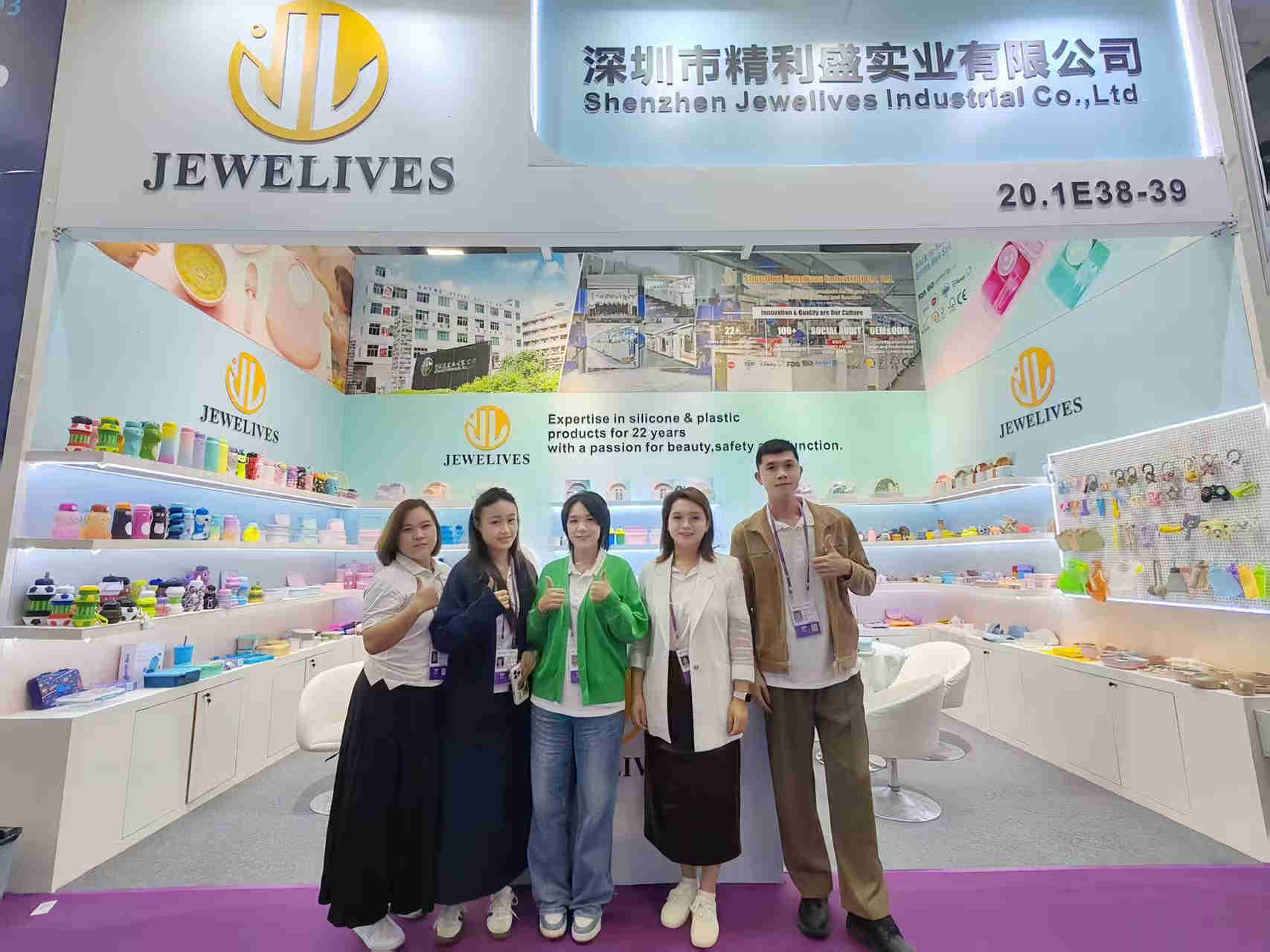
Jewelives Example: Partnering with an expert like Jewelives ensures access to 23 years of R&D and 500+ patents, giving your brand an immediate edge in innovation.
6. Developing the Silicone Mold (Tooling)
The mold is your biggest upfront cost.
-
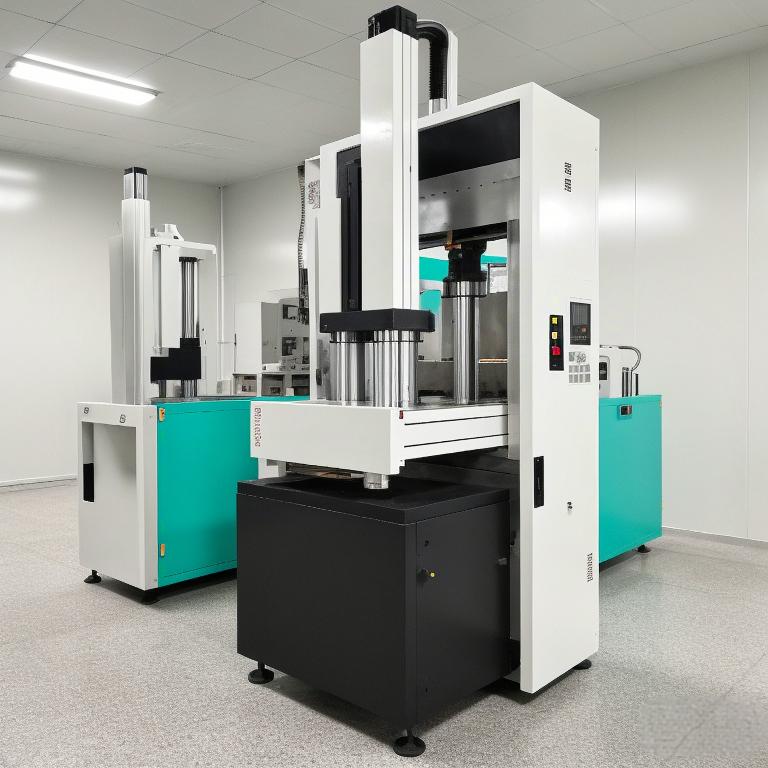
Steel Grade: For a high-volume Silicone stacking toy, insist on hardened steel (S136). It lasts for over 500,000 cycles.
-
Cavity Count: A 4-cavity mold is more expensive but reduces your “per-unit” cost, allowing for better margins during holiday sales.
7. Branding: The “Clean and Safe” Aesthetic
In 2026, your brand story is your product.
-
Eco-Packaging: Avoid single-use plastics. Use FSC-certified cardboard or reusable silicone pouches.
-
Visual Identity: Parents buy with their eyes. High-fidelity renders and “lifestyle” photography of a child playing with a preschool toy in a beautifully designed room are essential for conversion.
8. Building Your Digital Storefront
Whether you use the Amazon platform or build your own website, your site must scream “Trust.”
-
Transparency: Dedicate a page to your safety testing. Upload your lab reports for your baby bath toy so parents can see the results.
-
SEO Optimization: Use long-tail keywords. Don’t just target “toys.” Target “non-toxic educational baby toys for 12-month-olds.”
9. Marketing in the “Mom-fluencer” Economy
In 2026, traditional ads are secondary to social proof.
-
UGC (User Generated Content): Send your Silicone stacking toy to micro-influencers (parents with 5k–50k followers). Their endorsement is more trusted than a celebrity’s.
-
Educational Content: Create videos on why silicone is better than plastic for a baby bath toy (no mold, dishwasher safe, durable).
10. Logistics, Fulfillment, and Scaling
-
Fulfillment Centers: If selling in the US, use a 3PL (Third Party Logistics) to ensure 2-day shipping.
-
Global Reach: Once your custom baby teether is a hit, look into cross-border e-commerce. Silicone’s lightweight nature makes it cost-effective to ship internationally.
-
Product Diversification: Scale your catalog. If your preschool toy is successful, consider adding silicone-based mealtime products to your brand.
FAQ: Starting a Silicone Toy Business
Q1: How much does it cost to start a silicone toy business in 2026? The initial investment typically ranges from $5,000 to $15,000. This covers 3D designs, a high-quality silicone mold ($2k–$5k), safety testing ($1k–$3k), and your first production run.
Q2: Can I use “food-grade” silicone for toys? Yes, but “food-grade” is a chemical standard. For toys, you must also pass mechanical safety tests (the “torque” and “tension” tests) to ensure pieces don’t break off and become choking hazards.
Q3: Is silicone better than wood for educational baby toys? Silicone is often preferred for educational baby toys because it is antimicrobial, easier to sanitize (dishwasher safe), and softer for teething infants compared to wood, which can splinter over time.
Q4: How do I prevent mold in a baby bath toy? Choose a “closed-hole” or “no-hole” design. Traditional squeeze toys with holes trap water inside. A solid-core or sealed baby bath toy prevents internal mold growth, a major selling point for modern parents.
Q5: What is the lead time for custom silicone products? Typically, mold development takes 30 days, and mass production takes another 20–30 days. Including shipping, you should plan for a 3-month cycle from final design to having stock in your warehouse.
Q6: Can I sell a custom baby teether on Amazon without a CPC? No. Amazon is extremely strict. If you cannot provide a Children’s Product Certificate (CPC) from a CPSC-accepted lab, your listing will be removed, and your account could be suspended