Japanese
  English
  French
  German
  Spanish
  Russian
  Polish
  Chinese
  Korean
内容
Selecting the right OEM silicone bib manufacturer is one of the most important decisions for baby product brands, wholesalers, distributors, and retailers. A reliable manufacturing partner not only produces high-quality silicone bibs but also supports product development, quality assurance, regulatory compliance, packaging customization, and long-term supply chain stability. As global demand for food-grade silicone baby products continues to grow, choosing the right supplier has become a key factor in building a successful and competitive brand.
Whether you are launching a new baby products business or expanding an existing product portfolio, understanding how to evaluate an OEM silicone bib manufacturer can help reduce sourcing risks, improve product quality, and create a stronger customer experience. This guide explains the essential factors to consider before selecting an OEM manufacturing partner and outlines the qualities that distinguish professional silicone factories from ordinary suppliers.
Why Choosing the Right OEM Manufacturer Matters
Silicone bibs are products that come into close contact with babies during mealtime, making product safety and manufacturing quality essential. A dependable OEM manufacturer ensures consistent material quality, precise production, strict quality inspections, and compliance with international regulations.
★ Benefits of Working with a Professional OEM Silicone Bib Manufacturer
• Consistent product quality
• Competitive factory pricing
• Food-grade silicone materials
• OEM and private label services
• Product design optimization
• Reliable production schedules
• Stable long-term supply chain
• Comprehensive quality management
Instead of simply comparing prices, buyers should evaluate a manufacturer’s technical capabilities, production capacity, certifications, and customer support before making a sourcing decision.
Understand Your Product Requirements First
Before contacting manufacturers, define your product specifications as clearly as possible. The more detailed your requirements are, the easier it will be for suppliers to provide accurate quotations and practical manufacturing recommendations.
Prepare the Following Information
- Target market and sales channels
- Product dimensions
- Preferred silicone hardness
- Color requirements
- Logo placement
- Packaging specifications
- Estimated order quantity
- Applicable safety standards
Tip: Clear product specifications reduce communication errors and help manufacturers recommend the most suitable production process.
Evaluate Manufacturing Experience
Experience is one of the strongest indicators of manufacturing capability. A factory with many years of silicone production experience is more likely to understand product design, tooling, material performance, and international compliance requirements.
Manufacturers specializing in baby feeding products usually have dedicated engineering teams familiar with safety regulations and ergonomic product development.
Questions to Ask
• How many years have you manufactured silicone baby products?
• What percentage of your business is OEM?
• Which export markets do you serve?
• Can you provide previous project examples?
Check Material Quality
Material selection directly affects product safety, durability, and customer satisfaction. High-quality silicone bibs should be manufactured using premium food-grade silicone that is BPA-free, odorless, and suitable for direct food contact.
Characteristics of Premium Silicone
- Soft and flexible texture
- No unpleasant odor
- Excellent tear resistance
- Heat and cold resistance
- Long-lasting color stability
- Safe for repeated use
Ask suppliers whether they can provide raw material certificates and laboratory test reports to verify compliance with food-contact standards.
Verify International Certifications
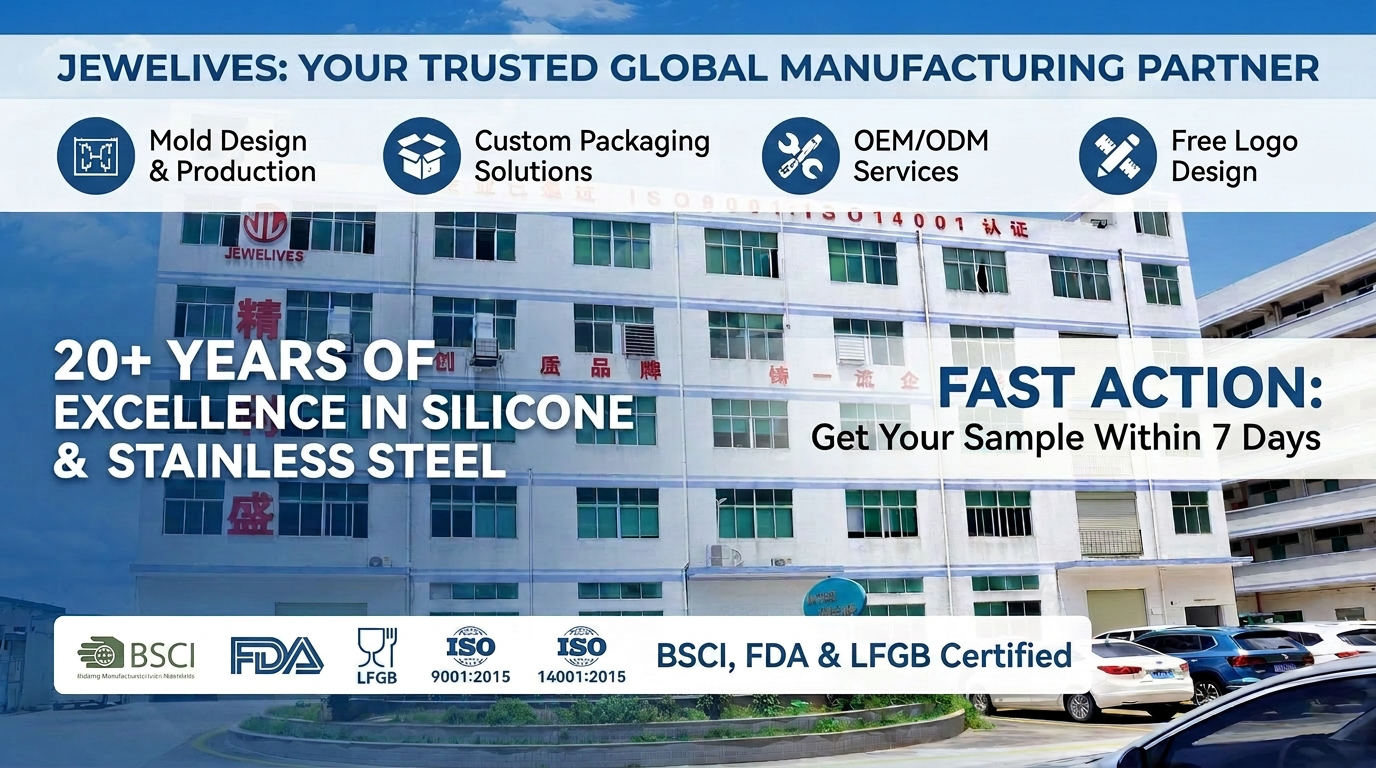
A reliable OEM silicone bib manufacturer should maintain internationally recognized certifications that demonstrate quality management, environmental responsibility, and product safety.
✔ Important Certifications
• ISO 9001 Quality Management
• ISO 14001 Environmental Management
• BSCI Social Compliance
• Sedex Audit
• FDA Food Contact Compliance
• LFGB Food Safety Testing
• REACH Compliance
• BPA-Free Verification
These certifications provide confidence that the manufacturer follows internationally accepted production and quality standards.
Assess OEM Development Capabilities
Not all suppliers provide the same level of OEM support. Professional silicone factories usually offer complete product development services from concept to mass production.
OEM Services May Include
- Industrial design assistance
- 3D CAD modeling
- Custom mold development
- Prototype production
- Engineering optimization
- Packaging design
- Private label branding
- Mass production management
OEM Advantage
Working directly with an experienced engineering team shortens development cycles while improving product quality and manufacturing efficiency.
Review Production Equipment
Modern manufacturing equipment plays a significant role in product consistency and production capacity. Factories equipped with advanced machinery are better prepared to handle complex OEM projects and large production volumes.
Typical Equipment in Professional Silicone Factories
- Hydraulic compression molding machines
- Liquid silicone injection molding equipment
- CNC machining centers
- Automatic trimming systems
- Laser engraving equipment
- Packaging production lines
- Quality testing laboratories
Examine Quality Control Procedures
Quality control should be integrated throughout the manufacturing process rather than performed only before shipment. Comprehensive inspection systems reduce defects and improve production consistency.
Quality Inspection Stages
✓ Raw material inspection
✓ Silicone mixing verification
✓ Mold inspection
✓ Appearance inspection
✓ Dimension measurement
✓ Button durability testing
✓ Packaging inspection
✓ Pre-shipment quality audit
Ask whether the manufacturer has dedicated quality inspectors and documented quality management procedures.
Evaluate Customization Options
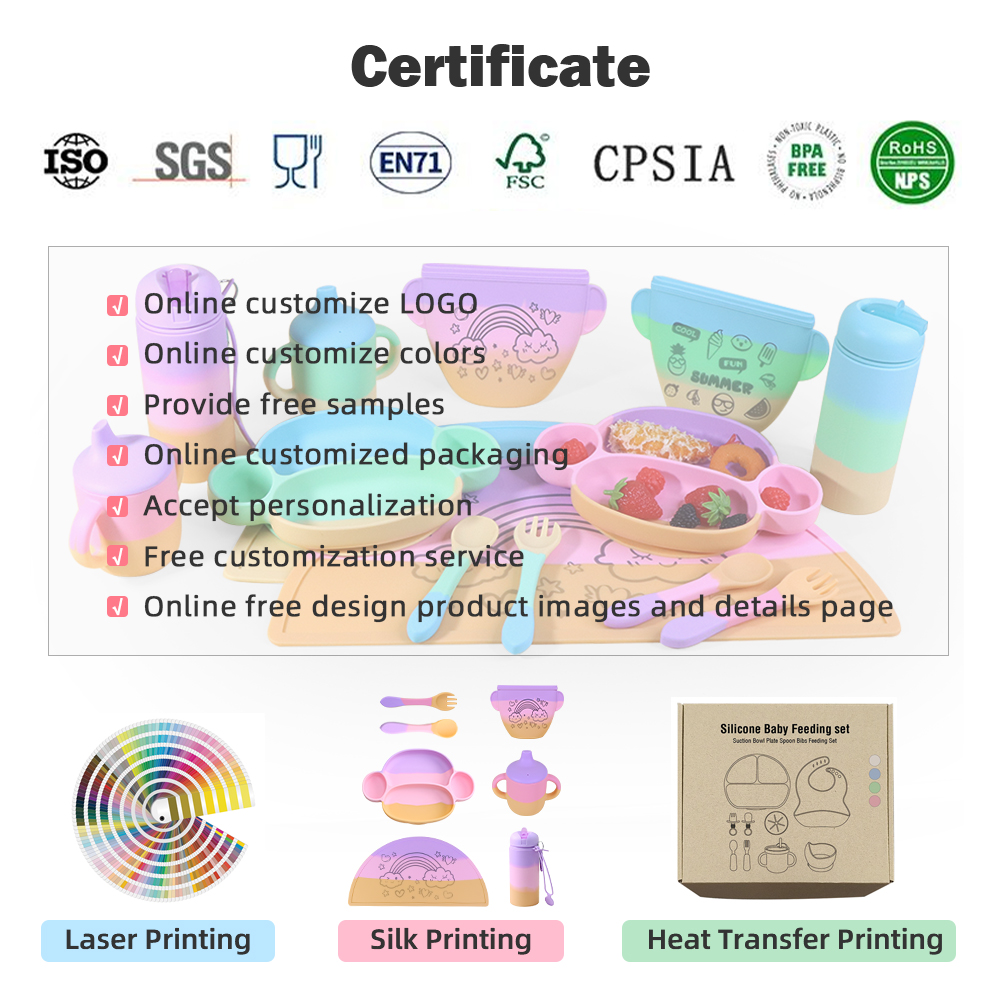
Customization is essential for private-label brands seeking product differentiation. A capable OEM manufacturer should support a wide range of branding and packaging options.
- Custom Pantone colors
- Embossed logos
- Debossed logos
- Laser engraving
- Custom gift boxes
- Retail-ready packaging
- Instruction manuals
- Barcode labels
- UPC and QR code printing
Branding Tip
Consistent product colors, premium packaging, and professionally integrated logos improve customer recognition and strengthen brand identity.
Consider Production Capacity and Delivery Performance
Production capacity directly affects lead times and supply chain reliability. Manufacturers with sufficient equipment, skilled workers, and production planning systems can better support growing brands.
Request information about monthly production capacity, average lead times, peak-season planning, and inventory management capabilities before placing orders.
Request Samples Before Mass Production
Product samples provide valuable insight into manufacturing quality and attention to detail. Evaluate samples carefully before approving mass production.
Sample Evaluation Checklist
- Material softness
- Surface finish
- Color consistency
- Button functionality
- Pocket stability
- Logo quality
- Packaging appearance
- Overall craftsmanship
Recommendation: Conduct functional testing, repeated cleaning, and durability checks before confirming production specifications.
Evaluate Communication and Customer Service
Effective communication is essential for successful OEM projects. Manufacturers should respond promptly, provide clear technical explanations, and offer practical solutions throughout development and production.
Professional suppliers usually assign dedicated project managers who coordinate communication between customers, engineers, production teams, and quality inspectors.
Build a Long-Term Manufacturing Partnership
Rather than focusing only on individual purchase orders, successful brands establish long-term relationships with trusted manufacturing partners. Long-term cooperation often results in improved pricing, priority production scheduling, faster product development, and continuous innovation.
Long-Term Partnership Benefits
• Stable product quality
• Faster new product development
• More efficient communication
• Better production planning
• Continuous cost optimization
結論
Choosing an OEM silicone bib manufacturer requires careful evaluation of manufacturing experience, material quality, engineering expertise, certifications, quality management systems, production capacity, and customer service. While competitive pricing is important, long-term business success depends on working with a supplier capable of delivering consistent quality, reliable production, and continuous product innovation. By conducting thorough supplier assessments and building strong manufacturing partnerships, baby product brands can create premium silicone bib collections that meet international safety standards and earn the trust of parents around the world.
Frequently Asked Questions
What should I look for in an OEM silicone bib manufacturer?
Evaluate manufacturing experience, food-grade silicone materials, certifications, OEM capabilities, quality control systems, production capacity, customization options, and customer support.
Why are certifications important when choosing a silicone bib supplier?
Certifications such as ISO 9001, FDA, LFGB, BSCI, and Sedex demonstrate that the manufacturer follows recognized quality, safety, and compliance standards.
Can OEM manufacturers help design custom silicone bibs?
Yes. Many professional manufacturers provide design assistance, mold development, prototype production, logo customization, and packaging design as part of their OEM services.
How can I verify the quality of a silicone bib before placing a bulk order?
Request production samples, review laboratory testing reports, inspect certifications, evaluate craftsmanship, and confirm the manufacturer’s quality inspection procedures.
Is it better to work directly with a silicone factory?
For most OEM projects, working directly with an experienced silicone factory offers better technical support, greater customization flexibility, more competitive pricing, and stronger quality control than purchasing through intermediaries.
Meta Description: Learn how to choose the right OEM silicone bib manufacturer. Discover key factors including food-grade materials, certifications, OEM capabilities, quality control, production capacity, customization services, and supplier evaluation tips for baby product brands.